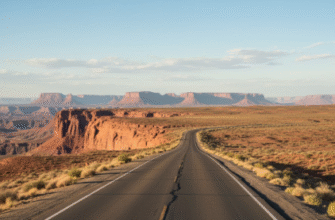
The highway sign says “Scenic Byway” and honestly, I didn’t think much of it at first.
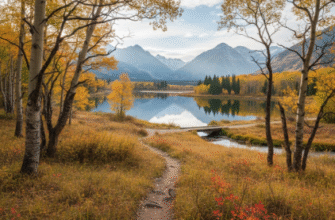
I’ve driven through a lot of Arizona—the painted deserts near Holbrook, the red rocks around Sedona, that stretch of I-10 where you swear the heat is actually visible—and I used to think I had the state figured out. Then I took State Route 260 through the White Mountains one September morning, and the whole ride from Heber-Overgaard eastward felt like driving through someone else’s idea of what Arizona should be. Ponderosa pines instead of saguaros. Meadows that actually stay green past May. Aspens that turn gold in fall, which—wait, aspens? In Arizona? Turns out the Apache-Sitgreaves National Forest covers roughly 2.1 million acres, give or take, and sits at elevations between 3,500 and 11,000 feet. The ecosystem up there has more in common with Colorado than Phoenix.
The air smells different at 7,000 feet. Cooler, obviously, but also sharper somehow, like it hasn’t been filtered through dust and creosote first. I cracked the window near Show Low and got hit with the scent of pine resin mixed with something almost sweet—probably wildflowers, maybe lupine or Indian paintbrush, though I’m not great at identifying plants unless they’re trying to kill me.
Why the Forest Service Built This Road in the First Place (And Why It Took Forever)
Here’s the thing: SR-260 wasn’t always paved. The original route through here was a mess of logging roads and fire access trails that the Forest Service cobbled together in the 1930s, part of that whole New Deal infrastructure push. They wanted a way to move timber and fight fires without having to bushwhack every single time. But the terrain fought back—steep grades, seasonal flooding, soil that turned to soup every monsoon season—and it took until the 1960s to get a fully paved road through the whole stretch. I guess it makes sense when you consider they were basically carving a highway through mountains that had been Mogollon Rim country for centuries, home to Apache communities and then later to Mormon settlers who showed up in the 1870s looking for timber and farmland.
The byway officially got its designation in 1989. By then, people had figured out that driving through alpine forest in the middle of a desert state was actually kind of remarkable.
What You’ll Actually See If You Drive It (Beyond the Obvious Trees)
The route runs about 123 miles if you take it from Heber all the way to Springerville, though most people jump on somewhere in the middle near Pinetop-Lakeside. You’ll pass meadows where elk graze in the early morning—genuinely hundreds of them sometimes, especially near Sunrise Lake—and the Sunrise Park Resort, which is one of the few ski areas in Arizona that doesn’t feel like a cruel joke. The Fort Apache Indian Reservation covers a huge chunk of the eastern section, and you’ll see signs for the White Mountain Apache Tribe’s ventures: the casino, the fishing lakes, the timber operations. The tribe manages about 1.6 million acres here, and they’ve been doing it a lot longer than the Forest Service has.
I stopped near Big Lake once, just to stretch my legs, and a guy in a fishing vest told me the lake was stocked with brook trout and that the water temperature never gets above 60 degrees even in July. He said this like it was a point of pride. I didn’t have the heart to tell him I think trout tastes like mud.
The Geology Doesn’t Make Sense Until You Remember Volcanoes
The White Mountains aren’t technically mountains in the way the Rockies are mountains—they’re volcanic. Most of the high country here formed between 8 and 3 million years ago, when a whole chain of stratovolcanoes erupted and then collapsed and then erupted again, leaving behind layers of basalt and ash that eventually weathered into the meadows and forests you see today. Mount Baldy, the second-highest peak in Arizona at 11,403 feet, is part of that volcanic field. You can’t drive to the summit—it’s sacred to the White Mountain Apache and closed to non-tribal members—but you can see it from the byway on clear days, this broad hump of a mountain that doesn’t look dramatic until you realize how high it actually is.
Anyway, volcanic soil is weirdly fertile, which explains why the forest grows so thick up there even though the winters can dump six feet of snow.
When to Go and What to Bring (Because Cell Service Is a Joke)
Late September through early October is the best window, when the aspens are turning and the summer crowds have cleared out but the snow hasn’t started yet. Spring is pretty too—wildflowers everywhere, streams running high—but the roads can be sketchy if there’s been late-season snow. Summer is the busiest season because everyone from Phoenix drives up to escape the heat, and you’ll hit traffic in Pinetop on weekends, which feels absurd for a town of 4,000 people. Winter is beautiful if you like that sort of thing, but you’ll definately need chains or at least good snow tires, and half the campgrounds close.
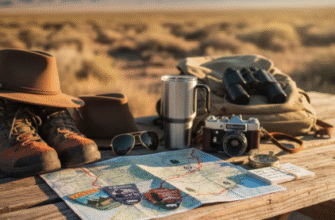
Bring a paper map. Seriously. I’ve lost cell service for 40-mile stretches up there, and GPS gets confused when you’re winding through canyons. Also bring water, snacks, and a jacket even if it’s August—temperature swings are no joke at elevation. I once started a hike near Sunrise in shorts and a T-shirt and came back shivering two hours later because a thunderstorm rolled in out of nowhere.
The Part Nobody Mentions: How Quiet It Gets
I used to think “scenic byway” was just marketing, a way to slap a special name on a road that happened to be pretty. But there’s something about the White Mountains stretch that feels different from other drives. Maybe it’s the way the light filters through the pines in the late afternoon, all golden and hazy. Maybe it’s the fact that you can pull off at a dozen different trailheads and within ten minutes be completely alone, no engine noise, no voices, just wind and birdsong and the occasional rustle of something moving through the underbrush—probably a deer, possibly a bear, hopefully not a bear.
Or maybe it’s just that the road keeps climbing and the air keeps thinning and at some point you look around and realize you’re in a place that doesn’t quite fit the Arizona you thought you knew. Which is fine. Better than fine, actually.