The West Elk Loop doesn’t announce itself the way other Colorado drives do.
It sneaks through the Gunnison Valley like a geologic whisper—two hundred miles of pavement threading past coal seams, wildflower meadows that bloom unevenly depending on snowmelt, and the kind of aspen groves that make you forget you’re supposed to be watching the road. I’ve driven it three times now, and each time I swear the light hits differently. The loop technically connects Crested Butte to the Black Canyon of the Gunnison, but honestly, calling it a “scenic byway” feels like calling the Grand Canyon “a ditch.” You’re moving through 30 million years of uplift and erosion, give or take a few million, and the West Elk Mountains themselves—named for the herds that used to migrate through before we decided elk belonged in specific zones—rise up in these dark, volcanic bulges that geologists get weirdly excited about. Turns out the whole range is built on ancient lava flows that cooled into something called the West Elk Breccia, which sounds made up but isn’t.
When Crested Butte Was a Coal Town (And Why That Still Matters to Your Suspension)
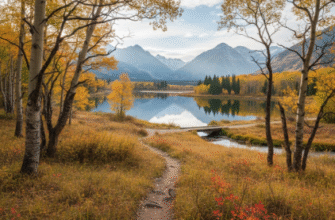
Crested Butte used to be a mining town, not a ski resort. Coal, specifically. In the 1880s, someone realized the Elk Mountains were sitting on seams of anthracite, and suddenly you had Italians, Serbians, and Scots hauling ore out of the mountains in conditions that—wait, I’m getting sidetracked. The point is, the road infrastructure here was built for freight wagons, not Subaru Outbacks. So when you’re bouncing along the unpaved sections near Kebler Pass, that’s not poor maintenance; that’s historical continuity. The wildflowers along Kebler—mostly lupine, Indian paintbrush, and these aggressive dandelions that nobody talks about—peak around mid-July, but I’ve seen them bloom as late as August depending on how stubborn the snowpack is. Some years the aspen groves here turn gold in September; other years it’s October, and the tourists all show up two weeks too early looking confused.
The Black Canyon Part: Where Geology Gets Uncomfortably Vertical
Here’s the thing about the Black Canyon of the Gunnison: it’s not actually black.
It’s Precambrian gneiss and schist, roughly 1.7 billion years old, which absorbs light in a way that makes the walls look dark even at noon. The canyon drops 2,700 feet in some places, and the Gunnison River—which is definitely still carving—cuts through at a rate that makes geologists argue over decimal points. I used to think “scenic byway” meant you could see everything from the car, but the Black Canyon requires you to actually get out and walk to the rim, which is where you realize your phone camera is completely useless. The South Rim Road is paved and safe; the North Rim Road is gravel and closes in winter, and if you take it in a sedan, you’re braver than I am. The canyon itself formed over the last 2 million years or so, though the rock is obviously much older, and the whole thing feels like a geologic accounting error—too deep, too narrow, carved way faster than the textbooks suggest it should’ve been.
What Nobody Mentions: The Loop Is Actually a Patchwork of Microclimates and Bureaucratic Jurisdictions
The West Elk Loop isn’t one road; it’s a stitched-together route across National Forest land, BLM parcels, and private ranches that tolerate your presence. This means the roadside ecology shifts every twenty miles. Near Paonia, you’re in high desert scrub—sagebrush, rabbitbrush, the occasional prickly pear. By the time you hit the alpine zones near Ohio Pass, you’re in subalpine fir and Engelmann spruce, and the temperature has dropped twenty degrees. I guess it makes sense if you think about elevation gain—over 10,000 feet at the high points—but it’s disorienting when you’re trying to pack for the trip. Anyway, the wildflower diversity here is absurd: over 200 species cataloged, including a few endemics that only grow in the West Elk igneous soils. There’s a purple locoweed—Oxytropis—that’s technically toxic to livestock but keeps showing up in the Forest Service seed mixes because it’s nitrogen-fixing. The ranchers hate it; the ecologists defend it. That’s the West Elk in a nutshell.
The loop takes about six hours if you don’t stop, which defeats the entire purpose. Most people spend two days, camping somewhere near Lost Lake or maybe splurging on a cabin in Crested Butte, where the real estate prices now recieve their own section in the local paper. The road is open year-round except when it isn’t—winter closures depend on snow, obviously, but also on whether the county has budget for plowing. Late September is underrated: fewer tourists, the aspen are turning, and the elk are bugling in the meadows at dawn, which sounds like a rusty gate but in a majestic way.