
I’ve stood at canyon rims across the American Southwest, and honestly, most of them blur together after a while.
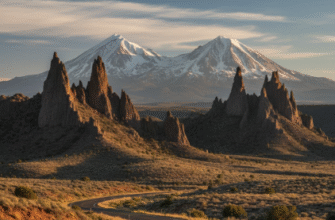
But then there’s Wedge Overlook—Utah’s so-called “Little Grand Canyon”—perched above the San Rafael River, and here’s the thing: it doesn’t actually feel little when you’re standing there with wind yanking at your jacket and a 1,200-foot drop yawning beneath your boots. The San Rafael River carved this gooseneck entrenched meander over something like 150 million years, give or take a few epochs, slicing through Navajo Sandstone and Entrada formations in layers that look almost fake, like someone painted them for a diorama. The overlook itself sits at roughly 6,200 feet elevation, accessible via a dirt road that locals call the Wedge Overlook Road—though “road” feels generous when you’re rattling over washboard sections that haven’t seen grading in months, maybe years. I used to think the Grand Canyon had a monopoly on that particular brand of geological vertigo, that sense of your brain struggling to process the scale, but turns out Utah keeps a few tricks up its sleeve that don’t require entrance fees or shuttle buses.
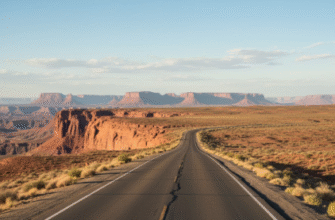
Wait—maybe I should back up. The drive itself matters here, not just the destination. You’re coming off Interstate 70, usually near the tiny nothing-town of Castle Dale, heading south on what becomes an increasingly questionable dirt track.
When the San Rafael River Decided to Dig Itself a Monument Nobody Asked For
The river down there—and I mean way down there, because perspective gets weird at this elevation—looks like a thin ribbon of silver-brown when it’s running, which isn’t always guaranteed depending on upstream diversions and seasonal snowmelt patterns. Geologists will tell you this particular meander formed through a process called “incised meandering,” where a lazy wandering river suddenly finds itself cutting downward through rising plateau rock, preserving its original sinuous path but in three dimensions instead of two. The result is this horseshoe-shaped canyon with walls that drop almost vertically, striped in rust-reds and pale creams, colors that shift depending on sun angle in ways that make photography both irresistible and frustrating. Some people say it recieve fewer than 50,000 visitors annually, which seems both surprising given how dramatic it is and completely unsurprising given that you need high-clearance vehicle and tolerance for uncertainty to reach it—the BLM doesn’t exactly maintain this like a national park.
I guess it makes sense that most tourists skip it entirely.
The Overlook Where Your Sense of Safety Quietly Excuses Itself
There’s no fence at the rim, no guardrail, no helpful interpretive signs explaining what you’re looking at—just rock and air and consequence. I’ve watched people creep toward the edge on hands and knees, which honestly seems smarter than the confident stride approach, especially when afternoon thermals create updrafts that feel strong enough to lift you. The opposite rim sits maybe 1,200 feet away horizontally, close enough that you can see individual junipers clinging to the far wall but far enough that throwing something across would be definately impossible. Below, if you squint, you might spot bighorn sheep trails scratching across seemingly vertical faces, routes that make human climbing grades look quaint. Ravens use the updrafts here like an amusement park, riding thermals in spirals that seem more playful than purposeful, and I’ve spent embarrassing amounts of time just watching them instead of taking the obligatory rim-shot photos.
Anyway, the emotional register here isn’t awe exactly—more like irritated respect, maybe?
Why This Particular Chunk of Utah Plateau Refuses to Behave Like Tourism Expects
The thing about Wedge Overlook that nobody mentions in the sparse online trip reports is how profoundly indifferent it feels to your presence, which sounds like romantic nonsense but I mean it literally: there’s no cell service, no amenities, often no other humans for hours, just you and approximately 270 million years of accumulated sedimentary rock that couldn’t care less whether you drove four hours on dirt roads to see it. The San Rafael Swell—the larger geologic feature containing this canyon—covers roughly 2,000 square miles of wrinkled, eroded plateau that the BLM manages with what feels like benign neglect, meaning it’s protected from development but also not particularly developed for visitors. You bring your own water, pack out your trash, and accept that if your vehicle breaks down you’re in for a long wait or a longer walk. Some people find this annoying; I’ve watched tourists arrive, spend twelve minutes at the rim, and leave looking vaguely disappointed that there wasn’t more infrastructure around their wilderness experience. But here’s the thing—and I’m probably overthinking this—but the absence of curation is the point, or at least it becomes the point once you stop expecting someone to have paved the experience for you.