I used to think the Cascade volcanoes were just postcard scenery—dormant giants you’d admire from a distance, maybe snap a photo, then move on.
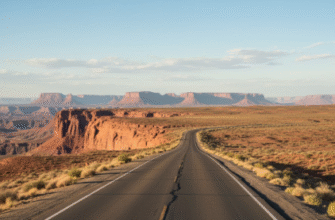
The Volcanic Legacy Scenic Byway changed that for me, and not gently. This 500-mile ribbon of asphalt—stretching from Crater Lake in southern Oregon up through Lassen Volcanic National Park in Northern California, then looping back through the Modoc Plateau and into Washington—isn’t really a byway at all. It’s a geological time machine that happens to have guardrails. You’re driving over the Ring of Fire’s backbone, where the Juan de Fuca Plate has been grinding beneath North America for roughly 7 million years, give or take a few epochs. The result? A chain of stratovolcanoes—Mount Shasta, Mount McLoughlin, Lassen Peak—that aren’t dormant so much as napping. Lassen last erupted in 1915, a series of explosions that sent ash seven miles into the atmosphere and melted snow into catastrophic mudflows. Shasta’s last confirmed eruption was around 1786, but geologists monitoring its fumaroles and hot springs will tell you, off the record, that it’s not a question of *if* but *when*. The byway doesn’t advertise this unease, but you feel it anyway—the sulfur smell at Bumpass Hell, the skeletal forests near Lassen’s Devastated Area, the way locals in the tiny towns dotting Highway 97 casually mention “eruption plans” like they’re discussing grocery lists.
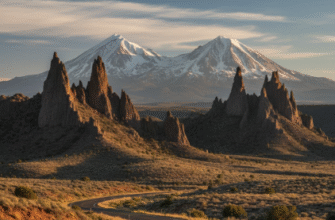
Here’s the thing: most scenic drives feel curated, sanitized. The Volcanic Legacy doesn’t bother. You’ll round a bend expecting Instagram-worthy vistas and instead find yourself staring at a cinder cone that looks like a wound in the earth, or a lava tube so dark your phone’s flashlight barely penetrates ten feet. The Medicine Lake Highlands—a massive shield volcano that nobody outside geology circles talks about—sprawls across 900 square miles, its obsidian flows glittering like broken glass. I’ve driven past families picnicking on what is essentially a volcanic bomb field, kids running over basalt that cooled maybe 1,000 years ago, and I can’t decide if that’s blissful ignorance or a more honest relationship with the planet than my anxious scanning for steam vents.
When the Ground Beneath You Refuses to Stay Still for Very Long
Wait—maybe I’m overstating the danger. The USGS rates most Cascade volcanoes as “high threat,” but that’s technical jargon for “we’re watching closely, not evacuating Portland tomorrow.” Still, the byway forces you to reckon with impermanence in a way few roads do. Crater Lake, the byway’s crown jewel, is a caldera—the collapsed throat of Mount Mazama, which exploded roughly 7,700 years ago with 42 times the force of Mount St. Helens in 1980. The Klamath tribes have oral histories describing the eruption, a cultural memory spanning millennia. Standing at the rim, staring into water so blue it looks Photoshopped, you’re looking at catastrophe that became beauty. That duality—destruction as creation—threads through every mile. The byway’s lava beds, now home to golden eagles and pronghorn antelope, were molten rivers within human memory. The forests of mountain hemlock and ponderosa pine cling to soil that’s basically volcanic ash with delusions of fertility.
Honestly, the byway’s infrastructure can’t quite keep up with its geology. The northern section—skirting Mount Adams and looping toward Mount St. Helens—closes half the year due to snow. The southern stretches through Modoc National Forest feel almost forgotten, two-lane roads where you might see more cattle than cars. This isn’t Yellowstone’s manicured accessibility; it’s raw, underfunded, occasionally frustrating. I guess that’s fitting. Volcanoes don’t perform on schedule, and neither does this route.
You won’t find many tour buses here, which is probably for the best.
The Unnerving Beauty of Landscapes That Could Erase You Without Malice or Warning
Turns out, the byway’s most unsettling moments aren’t the obvious ones—the fumaroles hissing at Lassen, the monolithic presence of Shasta dominating the horizon. It’s the quiet stretches through the Klamath Basin, where tule marshes reflect extinct cinder cones, and you realize the entire basin is a volcanic construct. Or the drive past Mount Thielsen, the “Lightning Rod of the Cascades,” its spire jagged from repeated strikes, and you think about the storms that must rake these peaks. The Cascade Range averages one major eruption per century. We’re due. Scientists at the Cascades Volcano Observatory will tell you—cautiously, hedged with caveats—that the next eruption will likely be smaller, manageable. But “likely” isn’t “definitely,” and the byway, with its lava flows and ash fields and calderas, is a 500-mile reminder that the earth doesn’t owe us stability. I’ve met travelers who find that thought paralyzing. I find it oddly comforting. The volcanoes were here 7 million years before us. They’ll outlast whatever we build on their slopes. The Volcanic Legacy Scenic Byway doesn’t let you forget that, not for a single mile, and maybe that’s exactly the kind of humility we need more of—driving through landscapes that could erase you without malice or warning, and choosing to marvel anyway.