The dirt road starts where most tourists give up.
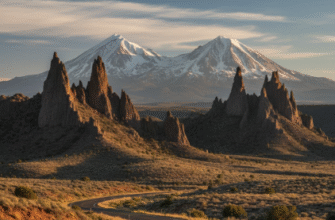
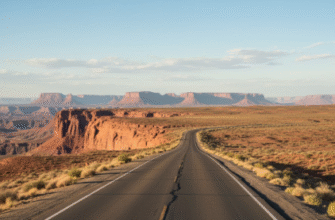
I’ve driven past Monument Valley’s entrance booth maybe a dozen times, and every single time I see the same thing: rental cars idling at the pullout, phones pressed against windows, everyone angling for that Forrest Gump shot of Highway 163. Which, sure, it’s iconic—I’m not going to pretend those buttes don’t deserve their fame. But here’s the thing: about seventeen miles west, there’s this turnoff most people miss entirely, and it leads into Valley of the Gods, which is basically Monument Valley’s weird, quieter sibling. Same red sandstone towers jutting out of the desert floor, same Navajo sandstone formations that took roughly 270 million years to form (give or take a few epochs), but without the $20 entrance fee or the tour buses kicking up dust every forty minutes. The loop is about seventeen miles of unpaved road, and honestly, the first time I drove it, I wasn’t even sure I was supposed to be there—no signage, no visitor center, just a cattle guard and a vague sense that I might be trespassing on something sacred.
Turns out I wasn’t the only one who felt that way. Valley of the Gods used to be part of Bears Ears National Monument until the previous administration slashed the monument’s boundaries by 85% in 2017, leaving this particular stretch of land in bureaucratic limbo. It’s BLM land now, which means it’s technically public, technically accessible, and technically free—but also technically vulnerable to uranium mining claims and oil drilling leases, which feels insane when you’re standing there watching the light change on formations with names like Lady in a Bathtub and Setting Hen Butte.
The Road That Doesn’t Want You There (But Won’t Actually Stop You Either)
The drive itself is—wait, how do I describe this without sounding dramatic? It’s rough. Not Moab’s Hell’s Revenge rough, but rough enough that I’ve seen sedans attempt it and immediatley regret their choices around mile three. The road snakes through washes that flood during monsoon season, climbs over slickrock shelves that’ll scrape your undercarriage if you’re not careful, and generally makes you reconsider your vehicle’s clearance every half mile or so. I did it in a high-clearance SUV and still felt my stomach drop a few times. But that’s sort of the point, I guess—the difficulty filters out the crowds. On a Saturday in June, I passed exactly two other vehicles the entire loop. Two. Meanwhile, Monument Valley’s scenic drive was bumper-to-bumper with German tour groups and Instagrammers in rented Jeeps.
The formations themselves are smaller than Monument Valley’s giants, but more numerous, more clustered—like someone scattered chess pieces across a rust-colored board and then walked away mid-game. Some of them have that classic Southwest profile, all vertical drama and improbable balance. Others are melting into themselves, eroding in real time, which geologists will tell you is a process measured in millennia but looks immediate when you’re staring at a half-collapsed spire leaning at an angle that defies physics.
I used to think emptiness was boring.
Then I spent three hours in Valley of the Gods with nothing but wind and my own thoughts, and realized emptiness is actually kind of overwhelming? There’s no soundtrack, no curated viewpoints, no plaques explaining what you’re looking at or why it matters. You’re just there, in the middle of 275 million years of geological history, trying to figure out if that shadow moving across the valley floor is a cloud or a vulture or your own exhaustion playing tricks. The silence gets loud after a while—that’s the best way I can describe it. You start noticing the small stuff: the way juniper trees cling to impossible cracks in the rock, the faint tire tracks from someone who drove this loop weeks or months ago, the distant hum of a plane that reminds you civilization still exists somewhere beyond the horizon.
Why Monument Valley’s Famous Cousin Stays Mostly Unknown (And Whether That’s Actually Better)
Here’s where I contradict myself a little. Part of me wants to gatekeep this place, to not write about it at all, to let it stay obscure and uncommercialized. But another part of me thinks that’s elitist nonsense—public land is public land, and the only way to protect it long-term is to make people care about it, which requires them to actually visit it. The paradox of conservation, I guess. Anyway, Valley of the Gods isn’t exactly a secret anymore; it shows up on overlanding forums and BLM maps and the occasional travel blog written by someone who drove it once and felt compelled to tell the internet. But it’s still quiet enough that you can sit on a rock for an hour without seeing another human, which is more than you can say for most of the Southwest these days.
The loop spits you out near Mexican Hat, a tiny town named after a rock formation that looks vaguely sombrero-shaped if you squint and have a generous imagination. From there, you can loop back to Highway 163, or keep going toward Goosenecks State Park, or just sit in your car and shake the dust out of your hair and wonder why anyone bothers with the crowded places when stuff like this exists just slightly off the map.