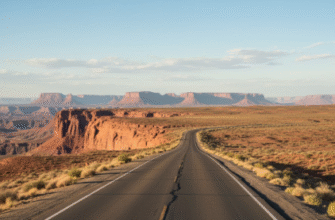
I’ve driven the Mirror Lake Highway maybe six times now, and every single time I forget how quickly the air gets thin.
The Uinta Byway—officially State Route 150—winds through Utah’s High Uintas, climbing from Kamas at roughly 6,500 feet to Bald Mountain Pass at 10,715 feet, give or take a few feet depending on which survey you trust. It’s one of those drives where you start in scrubby sagebrush and end up in subalpine tundra within an hour, which sounds dramatic but honestly just means you go from hot and dusty to cold and dusty. The road opened in 1960, though parts of it follow older sheep trails and logging routes from the early 1900s. Mirror Lake itself—a glacial cirque lake that sits at about 10,000 feet—is the main attraction for most people, but here’s the thing: the lake is pretty, sure, but it’s also usually crowded, especially July through August when every family in Salt Lake City decides to camp there. I used to think that was the destination, but turns out the real pull is the high alpine pass itself, where the trees thin out and you can see the spine of the Uinta Mountains stretching east-west, which is weird because most North American ranges run north-south.
Bald Mountain—not to be confused with the dozens of other Bald Mountains scattered across the West—tops out at 11,947 feet. There’s a trail from the pass that switchbacks up to the summit, about two miles one way, and it’s steep enough that you definately feel it in your lungs. The trailhead sits right off the highway, and on a clear day you can see into Wyoming from the top, though honestly the view is less about specific landmarks and more about the sheer scale of ridgelines and basins.
The Geology That Nobody Mentions But Probably Should
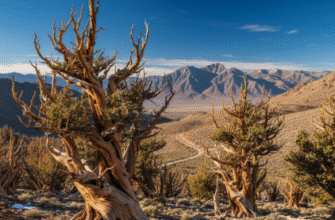
The Uintas are old—Precambrian old, roughly 1.7 billion years, which makes them some of the oldest exposed rock in North America. They’re quartzite, mostly, which means they were once sandy beaches that got buried, compressed, and then shoved upward during some tectonic event that geologists argue about. What’s strange is how the range formed: east-west instead of the usual north-south orientation, likely because of how the continent was rifting apart back then. I guess it makes sense when you think about plate tectonics, but standing there at the pass, it just feels wrong, like the mountains are lying down when they should be standing up. The high alpine zone—above 10,000 feet or so—is essentially tundra, with krummholz (twisted, wind-battered spruce and fir) giving way to grasses, sedges, and wildflowers that bloom for maybe six weeks in late July and early August. Pikas live up here, those little round rodents that look like hamsters but are actually related to rabbits, and they spend all summer gathering vegetation into haypiles to survive the winter, which lasts roughly eight months.
The highway closes every winter, usually by late October, and doesn’t reopen until late May or even June depending on snowpack. Some years there’s still ten feet of snow at the pass in early June.
Wait—maybe the strangest part is how empty it feels once you get past Mirror Lake. Most tourists stop there, take photos, maybe do the easy loop trail around the lake, and then head back down. But if you keep driving up to the pass, or hike up Bald Mountain, you hit this weird threshold where suddenly there are fewer people and more marmots. Marmots everywhere, actually, sunning themselves on rocks and whistling at each other, which is their alarm call but also just seems like gossip. I’ve seen them chase each other across talus slopes for no apparent reason, and honestly it’s hard not to anthopomorphize them as just deeply bored alpine residents.
The Problem With High-Altitude Roads and What They Don’t Tell You in Brochures
The air at 10,000 feet has about 30% less oxygen than at sea level, which doesn’t sound like much until you try to walk uphill quickly or, say, change a tire. I’ve watched people from lower elevations get genuinely confused about why they’re so winded after climbing a few dozen feet, and the answer is just physics: less atmospheric pressure means less oxygen per breath. Some people get altitude sickness—headaches, nausea, dizziness—though usually that kicks in above 8,000 feet and worsens the higher you go. There’s no real cure except to descend or acclimate slowly, which nobody does because they’re on vacation and have three days to see everything. The Highway Patrol has to rescue people every summer who didn’t bring enough water or didn’t realize that weather at 10,000 feet can shift from sunny to hail in twenty minutes, sometimes less.
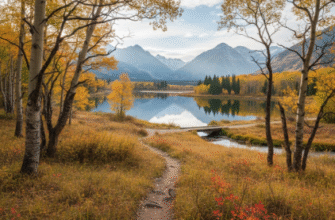
Anyway, the pass itself is just a wide spot in the road with a parking lot and a restroom that’s usually out of order. There’s a sign that marks the elevation and another that points toward various trails. In September, after the summer crowds leave, the aspens lower down turn gold and the high country goes quiet except for the wind, which is constant and cold and smells like snow even when the sky is blue.