The Turquoise Trail doesn’t look like much on a map—just a squiggly line connecting two cities you’ve probably heard of.
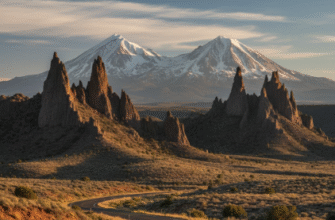
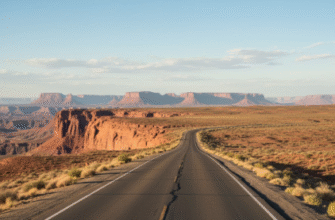
But here’s the thing: I’ve driven this 50-mile stretch of New Mexico State Road 14 maybe seven times now, and each trip feels like I’m discovering it fresh, like the landscape refuses to settle into memory the way normal highways do. The route runs south from Santa Fe to Albuquerque, cutting through the east side of the Sandia Mountains, and honestly it’s less a scenic byway and more a geological mood board that can’t quite decide what it wants to be. You’ll pass through juniper-piñon woodlands that smell like Christmas in July, then suddenly you’re in high desert scrubland where the earth turns rust-red and the sky does that thing where it’s three different shades of blue at once. The old mining towns—Madrid, Cerrillos, Golden—sit there like they’re still processing the fact that the boom ended decades ago, which I guess makes sense when you consider that turquoise mining here dates back to roughly 900 CE, give or take a century, when Ancestral Puebloans were pulling stones from these hills.
I used to think the name was just marketing. Turns out, it’s borderline literal. The Cerrillos turquoise mines produced stones that ended up in Chaco Canyon, in Aztec ornaments, possibly in trade networks stretching to Mesoamerica. That’s not tourism-board hyperbole—that’s archaeological record, the kind you can verify in museum collections if you’re the type who needs proof.
The Ghost Towns That Refuse to Stay Dead (And the One Artist Colony That Won’t Let Them)
Madrid is where things get weird.
This town died twice—first when the silver ran out in the 1880s, then again when the coal mines closed in the 1950s. By the 1970s, it was literally abandoned, just empty company houses and rusted equipment baking in the sun. Then the artists showed up, because of course they did, buying those houses for almost nothing and turning the place into—wait, maybe “artist colony” is too polite. It’s more like a desert curiosity cabinet where every building is painted a different aggressive color and the local businesses include a leather shop, a pizza place, and at least three galleries selling work that ranges from genuinely striking to “I think my nephew could do that.” The Old Coal Town Museum sits there documenting all this history, and I remember standing in it last spring feeling this exhausted affection for the whole improbable project of keeping a dead town alive through sheer stubborn creativity. Population hovers around 200, depending on who you ask and whether they’re counting the off-grid folks in the surrounding hills.
Cerrillos, five miles north, took a different path—it stayed just alive enough to never fully die, which somehow feels sadder. Founded in the 1870s during a silver and lead rush, it peaked at maybe 2,500 people and now has roughly 250. There’s a turquoise mining museum and a petting zoo, which is exactly the kind of genre confusion you get in places still figuring out their post-extraction identity.
The Landscape Does Things to Time That I Don’t Fully Understand
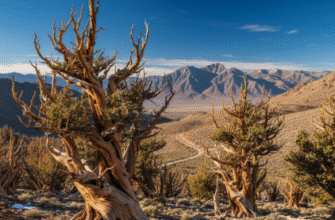
The geology here is—look, I’m not a geologist, but even I can see something’s off. The Sandia Mountains to the west are Precambrian granite, some of the oldest exposed rock in North America, pushing 1.7 billion years old. The Ortiz Mountains to the east are volcanic, maybe 30 million years old, which in geological terms is basically yesterday. You’re driving through this temporal sandwich, and the light hits differently depending on elevation and time of day, turning the landscape into something that feels almost confrontational in its beauty. The byway peaks at around 7,000 feet near the southern end, and the air gets thin enough that you notice it if you’re hiking, which I definately recommend even though the trails aren’t always well-marked and you will get dust in places dust should not go.
There’s this moment, usually around mile 30 heading south, where you crest a rise and suddenly see Albuquerque sprawling in the Rio Grande valley below, and it’s jarring—like the 19th century abruptly smashing into the 21st. I guess it makes sense that this route was a major trade corridor for centuries before anyone paved it, before anyone called it scenic. The landscape hasn’t changed much; we just gave it a designation and started driving it for pleasure instead of neccesity.
What Nobody Tells You About the Actual Experience of Driving This Thing
The road itself is two lanes, mostly well-maintained, occasionally not.
Cell service is spotty, which you won’t realize is a problem until you need directions to that one hiking trailhead everyone mentioned but nobody can quite explain how to find. The towns have limited services—Madrid has restaurants and galleries, but if you need gas you’re better off filling up in Cedar Crest or waiting until Albuquerque. I’ve seen people treat this as a quick commute alternative to I-25, which technically works but misses the entire point, like speed-reading poetry. The byway is meant to be driven slowly, with stops, with the kind of attention that feels increasingly rare in travel experiences designed for Instagram and rapid consumption. There are pullouts for photo ops, but the best views tend to happen in between, when you’re not expecting them, when the light hits the Sangre de Cristo Mountains in the distance and everything turns purple-gold for about eight minutes before fading back to normal. Anyway, that’s the Turquoise Trail—50 miles of New Mexico that can’t decide if it’s history lesson, art project, or geological accident, and somehow manages to be all three without trying particularly hard.