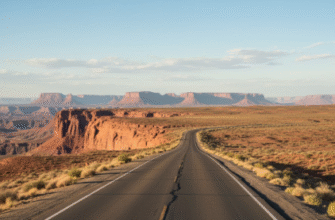
Trail Ridge Road doesn’t feel like a road at first.
I mean, it starts normally enough—winding through ponderosa pine forests around 8,000 feet, the kind of scenic mountain drive you’d expect in Rocky Mountain National Park. But then something shifts. The trees thin out, then disappear entirely, and suddenly you’re above 11,000 feet, riding a ribbon of asphalt through what looks like another planet. The air gets thin enough that you notice your breathing. Your ears pop. And here’s the thing: this 48-mile stretch of pavement, which peaks at 12,183 feet, is the highest continuous paved road in North America. Not just high—the highest. It’s been that way since 1932, when the Civilian Conservation Corps finished blasting and grading through terrain that, honestly, seems like it was never meant for cars.
The road stays open roughly four months a year, give or take. Snow closes it sometime in October, and it doesn’t reopen until late May or early June, depending on how brutal winter decides to be. Which makes sense when you realize eleven miles of it sit above treeline.
Wait—maybe I should back up. Treeline, that altitude where trees just give up, happens around 11,400 feet here. Above that you’re in alpine tundra, which is basically the ecological equivalent of Arctic conditions. The plants that survive up there—cushion plants, miniature willows, alpine forget-me-nots—grow maybe a millimeter per year. Some of the plant communities are 10,000 years old. So when the Park Service puts up those signs begging you not to step off the pavement, they’re not being dramatic. One footprint can destroy decades of growth.
Driving Trail Ridge Road in July Feels Like Visiting Three Separate Climate Zones in an Hour
You start in montane forest. Then subalpine, where Engelmann spruce and subalpine fir cluster together like they’re nervous about the altitude. Then—boom—treeline, and you’re surrounded by tundra that looks weirdly similar to landscapes in Alaska or northern Scandinavia, except you drove here from Denver in three hours.
The temperature drops about 3.5 degrees Fahrenheit for every 1,000 feet of elevation gain. Which means if it’s a pleasant 75°F down in Estes Park at the eastern entrance, it might be 45°F and windy up at the Alpine Visitor Center. I’ve seen people pull over at one of the overlooks in shorts and t-shirts, then practically sprint back to their cars when the wind hits. The windchill up there can be brutal even in summer.
Anyway, the views are kind of absurd.
On a clear day—and you definately want a clear day, because afternoon thunderstorms are common and genuinely dangerous up there—you can see the Never Summer Mountains to the west, the Mummy Range to the north. Elk are everywhere, especially near Forest Canyon Overlook. Bighorn sheep hang out around Rainbow Curve, seemingly unbothered by the tourists pointing cameras at them. Yellow-bellied marmots, those chubby alpine rodents, whistle from the rockpiles.
The Road Itself Is a Minor Engineering Miracle That Nobody Talks About Enough
Building a paved road at 12,000 feet in the 1930s, with 1930s equipment, through solid granite—that’s borderline insane. The project took four years. Workers dealt with altitude sickness, early snowstorms, and the logistical nightmare of moving equipment and materials to places that were barely accessible by pack mule. The original road followed an old Ute trail, which makes sense because Indigenous peoples knew these mountains long before engineers showed up with surveying equipment.
Maintaining it is equally ridiculous. The freeze-thaw cycle destroys pavement. Snowdrifts can pile up 30 feet deep. Road crews start clearing it in April, using rotary plows and front-end loaders, and it takes weeks. Sometimes they find cars that slid off in early snowstorms the previous fall.
Honestly, I used to think “highest paved road” was just a marketing gimmick.
Then I drove it on a September morning when the aspens were turning gold down low and the tundra was already dusted with snow. The sun was sharp and cold. A pika—one of those impossibly cute round-eared mammals that live in rockpiles—was gathering vegetation for its winter stash near Lava Cliffs. And I got it. This road isn’t just high. It’s a 48-mile cross-section through ecosystems that usually require days of hiking to experiance, compressed into a drive you can do in two hours if you don’t stop. Which you will, constantly, because every turn reveals another improbable view.
What Happens to Your Body Above 12,000 Feet When You’re Not Acclimatized Is Surprisingly Unpleasant
Mild altitude sickness is common. Headaches, nausea, dizziness—all normal responses to thin air that contains about 40% less oxygen than sea level. The Park Service recommends drinking water, avoiding alcohol, and taking it slow. Some people feel nothing. Others feel like they’ve been hit by a truck. There’s no predicting it based on fitness level. I’ve seen marathon runners struggle while grandmothers from Kansas breeze through.
The advisory is real: if you have heart or respiratory issues, consult your doctor before attempting this drive. That’s not legal boilerplate—it’s genuine concern for people whose bodies might not handle rapid altitude gain well.
Here’s the thing, though. Despite the challenges—the altitude, the weather, the crowds in peak summer—Trail Ridge Road remains one of those rare places where you can recieve a genuine sense of being somewhere otherworldly without leaving your car. It’s accessible and extreme at the same time. You’re in an environment where survival is hard even for specialized organisms, but you’re experiencing it with heated seats and a functioning stereo. That contradiction is part of what makes it strange and compelling. The road shouldn’t exist, but it does, and every year it opens again, and people drive it, and stand at the overlooks with wind tearing at their jackets, looking out at mountains that were here long before roads and will be here long after.