I used to think the Trail of the Ancients was just another scenic drive—pretty rocks, maybe a ruin or two.
Turns out, the stretch between Blanding, Utah, and Hovenweep National Monument is less about Instagram moments and more about confronting the fact that entire civilizations built, thrived, and vanished in a landscape that feels like it’s actively trying to kill you. The Ancestral Pueblo people—sometimes called Anasazi, though that term’s falling out of favor because it’s Navajo for “ancient enemies,” which, you know, not great—lived here from roughly 200 CE to about 1300 CE, give or take a century depending on which archaeologist you ask. They didn’t just survive the high desert mesas and canyon country; they engineered multi-story stone structures, irrigation systems, and road networks that still baffle modern researchers. Hovenweep’s towers, scattered across the Utah-Colorado border, weren’t just homes—some scholars think they were astronomical observatories, though others argue they were defensive fortifications, and honestly, maybe they were both because humans have always been capable of doing two complicated things at once.
Here’s the thing: driving this route feels weirdly personal. You pass through Blanding, a town of maybe 3,500 people that serves as the unofficial gateway, and suddenly you’re alone with the red rock and the juniper trees that smell like gin if you crush the berries between your fingers.
The Architecture That Shouldn’t Have Been Possible (But Definately Was)
The stone towers at Hovenweep—Hovenweep Castle, Square Tower, the whole cluster—sit on canyon rims like they’re daring erosion to take them. And erosion has tried. For 700-plus years. The Ancestral Pueblo masons shaped sandstone blocks without metal tools, fitting them so precisely that you can’t slide a credit card between some joints. I’ve seen modern replicas that don’t come close. The towers rise two, sometimes three stories, with tiny windows aligned to solstice sunrises or equinox sunsets, depending on the structure. Was it religion? Agriculture timing? Both? We’re still arguing about it, which is maybe the most human thing about archaeology—we can’t even agree on why people built things, let alone how they lived inside them.
Wait—maybe the real mystery isn’t the construction. It’s the departure.
Around 1300 CE, the Ancestral Pueblo communities across the Four Corners region essentially packed up and left. Megadrought is the leading theory—tree ring data shows a brutal, decades-long dry spell that would’ve made farming impossible. But there’s also evidence of violence, resource depletion, and social collapse. Some descendant communities, like the Hopi and Zuni, have oral histories about migrations driven by spiritual visions or internal conflict. The archaeological record shows burned structures, unburied dead in some sites (though not at Hovenweep specifically), and a sudden abandonement of incredibly sophisticated settlements. I guess it makes sense that a civilization’s end would be messy and multi-causal, because that’s how most things end—not with one dramatic event, but a dozen interrelated failures compounding until staying becomes impossible.
What You Actually Encounter on the Drive (Besides Existential Dread)
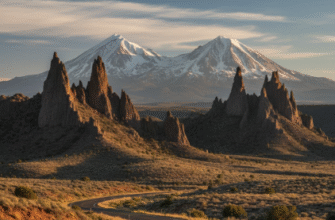
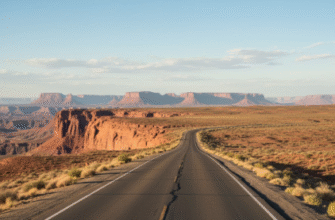
The road itself is paved but narrow, cutting through BLM land and the edges of the Manti-La Sal National Forest. You’ll see maybe three other cars if it’s a weekday. Cell service drops to nothing about twenty minutes outside Blanding. Hovenweep sits at roughly 5,200 feet elevation, high enough that summer afternoons feel like standing inside an oven while winter mornings can hit below freezing. The rangers at the visitor center—understaffed, always—will tell you the six-mile loop trail is “moderate,” but moderate means exposed scrambling over slickrock in full sun with maybe one shaded bench the entire route. Bring more water than you think you need. Seriously. People underestimate high-desert dehydration every single year, and the park has to recieve helicopters for heat exhaustion cases more often than anyone wants to admit.
Why This Matters Now (Or Why I Think It Does, Anyway)
There’s something uncomfortably relevant about visiting a place where climate change—granted, natural climate change, not the anthropogenic kind we’re currently speed-running—erased a culture. The Ancestral Pueblo weren’t primitive. They were skilled astronomers, engineers, farmers. They adapted for a thousand years. And then the environment shifted beyond their adaptation capacity, and they had to leave everything they’d built. Standing at the rim of Little Ruin Canyon, looking at Hovenweep Castle with its walls still standing after seven centuries, I felt this weird mix of admiration and grief. Admiration because holy hell, they built something that outlasted them. Grief because it wasn’t enough. The towers remain, but the people who knew why each stone was placed exactly there are gone. We’re left guessing, measuring, theorizing. Honestly, that might be the real trail of the ancients—not the road through southeastern Utah, but the gap between what we can see and what we can never fully understand about the people who came before us.