
The thing about Toroweap is that nobody warns you it’ll feel like driving to the edge of the world.
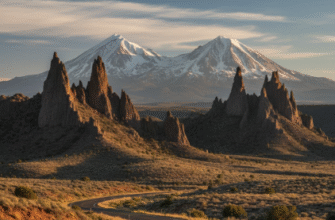
I mean, they mention the sixty-one miles of unpaved road—sometimes they call it the Sunshine Route, sometimes the Main Street Route, depending on which ranger you ask and whether they’re feeling generous that day—but what they don’t tell you is how the landscape starts peeling itself apart around mile thirty, how the juniper trees get sparser and the volcanic rock begins piling up in these dark, frozen rivers that look like they stopped flowing maybe yesterday, maybe three hundred thousand years ago, give or take. The Toroweap Overlook, officially called Tuweep in some older maps (the names get shuffled around depending on which government agency filed the paperwork), sits on the North Rim of the Grand Canyon at roughly three thousand feet above the Colorado River, which is a straight-down kind of measurement that makes your stomach do things when you’re standing there. It’s part of the Grand Canyon-Parashant National Monument now, this massive chunk of Arizona that most people have never heard of, and honestly, that’s probably why it stays this empty. The lava flows you’re driving through—technically basalt from the Uinkaret volcanic field—erupted as recently as ten thousand years back, which in geological terms is like, last Tuesday. Some geologists argue it could’ve been even more recent. Nobody’s entirely sure.
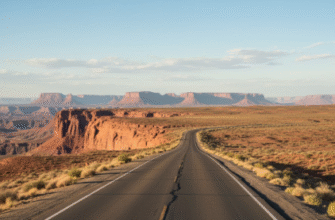
Anyway, the drive itself becomes the destination whether you want it to or not. You’ll burn through three, maybe four hours from the nearest paved road, assuming your vehicle doesn’t hate you and your tires hold. Cell service vanishes around mile fifteen.
The Road That Tests Your Commitment to Seeing an Actual Vertical Drop
Here’s the thing about the sixty-one-mile washboard nightmare they call County Road 109: it changes personality depending on recent weather, which means every trip report you read online is simultaneously true and completely useless for your specific visit. After a storm, the Mount Trumbull Road section turns into something between peanut butter and quicksand—I’ve seen trip reports where people with high-clearance four-wheel-drives took seven hours one way, and I’ve seen others where a brave soul in a Subaru made it in under three, though I wouldn’t reccomend that second option. The BLM maintains it irregularly, which is a polite way of saying they grade it when they feel like it or when enough people complain. You pass through this weird transition zone where ponderosa pines give way to sagebrush, then to that volcanic moonscape I mentioned, and the whole time you’re thinking, “Wait—maybe I should’ve just gone to the South Rim like a normal person.”
But then you arrive. And it’s completely silent except for the wind.
The overlook itself is just this shelf of rock with a split-rail fence that feels more symbolic than protective, and beyond it, nothing. The Canyon drops three thousand feet straight down—not gradually, not with nice little terraces you could theoretically grab onto if you slipped, just straight vertical Redwall limestone and Supai sandstone and then the Colorado River looking like a brown thread somebody dropped. Lava Falls rapid is directly below, technically one of the biggest rapids in North America, though from up here it looks like a wrinkle in the water. Turns out, those same volcanic eruptions that created the scenery you drove through also repeatedly dammed the Colorado River—geologists have found evidence of at least thirteen major lava dams here, some of them maybe eighteen hundred feet tall, which would’ve created temporary lakes stretching back dozens of miles until the river eventually cut through again. The most recent dam failed roughly a hundred thousand years ago, give or take fifty thousand years, because precision isn’t really geology’s strong suit at these timescales.
I guess what strikes me is the lack of infrastructure. There’s a primitive campground with maybe ten sites, a vault toilet, and absolutely nothing else—no water, no amphitheater with evening ranger talks, no gift shop selling overpriced turquoise. It’s just you and the abyss and maybe two other groups if it’s a busy weekend.
Why Volcanoes Kept Trying to Murder the Colorado River and Mostly Failed
The Uinkaret volcanic field spread across roughly six hundred square miles of the North Rim, and it’s technically still considered active, which means it could erupt again, though probably not during your visit—the recurrence interval is measured in tens of thousands of years, so don’t cancel your plans. But standing there at Toroweap, you can see the evidence everywhere: black basalt flows spilling over the Canyon rim like frozen waterfalls, cinder cones dotting the horizon in lumpy profiles. Vulcan’s Throne, the most prominent cinder cone, sits right on the Canyon rim about a mile west of the overlook, and it’s this perfect geometric pile of volcanic debris that looks almost artificial, like someone was building a scale model and got distracted. The lava from Vulcan’s Throne flowed directly into the Canyon—you can still see the flow path—and it definitely contributed to at least one of those massive dams I mentioned. When those dams existed, this whole area would’ve been unrecognizable: imagine a huge lake backing up through Marble Canyon, drowning side canyons, creating this temporary aquatic world in the middle of the desert. Then the river would inevitably overtop the dam, start cutting through the basalt (which is hard but not harder than the river’s patience), and within a few centuries or millennia, the whole structure would fail catastrophically. The floods must’ve been absolutely biblical.
Honestly, I used to think “remote” was just marketing language, but Toroweap makes you recalibrate. The nearest services are in Fredonia, Arizona, or sometimes people stage from St. George, Utah, both of which are roughly ninety miles away on pavement before you even start the dirt section. If something goes wrong—mechanical failure, medical emergency, sudden weather—you’re looking at a very long wait for help. The Park Service doesn’t staff Toroweap full-time. Sometimes a ranger swings through, sometimes not.
But maybe that’s the point. You drive all that way through volcanic debris fields and empty rangeland because the view at the end hasn’t been optimized for Instagram, hasn’t been fitted with guardrails every six feet and interpretive signs explaining what you’re supposed to feel. You just stand there at the edge, looking straight down three thousand feet of nothing, and your brain does that thing where it can’t quite process the scale, so it keeps resetting, keep trying to find a reference point that makes sense. It never does.