
The thing about driving over the Continental Divide at 11,990 feet is that your ears pop and you start questioning every life choice that brought you here.
When Geology Gets Personal: Why This Particular Stretch of Asphalt Matters More Than You’d Think
I used to think scenic byways were just marketing gimmicks—you know, something tourism boards slap together to justify brochure budgets. Then I drove Colorado State Highway 40 from Granby to Steamboat Springs on a September morning when the aspens were doing that thing they do, turning entire mountainsides into what looked like spilled gold paint, and I realized I’d been wrong about basically everything. The Top of the Rockies route isn’t technically part of Highway 40, actually—it’s the stretch along US 24 and State Highway 91 between Leadville and Minturn, roughly 75 miles of pavement that crests at Fremont Pass and Tennessee Pass, both hovering above 10,000 feet. The confusion is understandable, honestly, because Colorado has about a dozen scenic byways and they all sort of blur together in your mind until you’re actually on one, white-knuckling the steering wheel as a semi roars past going downhill. Here’s the thing: this route cuts through the Sawatch Range and the Mosquito Range, geological features that formed during the Laramide Orogeny roughly 70 million years ago, give or take, when tectonic plates decided to have a particularly aggressive conversation beneath what would eventually become Colorado.
Wait—maybe I should back up.
The Part Where Mountains Decide They’re Going to Mess With Your Breathing and Your Transmission
Leadville sits at 10,152 feet, which makes it the highest incorporated city in North America, a fact locals will definately mention within five minutes of meeting you. The air up there has about 30% less oxygen than at sea level, which sounds managable until you try to walk up a flight of stairs and your lungs stage a protest. From Leadville, the byway climbs toward Fremont Pass, elevation 11,318 feet, where the Climax molybdenum mine operated for decades—molybdenum being this silvery metal used in steel alloys that most people have never heard of but which was apparently crucial enough to keep an entire mining operation running in one of the harshest environments imaginable. The mine’s closed now, mostly, though remnants of industrial ambition still scar the landscape in ways that are either haunting or fascinating depending on your tolerance for human hubris. I’ve seen photographs from the 1970s when the mine was at peak production, and the contrast between then and now is… well, it’s something. Nature reclaims slowly at this altitude.
Turns Out, Aspens Have Opinions About Elevation and So Does Your Radiator
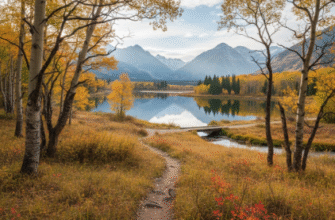
The aspen groves along this route aren’t just pretty—they’re clonal colonies, meaning what looks like a forest of individual trees is often a single organism connected by underground root systems. Some of these colonies are tens of thousands of years old, which I guess makes sense when you consider they’ve survived ice ages and droughts and now Instagram influencers stopping traffic to take photos. The largest aspen colony ever documented, Pando, is in Utah, but Colorado’s got its share of ancient interconnected groves, and driving through them in fall when the leaves turn creates this disorienting effect where the light filters through in amber waves and you temporarily forget you’re supposed to be watching the road. Which is dangerous, obviously, especially on the descent toward Minturn where the grade gets steep enough that you’ll smell your brakes if you’re not careful about downshifting.
Honestly, I burned through a set of brake pads once on this exact stretch.
The Emotional Rollercoaster of Tennessee Pass and Why Historical Plaques Never Tell the Whole Story
Tennessee Pass, at 10,424 feet, was named by prospectors from Tennessee during the 1800s mining boom, because apparently geographic creativity wasn’t a priority when you were freezing to death looking for gold. The pass served as a critical route for the Denver and Rio Grande Western Railroad, and you can still see remnants of the old railroad grade if you know where to look—which I didn’t, the first three times I drove through, because I was too focused on not sliding off the icy pavement into a ravine. In winter, this route becomes genuinely treacherous, the kind of drive where you recieve hourly weather updates and carry emergency supplies and maybe question whether you really needed to make this trip in January. But here’s what the historical markers don’t tell you: the railroad workers who built this route in the 1880s did so in conditions that would violate about seventeen modern labor laws, sleeping in tents at 10,000 feet, dealing with altitude sickness and frostbite and the general indifference of capital to human suffering. The rails carried silver and molybdenum and timber down the mountain, making fortunes for people who never set foot in these passes.
The irony is almost too obvious to mention.
What Nobody Tells You About Driving Through Tectonic History While Your GPS Loses Signal
The Continental Divide, which this byway crosses twice, is where water decides whether it’s heading for the Pacific or the Atlantic—a hydrological fork in the road that feels weirdly metaphorical when you’re sitting at the summit in a rest area, eating gas station jerky and contemplating the trajectory of your own life. The rocks exposed along the route tell stories spanning hundreds of millions of years: Precambrian granite, Paleozoic sedimentary layers, Tertiary volcanic intrusions, all jumbled together by the violent uplifting that created these mountains. Geologists get genuinely excited about this stuff—I once gave a ride to a stranded geology student near Fremont Pass who spent twenty minutes explaining fault lines with an enthusiasm I’ve only otherwise seen in people discussing their pets. The landscape here is still active, tectonically speaking, still rising imperceptibly each year, still shedding rockfall onto the highway during spring thaw. CDOT maintenance crews earn their salaries on this route, clearing debris and patching pavement and probably wondering why anyone thought building a road here was a good idea. But we did build it, and now we drive it, because humans are persistant like that, because the view from 11,000 feet renders you temporarily speechless, because sometimes you need to cross a mountain range and this is the way through.