I’ve driven through the Texas Hill Country maybe a dozen times, and honestly, I still can’t figure out if the appeal is the wine or the fact that you can float in a spring that’s been bubbling up from limestone aquifers for—what, thousands of years? Give or take.
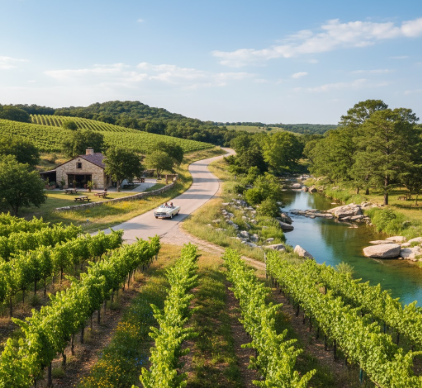
The thing about this region is that it doesn’t announce itself the way Napa does, with manicured rows and tasting rooms that look like modernist art installations. Instead, you’re winding through ranchland on FM roads, passing roadside peach stands and suddenly there’s a sign for a vineyard tucked behind a grove of live oaks. The wineries here—Becker Vineyards, Pedernales Cellars, places like that—they’re scrappy in a way that feels refreshing, like they’re still figuring things out even after twenty-some years of making Tempranillo and Viognier in soil that shouldn’t, by all accounts, support European grape varietals. But turns out limestone and heat can produce something interesting when you stop trying to replicate Bordeaux and just work with what you have. The tasting rooms smell like oak barrels and dust, and the people pouring your wine are usually the ones who pruned the vines that morning. I used to think that was charming; now I think it’s just efficient.
Wait—maybe I should mention the springs first, because that’s probably why most people actually make the drive.
The Springs That Make You Reconsider Your Relationship With Cold Water
Jacob’s Well in Wimberley stays at 68 degrees year-round, which sounds pleasant until you’re standing on the edge in July heat and realize that’s actually shockingly cold. It’s one of those springs that drops down into an underground cave system—divers have mapped it to roughly 140 feet deep, though I’ve read conflicting accounts—and the water is so clear you can see the limestone bottom and the schools of perch that don’t seem bothered by the humans shrieking above them. Krause Springs, over near Spicewood, has this ramshackle, almost hippie-commune vibe with multiple pools cascading down a hillside, and trees strung with swings where teenagers launch themselves into water that’s cold enough to make your chest tighten. Here’s the thing: these springs aren’t maintained by some parks department with a big budget; they’re family-owned, slightly chaotic, and you’re sharing the water with people who drove two hours to float for an afternoon and forget about whatever’s happening in Austin or San Antonio.
The Wine Country That Nobody Expected to Exist Here in the First Place
Texas isn’t supposed to have wine country, at least not according to anyone who studied viticulture in Europe. The climate’s too extreme—freezes in winter, brutal heat in summer—and the soil is all wrong. Except it isn’t, apparently. The Hill Country AVA, established in the early ’90s, now has over 50 wineries, and they’re producing wines that occasionally surprise people at blind tastings, which seems to both delight and irritate the winemakers in equal measure. I talked to a guy at Flat Creek Estate once who said they’d had a late frost that killed half their crop, and he just shrugged like it was part of the deal. The reds here tend to be bold, tannic, unapologetic—GSM blends, Tempranillo, even some Sangiovese that I definately didn’t expect to work but somehow does in that high-acid, food-friendly way.
Anyway, the route most people take loops from Fredericksburg down through Johnson City, maybe swinging by Dripping Springs if you’re ambitious. You taste wine in the afternoon, jump in a spring when you can’t take the heat anymore, eat barbecue that’s been smoking since dawn, and try not to think too hard about the physics of why 68-degree water feels colder than 68-degree air.
The Strange Geology That Makes This Whole Thing Possible and Also Slightly Precarious
The Edwards Plateau—that’s the geological formation underlying all of this—is basically a massive limestone shelf riddled with caves, sinkholes, and underground rivers. The springs you’re swimming in? They’re discharge points for the Edwards Aquifer, which supplies drinking water to millions of people and also happens to be one of the most vulnerable aquifer systems in the country because limestone is porous as hell. So every time you’re floating in Barton Springs or Hamilton Pool, you’re essentially bobbing around in San Antonio’s future tap water, which is either poetic or mildly disturbing depending on your perspective. The same limestone that filters the water and keeps it crystal-clear is what gives the soil its mineral content, which the grapevines apparently love even though they struggle with the lack of topsoil. Everything here is connected in this weirdly fragile way—the wine, the water, the tourism economy, the ranchers who are trying to decide whether to sell their land to developers or hold out for another generation.
I guess what I’m saying is this road trip isn’t really about ticking off wineries or Instagram-perfect swimming holes. It’s about driving through a landscape that’s still negotiating what it wants to be, where the wine tastes like the place it came from because there’s no other option, and the water is so cold it resets something in your nervous system you didn’t know needed resetting. The Hill Country doesn’t try to be anything other than what it is, which is maybe why people keep coming back.