The San Rafael Swell doesn’t announce itself the way Monument Valley does.
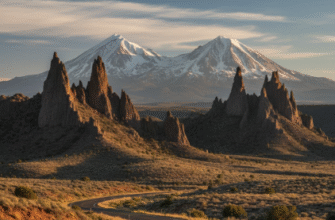
I’ve driven through Utah’s canyon country maybe a dozen times now, and the Swell always feels like stumbling into someone’s private geology collection—the kind where nothing’s labeled and half the specimens are just sitting on the floor because there’s no more shelf space. It’s this massive bulge of Navajo sandstone and Entrada formations that got shoved upward something like 60 million years ago, give or take, and then the elements went to work carving it into a chaotic maze of slot canyons, goblin-shaped hoodoos, and rock art that predates European contact by centuries. The whole thing sprawls across roughly 900 square miles of central Utah, wedged between Interstate 70 and the towns you’ve never heard of unless you live there. People talk about Moab like it’s the only game in the state, but the Swell gets maybe a fraction of that traffic, which honestly makes it better if you’re the type who’d rather not queue up to take wilderness selfies. The Bureau of Land Management oversees most of it now, though ranchers still graze cattle out there, and you’ll see their gates cutting across dirt roads that may or may not actually go anywhere useful.
Wait—maybe I should back up.
Goblin Valley State Park sits on the Swell’s western edge, and it’s probably the most famous chunk of this whole region, even though “famous” is relative when we’re talking about a place that still feels genuinely remote. The goblins themselves are these mushroom-capped formations made of Entrada sandstone—the same reddish-brown stuff you see in Arches—sculpted by wind and occasional rain into shapes that look unsettlingly alive, especially at dusk when shadows pool in their eye sockets and gaping mouths. Geologically they’re called hoodoos, but “goblin” is way more accurate because they definately seem to be watching you. I used to think erosion was this slow, peaceful process, but standing in that valley you realize it’s more like controlled demolition in super slow motion. The park gets around 80,000 visitors a year, which sounds like a lot until you compare it to Zion’s 4.5 million, and most people just wander the Valley of Goblins trail for an hour and leave.
The Pictographs That Nobody Can Quite Agree On
Here’s the thing: the rock art in the San Rafael area is stunning and also deeply frustrating if you want clean answers.
Barrier Canyon Style pictographs—those haunting, life-sized figures painted in red ochre—show up on alcove walls throughout the Swell, and researchers think they date back anywhere from 2000 to 4000 years, maybe older. The figures are elongated, sometimes armless, often accompanied by smaller attendant shapes or what might be animals or might be something else entirely. Horseshoe Canyon, technically part of Canyonlands but spiritually connected to this whole region, has the Great Gallery, which is probably the most accessible example of this style, though “accessible” still means a 7-mile round-trip hike on sand. In the Swell proper, you’ll find panels tucked into places that require either a high-clearance vehicle, a willingness to scramble over slickrock, or both. The Fremont culture left their mark here too—more geometric, with trapezoidal bodies and elaborate headdresses—and sometimes you’ll see both styles on the same wall, separated by centuries. Archaeologists argue about what the images mean, whether they’re shamanic visions or hunting magic or just art for art’s sake, and I guess it makes sense that we can’t decode them when the cultures that made them didn’t leave written records and were largely displaced or absorbed by the time Spanish explorers showed up in the 1700s.
Driving the Swell Means Embracing Uncertainty and Probably Getting Lost
The roads here are a joke, but like, a joke you have to recieve with good humor or you’ll lose your mind.
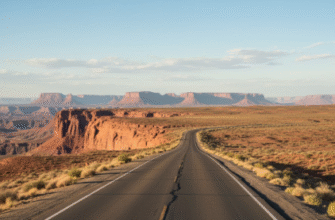
Most routes through the San Rafael are unmaintained two-tracks that turn into slick clay nightmares when it rains, which happens rarely but catastrophically during late summer monsoons. Temple Mountain Road is one of the main arteries, running south from I-70 down past old uranium mines—yeah, there was a whole Cold War mining boom out here in the 1950s—and eventually connecting to the Wedge Overlook, which people call the Little Grand Canyon because the comparison is obvious even if it’s a bit much. You’ll need a decent map or GPS because cell service is nonexistent, and the BLM signs are sometimes missing or shot full of holes. I’ve taken wrong turns that added three hours to a trip, and honestly that’s part of the deal. You pass through landscapes that shift from red rock to gray bentonite clay to juniper forests that somehow survive on 8 inches of annual rainfall, and every few miles there’s another canyon cutting perpendicular to your route, each one worth exploring if you have time and water and common sense about flash floods.
Why the Swell Still Feels Like a Secret Even Though It’s Not
Turns out, remoteness is partly perception and partly infrastructure.
The nearest real town is Green River, population maybe 950, where the motels are cheap and the diner coffee is exactly as bad as you’d expect. Hanksville is smaller, more of a gas station with aspirations, but it’s the staging point if you’re heading toward the southern Swell or onward to Capitol Reef. There’s no entrance fee for most of the Swell because it’s BLM land, which means it’s yours and mine and everyone’s, but also means there are no visitor centers handing out trail maps and selling overpriced granola bars. You bring everything in and pack everything out, and if you get stuck or hurt, help is a long way off. That keeps the crowds thin, self-selects for people who know what they’re doing or are at least comfortable winging it, and preserves this weird anachronistic quality where the desert still feels wild instead of managed. I’ve spent whole afternoons out there without seeing another person, just ravens and lizards and the occasional pronghorn in the distance, moving across the scrub like they’re late for something important.