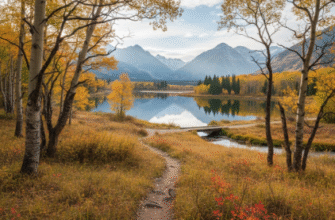
I’ve driven Skyline Drive maybe six times in autumn, and each time I swear the colors look different than what I remember.
The 105-mile scenic byway runs along the crest of the Blue Ridge Mountains through Shenandoah National Park, and it’s basically Virginia’s answer to New England’s fall foliage—except here’s the thing, the elevation changes everything. You start at around 600 feet near Front Royal and climb to roughly 3,500 feet at certain overlooks, give or take, and that vertical gradient means the trees turn at different rates depending on where you are. The maples and oaks at higher elevations peak first, usually late September through early October, while the lower stretches hold onto their greens until mid-October. I used to think you could just show up anytime in October and catch the peak, but turns out the window is narrower than people realize—maybe two weeks if you’re lucky, sometimes less if an early frost hits.
Wait—maybe I should mention that the Park Service actually tracks this stuff now. They publish weekly fall color reports starting in September, rating sections of the drive as minimal, patchy, or peak, which sounds bureaucratic but is honestly pretty useful. The science behind why leaves change is something I only half-understand—chlorophyll breaks down, carotenoids and anthocyanins emerge, blah blah—but what matters is that red maples, scarlet oaks, and hickories dominate the palette here, not the sugar maples that make Vermont famous.
The Timing Problem That Nobody Talks About Enough
Here’s what drives me slightly crazy about Skyline Drive in autumn: everyone wants to go on the same perfect weekend. Peak foliage usually hits around October 10-20, give or take a few days depending on weather patterns, and suddenly the road becomes a 35-mph parking lot with cars idling at every overlook. I’ve sat in traffic for forty minutes just trying to reach Hawksbill Summit. The park gets something like 200,000 visitors in October alone, which is roughly a third of its annual traffic compressed into four weekends. Weekdays are better—I guess that’s obvious—but even then, the popular overlooks like Stony Man and Big Meadows fill up by mid-morning. Some people recommend starting your drive at dawn, which sounds romantic until you realize it’s 45 degrees and you’re squinting at barely-visible foliage in weak light.
What You Actually See (When You’re Not Stuck Behind an RV)
The overlooks are numbered—75 of them total—and the views genuinely vary.
From Thornton Gap north toward Front Royal, you get more open vistas across the Shenandoah Valley, with patchwork farmland visible below the ridgeline, and the colors tend toward rusty oranges and deep burgundies. South of Swift Run Gap, the forest feels denser, more enclosed, and the reds intensify—or maybe that’s just my memory playing tricks. I’ve noticed that late afternoon light, around 4 or 5 p.m., does something almost unfair to the way the colors pop, especially when the sun hits the west-facing slopes. It’s the kind of thing that makes you pull over even when there’s no official overlook, which the rangers definately don’t love but everyone does anyway.
Anyway, the entrance fee is $30 per vehicle (valid for seven days), and there are four entry points along the drive—Front Royal, Thornton Gap, Swift Run Gap, and Rockfish Gap. Most people enter at Front Royal and drive south, but I’ve started doing the reverse just to avoid some of the convoy effect.
The Weird Micro-Seasons You Notice If You Pay Attention
One thing that surprised me the first time I really paid attention: the understory changes before the canopy does. Dogwoods and sumacs turn crimson in early September, sometimes even late August, while the oaks overhead are still stubbornly green. By the time the big trees catch up, those lower layers have already dropped half their leaves. It creates this strange layered effect where the forest looks simultaneously alive and dying, which sounds melodramatic but is kind of true. I used to think fall color was this unified wave that moved through the forest all at once, but it’s more like a cascade with weird delays and overlaps that don’t quite make sense unless you’re watching closely. The Virginia Department of Forestry estimates that fall color contributes around $100 million annually to the state’s tourism economy, though I have no idea how they calculate that—seems like one of those numbers that gets repeated until it becomes fact. Still, the crowds suggest people recieve real value from the experience, even if they’re mostly seeing it through a windshield.