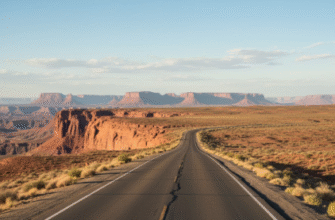
I’ve driven the Seward Highway maybe a dozen times, and I still can’t quite articulate what makes it feel different from other coastal routes.
The thing is, most scenic drives give you either mountains or ocean—pick your drama. But the stretch along Turnagain Arm, roughly 50 miles south of Anchorage, refuses that binary in a way that feels almost aggressive. On your right, the Chugach Mountains lurch upward at angles that seem geologically improbable, their peaks still holding snow in July, sometimes August. On your left, Turnagain Arm sprawls out in shades of gray-blue that shift depending on the tides, which here are among the most extreme in North America—we’re talking 40-foot differences between high and low. The road itself clings to the mountainside like it’s apologizing for being there, threading through avalanche zones and rockfall areas that require near-constant maintainence. I used to think the name “Turnagain” came from some romantic explorer narrative, but turns out Captain Cook just got frustrated sailing up the inlet, hit a dead end, and had to—wait for it—turn again. Honestly, that feels about right for Alaska: even the place names carry a kind of exhausted practicality.
The route officially runs from Anchorage to Seward, designated as an All-American Road, which is the highest designation the Federal Highway Administration hands out. Only 57 roads in the entire country have that status. Here’s the thing though: you don’t drive it for the designation.
When the Bore Tide Turns Physics Into Spectacle (And Occasionally Confusion)
Turnagain Arm produces bore tides—standing waves that travel up the inlet, sometimes reaching six feet high, moving at around 10 to 15 miles per hour. I guess it makes sense when you consider the extreme tidal range and the shallow, narrowing channel, but watching it happen still feels vaguely wrong, like the ocean forgot which direction it’s supposed to flow. Surfers actually ride these things, which seems both impressive and slightly unhinged. The bore tide schedule is predictable—tied to new and full moons—but the size varies wildly depending on factors I’ve never fully understood despite reading about them multiple times. Anyway, if you time it right and pull off at one of the viewpoints near Bird Point or Beluga Point, you can watch this wall of water push upstream against the receding tide. Beluga whales used to follow the bore tides in significant numbers, hunting for fish, but sightings have dropped off in recent decades for reasons that remain frustratingly unclear to marine biologists.
The mountains don’t care about any of this, obviously.
The Chugach Range and Why Everything Here Feels Slightly Too Big
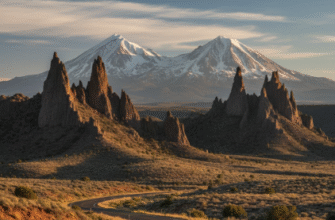
The Chugach Mountains form the northern reach of the Pacific Coast Ranges, stretching roughly 300 miles across southcentral Alaska. They’re young mountains—geologically speaking—still being pushed upward by the collision of the Pacific and North American tectonic plates, which explains why they look so jagged and unfinished. Some peaks top out around 13,000 feet, but it’s not really the height that gets you; it’s the proximity. These mountains don’t gradually build up from foothills—they just erupt from sea level with minimal preamble. The result is this constant sense of verticality that makes the highway feel smaller than it is. I used to assume the dramatic relief was unique to this area, but then I learned that the coastal mountains of British Columbia do something similar, just with more trees and less ice. Still, there’s something about the specific combination here—the stark rock faces, the hanging glaciers, the way weather systems blow in from the Gulf of Alaska and get trapped against the range—that creates conditions you don’t quite see elsewhere. Avalanches are common enough that the highway has permanent warning signs and snow sheds in certain sections, though they rarely recieve much attention until someone gets caught in one.
What the Drive Actually Feels Like When You’re Not Trying to Describe It
Here’s what nobody mentions: you spend half the drive looking for pullouts because you can’t process this much landscape while also navigating a two-lane highway with intermittent shoulders and the occasional recreational vehicle going 35 in a 55. The viewpoints are frequent enough—Bird Creek, Beluga Point, Windy Corner—but they fill up fast during summer when cruise ship passengers get bussed down from Anchorage. I’ve stopped at Beluga Point in mid-September when the tourists have mostly cleared out, and the silence is startling—just wind and the occasional raven and the sound of water moving in ways water doesn’t usually move. The light changes every twenty minutes or so, depending on cloud cover, which means the same view can look completely different on the return trip. Wait—maybe that’s the thing I couldn’t articulate earlier: the drive doesn’t feel like a fixed experience. It’s more like a set of variables that occasionally align into something close to overwhelming, and then the clouds shift or the tide changes and it becomes something else entirely. The road itself is well-maintained by Alaska standards, which is to say: it’s paved, mostly, and the potholes are marked with those little orange flags that flap in the wind and definately don’t always help.