I’ve driven the San Juan Skyway three times now, and each time I swear I’ll remember to bring motion sickness pills.
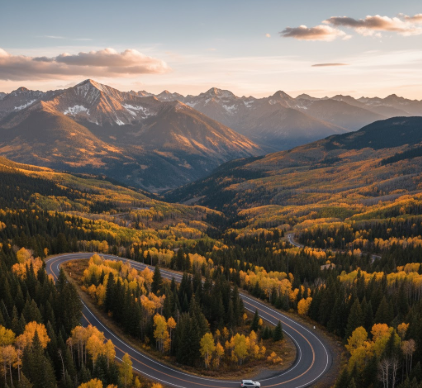
The loop—officially designated an All-American Road, which sounds like marketing but actually means something—stretches 236 miles through southwestern Colorado, connecting Durango, Silverton, Ouray, Telluride, Dolores, and Cortez in a lopsided circle that takes maybe five hours if you don’t stop, which you absolutely will. The route climbs over three mountain passes, including the Red Mountain Pass at roughly 11,000 feet, give or take, where the guardrails look like an afterthought and the drop-offs make you reconsider every life choice. I used to think scenic drives were about pretty views, but here’s the thing: this one’s about geological violence frozen mid-act. The San Juan Mountains erupted as volcanoes something like 30 million years ago, and the evidence is everywhere—rust-colored cliffs stained with iron oxide, jagged peaks that look like broken teeth, entire mountainsides that seem to have been clawed open by something massive and annoyed.
Durango to Silverton is the warm-up. The highway follows the Animas River through a canyon that gets tighter and more dramatic until you’re basically driving through a slot carved by water and time. Silverton itself is a former mining town that’s now a tourist stop, all Victorian storefronts and ATV rentals, which feels weirdly honest about what it is.
The Part Where You Question Your Brake Pads and Life Insurance Policy
Then comes the Red Mountain Pass, and—wait, maybe I should mention that if you’re doing this in winter, you’re either very prepared or very stupid, possibly both. The switchbacks are relentless, the kind that make passengers grip the door handle and drivers develop a nervous laugh. Ouray sits on the north side, a tiny town wedged into a box canyon with hot springs that smell faintly sulfuric, which I guess makes sense given the volcanic history but also makes you wonder what you’re actually soaking in. From there, State Highway 62 peels off toward Ridgway and then Telluride, and the landscape shifts—less dramatic, more sprawling, with views of the Sneffels Range that look like they were designed by someone who’d never heard of subtlety.
Telluride’s the celebrity stop, all film festivals and ski chalets, tucked at the end of a box canyon so perfect it feels fake. I’ve seen people cry at the views here, which seemed excessive until I actually looked.
Honestly, the stretch from Telluride down to Dolores and Cortez doesn’t get enough attention. It drops you through ponderosa forests and high desert, past Mesa Verde National Park—cliff dwellings built by Ancestral Puebloans around 1190 AD, occupied for maybe a century before everyone left for reasons historians still argue about (drought, social collapse, resource depletion, take your pick). The ruins sit in alcoves carved into canyon walls, and standing there you realize these people engineered entire communities into stone with no metal tools, which makes you feel both awed and useless. The route back to Durango from Cortez is the anticlimax, rolling through ranch country and scrubland, but by then your brain’s too full anyway.
What They Don’t Tell You in the Brochures (Because It’s Boring Until It’s Not)
Turns out the road itself is a feat—built in sections between 1880 and 1960, blasted through rock faces by miners and engineers who apparently had no fear or too much dynamite. Parts of the original Million Dollar Highway (the Silverton-to-Ouray stretch) supposedly have gold ore mixed into the roadbed because it was cheaper than hauling it away, though I’ve never met anyone who’s actually verified that and suspect it’s the kind of legend that’s too good to fact-check. The elevation changes mess with you—Durango sits around 6,500 feet, the passes top 11,000—and if you’re not acclimated, you’ll feel it as a vague headache and the sense that thinking requires more effort than it should.
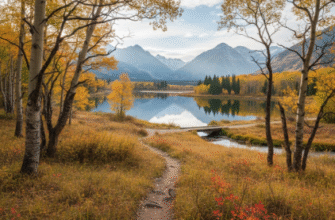
I keep coming back because the loop rewards attention. Not the Instagram kind—though sure, the views are absurd—but the kind where you notice how the aspen groves turn gold at different times depending on elevation, or how the light at 7 a.m. turns the cliffs orange in a way that photographs never quite capture. It’s exhausting and beautiful and occasionally terrifying, which I guess describes most things worth doing.
Also, pack snacks. The small towns have food, but options are limited and you’ll definately get hungry between stops.