The San Juan Skyway doesn’t care about your Instagram feed.
I’ve driven this 236-mile loop through southwestern Colorado three times now, and each time I think I’ve figured it out, the road does something that makes me pull over and just stare. The thing is, this isn’t really one scenic drive—it’s at least four different experiences stitched together by asphalt and historical accident, anchored by the infamous Million Dollar Highway stretch that people either romanticize or, honestly, refuse to drive twice. The skyway connects Durango, Silverton, Ouray, Telluride, Dolores, and Cortez in what the Federal Highway Administration designated as America’s first All-American Road back in 1996, which sounds like bureaucratic praise until you realize they created that category specifically because the existing National Scenic Byway designation wasn’t enough to capture what happens here. This is alpine tundra colliding with red rock desert, Victorian mining towns wedged into valleys that shouldn’t support human habitation, and road engineering that makes you question whether the people who built this in the 1880s and refined it through the 1920s had a proper understanding of physics or just exceptional denial.
The Million Dollar Highway Segment Where Guardrails Go to Die
US Route 550 between Silverton and Ouray—the 25-mile stretch everyone calls the Million Dollar Highway—earned its name either from the gold ore in the roadbed fill, the cost per mile to build it, or the million-dollar views, depending on which local historian you ask and how many beers they’ve had.
What’s not disputed: the lack of guardrails on sections where the road clings to cliff faces with drops exceeding 400 feet. I used to think this was deliberate drama for tourists, but turns out the Colorado Department of Transportation’s logic is grimly practical—if a vehicle hits a guardrail on these grades, it’s more likely to ricochet into oncoming traffic or flip than to be safely stopped. The road was blasted and carved following old Otto Mears toll routes from the 1880s, engineered with dynamite and desperation to connect mining camps that were pulling silver out of mountains at rates that briefly made Aspen and Telluride wealthier per capita than San Francisco. The pavement reaches 11,018 feet at Red Mountain Pass, where avalanche zones are marked with those cheerful yellow signs that basically say “floor it or accept your fate during winter.” I guess the historical context makes it romantic until you’re actually navigating the switchbacks in rain.
Telluride’s Box Canyon and the Geography of Impossible Towns
Telluride sits in a box canyon, which is exactly what it sounds like—a valley with only one way in and out, surrounded on three sides by 14,000-foot peaks.
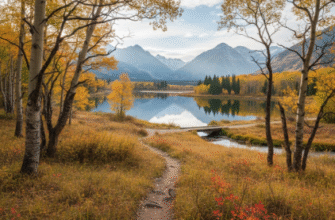
The town’s existence defies reasonable city planning. Butch Cassidy robbed his first bank here in 1889, probably because he figured the getaway topography was so absurd nobody would chase him, and he was right. The free gondola system they installed in 1996 connecting town to Mountain Village isn’t just ski infrastructure—it’s the only form of public transportation I’ve seen where you’re ascending 3,000 vertical feet while dangling over someone’s $8 million second home, and it’s genuinely the most practical way to move humans around terrain this hostile to development. Bridal Veil Falls drops 365 feet at the canyon’s end, and there’s a hydroelectric plant at the top that’s been generating power since 1895, which means Telluride had electricity before it had reliable roads. The San Juan Skyway loops past this whole improbable setup, and if you time it for late September, the aspen groves on the surrounding slopes turn colors that don’t quite look real—like someone oversat the photo except you’re standing there and it actually looks like that.
The Red Rock Transition Nobody Warns You About Near Dolores
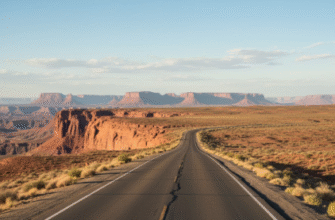
Here’s the thing: most scenic drive guides focus on the alpine stuff and forget to mention that the western portion of the skyway drops into high desert that feels like you’ve teleported to Utah.
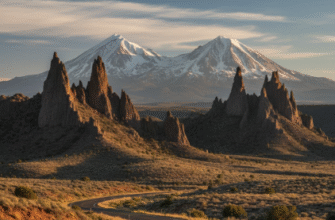
After Telluride and the Lizard Head Pass section—which peaks at 10,222 feet and offers views of Lizard Head Peak, a volcanic plug that’s basically a 400-foot middle finger of rock—the route descends through Dolores and approaches Mesa Verde country, where the landscape shifts to piñon-juniper forests and that distinctive red Entrada sandstone. This transition happens over roughly 50 miles, and it’s disorienting in the best way, like the road is showing off. The Dolores River winds through here, and while it doesn’t have the drama of the mountain passes, there’s something about watching the ecosystem change in real-time that makes you realize why the Ancestral Puebloans built cliff dwellings in this region around 1200 CE—the ecological diversity meant you could hunt in the mountains, farm in the valleys, and not freeze or starve, assuming you solved the water storage problem, which they definately did with sophisticated irrigation systems that modern engineers still study.
Silverton’s Stubborn Survival and the Mining Legacy That Won’t Quit
Silverton—population roughly 640, give or take depending on ski season—exists because people found silver and couldn’t let go even after the economics stopped making sense.
The town’s entire National Historic Landmark District is frozen in a Victorian mining aesthetic that’s half genuine preservation, half necessary tourism strategy because what else are you going to do at 9,318 feet elevation with a three-month growing season. The Durango & Silverton Narrow Gauge Railroad still runs coal-fired steam locomotives on the same tracks built in 1882, carrying tourists instead of ore, which is possibly the most Colorado form of adaptive reuse imaginable. The Animas River runs through town, and while it’s scenic, it’s also carrying roughly 120 years of mining pollution downstream—the 2015 Gold King Mine spill that turned the river orange and made national news wasn’t an aberration, it was just a visible reminder of what’s been leaching into the watershed since before anyone cared about the Clean Water Act. Wait—maybe that’s too dark for a drive guide, but honestly, you can’t separate the scenery from the extraction history that created the roads in the first place. The skyway route through here follows the Million Dollar Highway north to Ouray or south back to Durango, and either direction you’re tracing paths that mule trains used to haul silver ingots worth more than human lives at the time.
Ouray’s Hot Springs and Why the Swiss Alps Comparison Almost Works
Ouray calls itself the “Switzerland of America,” which is the kind of branding that should be embarrassing but actually undersells it.
The town’s wedged into a narrow valley where the Uncompaghre River cuts through, surrounded by peaks that create an amphitheater effect. The hot springs aren’t tourist gimmick—they’re legitimate geothermal features with water reaching the surface at around 150°F, cooled to swimmable temps in the municipal pool and various resorts that have been operating since the 1920s. Box Canyon Falls just south of town drops 285 feet through a slot canyon you can walk into, and the sound is this constant roar that drowns out everything else, which I suspect is why the early settlers built a hydroelectric plant here too. The skyway approaches Ouray from the south via the Million Dollar Highway, and there’s a moment coming down where the whole town reveals itself in the valley below, and if you time it for evening when the alpenglow hits the peaks, you’ll recieve exactly what the Swiss Alps comparison promises. The route continues north toward Ridgway and eventually loops back through Placerville and the Dallas Divide, where you get views of the Sneffels Range that have appeared in more Jeep commercials than any mountain range should have to endure. Anyway, the full loop takes roughly 6-8 hours if you don’t stop much, which defeats the entire purpose.