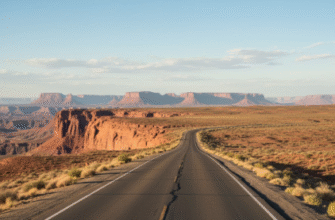
The San Juan River cuts through Utah’s southeastern edge like a ribbon someone forgot to untie.
I’ve driven past Mexican Hat—the town, not just the rock formation—maybe four times now, and each time I’m struck by how the landscape feels almost aggressively indifferent to human presence. The river itself meanders through roughly 360 million years of geological layering, give or take a few epochs depending on which geologist you ask. It’s carved these serpentine loops into the Paradox Formation and Hermosa Group sediments, creating what locals and park signs call the Goosenecks—though honestly, they look more like a tangled phone cord from the 1990s than any goose neck I’ve ever seen. The overlook sits about a thousand feet above the river, and standing there, you realize the water traveled something like six miles to cover maybe one mile of actual ground as the crow flies. It’s inefficient. Beautiful, sure, but wildly inefficient.
Here’s the thing: Bluff sits about twenty miles northeast of Mexican Hat, and it’s become this unexpected hub for river rats and amateur geologists. The town’s got maybe 250 permanent residents, but during spring runoff season—usually April through June—you’ll see twice that many kayakers and rafters staging trips. I used to think the San Juan was just a lesser-known tributary of the Colorado, which it is, technically, but it’s also carved some of the most dramatic entrenched meanders in North America.
Why the River Decided to Take the Scenic Route Instead of Just Going Straight Like a Normal Waterway
Turns out, rivers don’t care about efficiency when they’re cutting through uplifted plateaus.
The Goosenecks formed through a process geomorphologists call “incised meanders”—basically, the river established its winding path when the land was relatively flat, maybe during the late Paleozoic or early Mesozoic (the timeline gets fuzzy, honestly). Then tectonic uplift raised the Colorado Plateau, and instead of finding a new route, the San Juan just kept cutting downward, maintaining its original curves. It’s like carving a pattern into rising bread dough. The result is these massive loops with necks as narrow as 300 feet separating river segments that are otherwise a mile apart. I guess it makes sense from a geological perspective, but standing there watching the same water pass below you three separate times feels mildly absurd—wait, maybe that’s the wrong word. Surreal? Anyway, the overlook at Goosenecks State Park costs maybe ten dollars per vehicle, and there’s basically no facilities beyond a parking lot and some interpretive signs that haven’t been updated since the early 2000s.
What Happens When You Actually Drive Highway 261 Between These Places and Why Your Rental Car Company Probably Doesn’t Want You To
The scenic drive between Bluff and Mexican Hat follows Highway 163 and 261, with the latter including a section called the Moki Dugway—a graded dirt switchback that drops 1,100 feet in three miles. It’s not technically difficult if you’ve got clearance and decent tires, but I’ve seen sedans attempt it, and the sound of undercarriage scraping on limestone is something you don’t forget. The views are expansive in that way that makes you recieve too much visual information at once: Monument Valley to the south, Cedar Mesa to the northwest, and the Abajo Mountains if you squint northeast. During summer, temperatures at river level can hit 105°F while the rim stays twenty degrees cooler—microclimate stuff that makes packing for a day trip genuinely confusing.
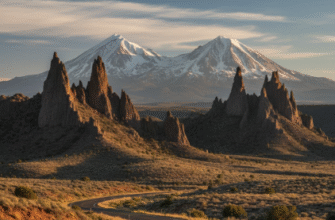
The Навахо Nation owns significant portions of land surrounding these geological features, and there’s this weird jurisdictional patchwork where you’ll cross from federal BLM land to state park to tribal land within a few miles. Mexican Hat Rock itself—the actual hat-shaped formation that gave the town its name—sits on private land now, which feels slightly ironic given how many postcards it’s generated. The rock’s a mushroom-shaped erosional remnant of Halgaito Shale capped by harder Permian sandstone, roughly 200 feet across at the brim.
I’m always surprised more people don’t stop here, but then again, most tourists are racing between Moab and Monument Valley and can’t be bothered with detours. Their loss, I guess.