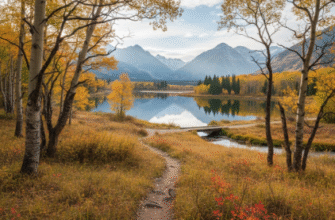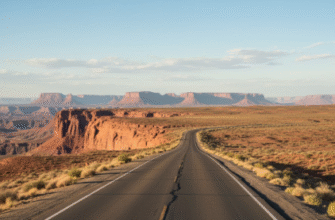

The highway north from Stanley dissolves into something quieter around mile marker 37, where the pavement still holds but the shoulders start crumbling into lupine and arrowleaf balsamroot.
I’ve driven this stretch—Highway 75 through the Sawtooth Valley—maybe a dozen times, and I still can’t quite articulate why it feels different from other mountain corridors I’ve covered. It’s not the tallest range in Idaho; that distinction belongs to the Lost River Range about forty miles east. The Sawtooths top out around 10,000 feet, give or take, with Thompson Peak at 10,751 being the punctuation mark. But here’s the thing: elevation doesn’t always correlate with the kind of geological theater you get when glaciers spent roughly 15,000 years carving granite into serrations. The last Pinedale glaciation—which peaked around 18,000 years ago, though dates get fuzzy depending on which moraine you’re carbon-dating—left behind cirques so clean they look almost intentional. I used to think glacial valleys were just U-shaped troughs, but the Sawtooths have this weird habit of stacking them vertically, so you get lakes at different elevations feeding into each other like some kind of alpine Rube Goldberg machine.
Redfish Lake sits at 6,547 feet, named for the sockeye salmon that used to turn its shallows crimson every summer. Wait—maybe “used to” is too definative, because they’re still there, just barely. We’re talking about a population that crashed from around 35,000 fish in the 1950s to single digits by 1990.
When a Lake Becomes a Waiting Room for Extinction Events
The Snake River sockeye—Oncorhynchus nerka, if you want to get technical—swim 900 miles from the Pacific, threading through eight dams, to reach this single lake. It’s the longest inland salmon migration in North America, and also maybe the most Sisyphean. In 2019, I think it was, exactly one wild adult made it back. One. The National Marine Fisheries Service has been running a captive breeding program out of the Sawtooth Fish Hatchery since 1991, releasing juveniles every spring, and the numbers are inching up—maybe 250 adults returned in 2022—but it’s the kind of conservation that feels like holding back a river with your hands. Honestly, standing at the Redfish Lake overlook in late August, watching the spawn that might or might not include wild genetics, you start wondering if we’re preserving a species or just a memory of one.
The Sawtooth Scenic Byway doesn’t advertise its geology in the way, say, the Grand Canyon does. There’s no visitor center drilling you on batholith formation.
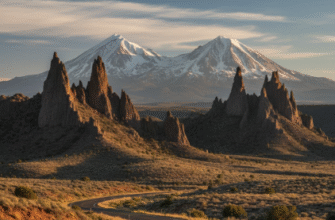
But the rock here tells a story that’s about 50 to 80 million years old, depending on which pluton you’re looking at—mostly granodiorite from the Idaho Batholith, which is this massive blob of magma that cooled underground during the Late Cretaceous and then got exhumed by erosion. The peaks you see now are essentially the roots of ancient volcanoes that never erupted, just sat there cooling slowly enough to form those big interlocking crystals that make granite so annoyingly durable. Anyway, what makes the Sawtooths visually distinct is that the rock fractures along nearly vertical joints, so weathering creates these knife-edge arêtes instead of the rounded domes you get in, say, Yosemite. I guess it makes sense: different cooling rates, different fracture patterns, different mountains.
The Part Where the Valley Floor Turns Into a Sediment Diary Nobody Asked For
The valley floor itself is a mess of glacial till and outwash—gravelly stuff dumped by meltwater streams during deglaciation. If you dig down near the Salmon River, you hit layers of volcanic ash from eruptions as far away as Yellowstone, maybe 600,000 years old, though I’ve seen papers arguing for different dates depending on which ashfall we’re talking about. The soil’s thin, barely a foot in most places before you hit bedrock or cobbles, which is why the vegetation trends toward lodgepole pine and Douglas fir instead of the thick forests you get in wetter ranges. There’s a weird ecological tension here: the trees want more water than the glacial sediments can hold, but the snowpack—still averaging maybe 150-200 inches annually in the high basins—keeps everything just hydrated enough to avoid full desertification. I used to think alpine ecosystems were stable, but spend enough time watching whitebark pine die off from blister rust and you realize stability is just a word we use when change happens slower than our attention span.
The drive itself takes maybe an hour if you don’t stop, two if you do. Most people pull over at the overlooks, take photos that never quite capture the scale, then leave. Turns out, mountains don’t compress well into phone screens.