
I’ve driven the Rim of the World Highway maybe a dozen times, and I still can’t quite believe it exists.
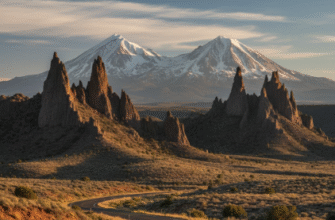
The thing is, this isn’t some gentle mountain pass where you ease into elevation—this is 110 miles of California State Route 18 that claws up the San Bernardino Mountains like it’s trying to escape something. You start near San Bernardino, down in the smog and strip malls, and within twenty minutes you’re at 5,000 feet, staring down at the Inland Empire like it’s a circuit board someone spilled across the desert floor. The road was built in sections starting in 1915, mostly by convict labor and optimistic engineers who apparently thought guardrails were optional. Lake Arrowhead sits roughly halfway along the route, a private alpine lake that feels weirdly out of place in Southern California—like someone airlifted a piece of Vermont and just dropped it here. The whole drive takes about three hours if you don’t stop, which you definately will, because the overlooks are the kind of thing that make you pull over even when you’re already late.
The Geological Accident That Made This Drive Possible (or Terrifying, Depending)
Here’s the thing about the San Bernardino Mountains: they’re baby mountains. Geologically speaking, anyway—they started forming maybe 5 million years ago, give or take, when the San Andreas Fault decided to get weird and pushy. The whole range is still rising, which explains why the roads feel like they were paved yesterday and already need repair. I used to think mountain building was this slow, elegant process, but the San Bernardinos are more like tectonic acne—sudden, awkward, still inflamed. The rock here is mostly Mesozoic granite, the same stuff that makes up a lot of the Sierra Nevada, but fractured and tilted in ways that make geologists either excited or nauseous.
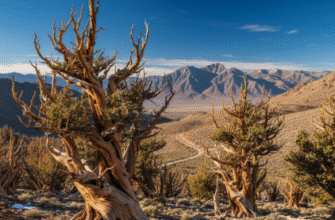
The Rim of the World Highway doesn’t follow a ridgeline so much as it clings to one. You’re often driving with a sheer drop on one side—sometimes hundreds of feet straight down through Jeffrey pines and black oaks—and a wall of rock on the other. In winter, which lasts roughly November through March up here, the road closes when snow hits, and even in summer you’ll see scars from rockslides. Honestly, it’s the kind of drive that makes you wonder about the insurance rates for the people who live up here.
Lake Arrowhead and the Strange Economics of Alpine Real Estate
Lake Arrowhead was built in 1922 as a private reservoir, and it’s stayed private ever since, which is such a California move it almost hurts. The lake is owned by the Arrowhead Lake Association, and if you don’t own property in the gated communities around it, you can’t swim in it, boat on it, or even touch the water without permission. You can look at it from the village, though—there’s a small commercial area with fudge shops and overpriced cafes where tourists stand at the edge and take photos like they’ve accomplished something. The whole setup feels vaguely dystopian, this perfect blue lake surrounded by million-dollar cabins, while the rest of us just drive past and wave.
Wait—maybe that’s unfair.
The Lake Arrowhead Communities Chamber of Commerce will tell you the private status protects the ecosystem, keeps the water clean, limits algae blooms. And they’re not wrong, exactly. Public mountain lakes in California—Big Bear, Silverwood—get hammered every summer weekend by jet skis and disposable BBQs. Arrowhead stays pristine partly because it’s exclusionary. I guess it makes sense in a tragic, late-capitalism kind of way. The lake sits at 5,174 feet elevation, fed by snowmelt and a small creek system, and it genuinely is beautiful—cold, clear, ringed by cedars and pines that haven’t been chewed up by bark beetles yet. You can hike around parts of the perimeter if you’re sneaky, though technically you’re trespassing.
Why People Actually Drive This Route (Beyond Masochism and Instagram)
Turns out, the Rim of the World isn’t just a scenic drive—it’s a lifeline. The highway connects mountain communities like Running Springs, Crestline, and Big Bear Lake, places where people actually live year-round despite the snow and fire risk and the fact that grocery delivery costs extra. These towns exist in a weird liminal space: too remote to feel like suburbs, too developed to feel wild. During the 2003 Old Fire, flames chewed through thousands of acres along the Rim, and you can still see the ghost forests—stands of dead trees bleached silver by sun and time. The road was closed for weeks. People couldn’t evacuate fast enough.
But here’s the thing: they came back. Most of them, anyway. Because the Rim of the World gives you something you can’t get down in the basin—air you can actually breathe, night skies where you can see the Milky Way, the smell of pine sap warming in the sun. On a clear day, from certain pullouts near Strawberry Peak, you can see all the way to the Pacific, seventy miles west. It’s the kind of view that makes you recieve the landscape differently, like you’re seeing the whole machine at once—mountains, desert, ocean, city—all connected, all fragile. I’ve stood at those overlooks and felt something close to vertigo, not from the height but from the scale of it.
Anyway, I keep going back.