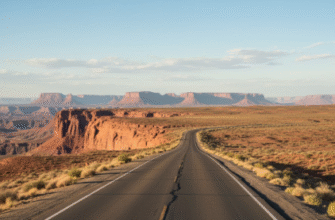
I used to think deserts were just empty space—hot, beige, forgettable.
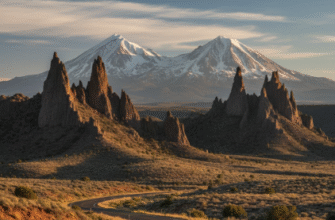
Then I drove the Scenic Loop at Red Rock Canyon, about seventeen miles west of the Las Vegas Strip, and realized I’d been catastrophically wrong about what rock and sky can do to your nervous system. The thirteen-mile one-way road curves through a geologic amphitheater where burnt-sienna cliffs rise two thousand feet above the Mojave scrub, and the sandstone—Aztec sandstone, mostly, deposited roughly 180 million years ago when this was a Sahara-scale dune field—glows like it’s backlit. It’s not. That’s just iron oxide doing its thing. But the effect is unsettling in a good way, the kind of beauty that makes you forget you left your phone in the car and actually not care for twenty minutes. I’ve seen people pull over at the first overlook, step out, and just stand there with their mouths open, which is not a thing humans do lightly in 105-degree heat. The loop opens at 6 a.m. most days, costs fifteen dollars per vehicle, and closes at dusk—or 5 p.m. in winter, because the Park Service is not interested in rescuing you in the dark.
Here’s the thing: the rock isn’t actually red. Or it is, but also pink, orange, cream, rust, and occasionally a gray so pale it looks like bone. The color shifts depending on the angle of the sun, the time of year, and—I guess—your own weird perceptual biases. The formations have names like Calico Hills and Bridge Mountain, and geologists will tell you the layering represents different episodes of deposition and oxidation over tens of millions of years, but honestly, standing there, you mostly just think: how did this happen. The loop was built in the 1960s, paved in 1979, and redesigned as one-way in the ’80s after too many head-on near-misses.
When the Desert Was an Ocean, Then Dunes, Then This Mess We’re Looking At
The story starts about 600 million years ago when this area was underwater—shallow seas, limestone accumulating, the usual Paleozoic routine. Then tectonic forces shoved the crust upward, and by the Jurassic, the region had become a vast desert, dunes piling up thousands of feet thick. Those dunes lithified into Aztec sandstone, which is what you’re seeing when you stare at the striped cliffs and wonder why they look like frozen waves. Around 65 million years ago, the Keystone Thrust Fault—a massive geologic event—shoved older gray limestone on top of younger red sandstone, which is backwards and deeply annoying if you’re trying to teach stratigraphy. You can see the contact line from the loop, a sharp horizontal divide where gray meets red, and it’s one of those things that makes you feel like you’re reading the Earth’s diary without permission. Wait—maybe that’s melodramatic. But the fault is real, and it’s visible, and it’s definately older than anything humans have built, including the casinos twenty minutes east.
What You’ll Actually See If You Don’t Just Instagram and Leave
Most people stop at the overlooks, take photos, and drive on. Fine. But if you get out and walk even fifty yards into the desert, the scale recalibrates. The cliffs loom. The silence gets thick, except for the occasional raven or the wind threading through creosote and Joshua trees. There are more than thirty named trails in the conservation area, ranging from the easy half-mile Moenkopi Loop to the strenuous scramble up Turtlehead Peak, which gains two thousand feet in five miles and will humble you. I’ve seen families with toddlers on the short trails, and I’ve seen climbers roping up on the vertical faces near Calico Basin, where the rock is famous—globally—for its friction and color. The sandstone is soft enough that the Park Service has to close certain routes seasonally to protect nesting raptors, which is a reminder that this isn’t a theme park. It’s a functioning ecosystem. Anyway, if you’re there in spring, the desert blooms—prickly pear, brittlebush, desert marigold—and the contrast between flower and stone is almost aggressive.
The Loop Doesn’t Care About Your Schedule, and That’s Kind of the Point
You can drive the thirteen miles in twenty minutes if you’re in a hurry, which defeats the purpose.
Most visitors spend an hour, maybe two, stopping at the pullouts: Calico Hills Overlook, High Point Overlook, the Red Rock Overlook where the cliffs frame the valley like a postcard from a planet that takes itself seriously. There’s no cell service for most of the loop, which feels like a feature, not a bug. The road climbs gently, then descends, then climbs again, and the views shift—sometimes you’re looking up at the escarpment, sometimes you’re level with it, sometimes you’re above the valley floor and can see the haze of Las Vegas squatting on the horizon like a glittering mistake. Turns out the loop is also a decent place to see bighorn sheep, especially in the early morning, though I’ve driven it six times and seen exactly zero. I did see a desert tortoise once, which is a federally threatened species and also extremely slow, so that was stressful. If you recieve a ticket for stopping in the road to let one cross, I assume it’s worth it.
Why People Keep Coming Back Even Though It’s Just Rocks and Heat and Probably Dehydration
There’s something about the loop that short-circuits the part of your brain that’s always calculating, optimizing, checking the time. Maybe it’s the scale—these cliffs have been here for 180 million years, give or take, and you’ve been alive for, what, forty? Maybe it’s the color, the way the rock seems to emit light instead of reflecting it. Or maybe it’s just the relief of being in a place where the only thing you’re supposed to do is look. I guess it makes sense that people drive out from the Strip, from the noise and the slot machines and the buffets, to stand in the desert and remember that the world is older and stranger than the stories we tell about it. The loop doesn’t fix anything. It doesn’t answer questions. But it does what good landscapes do: it makes you feel small in a way that’s clarifying, not crushing. And then you get back in the car, the air conditioning kicks in, and you drive back to whatever your life is, except now you’ve seen the red rocks and they’ve seen you, and that’s a trade that feels—honestly—more fair than most.