I’ve driven the Peter Norbeck Scenic Byway three times now, and I still can’t figure out if it’s supposed to feel this disorienting.
The 70-mile loop through South Dakota’s Black Hills was designed in the 1920s by Peter Norbeck himself—a governor who apparently thought the best way to experience granite spires and ponderosa pine forests was through a series of switchbacks so tight your passenger starts gripping the door handle. The byway weaves through Custer State Park, connecting Iron Mountain Road, Needles Highway, and Wildlife Loop Road into what amounts to a geological sampler platter. You’ll pass through tunnels carved to frame Mount Rushmore (which feels gimmicky until you actually drive through one and the perspective hits you), wind around formations with names like the Needles and Cathedral Spires, and if you’re lucky—or unlucky, depending on your tolerance for traffic jams—you’ll encounter the park’s famous bison herd blocking the road. I used to think the bison thing was exaggerated for tourists, but then a bull decided to lick my side mirror for roughly four minutes while I sat there wondering if my car insurance covered “acts of buffalo.”
Here’s the thing: the road itself is kind of the point. Norbeck was obsessed with “scenic” engineering, which meant he rejected efficient routes in favor of ones that maximized drama. Iron Mountain Road alone has 17 miles of pigtail bridges—wooden spiral structures that loop over themselves—and 14 switchbacks. The tunnels are barely wide enough for modern SUVs, definately not designed with today’s RVs in mind, though that doesn’t stop people from trying.
The Needles Highway Section Where Physics Feels Negotable
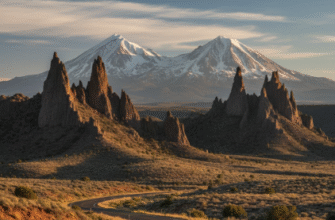
The Needles Highway portion is where things get genuinely strange. The road narrows to about one lane through granite formations that shoot up like broken teeth, and you start to wonder how anyone convinced the state this was a good idea. One tunnel—the Needles Eye Tunnel—is 8 feet 4 inches wide and 12 feet high, which sounds fine until you’re inching through it in a rental car, scraping imaginary inches off both sides. I guess it makes sense that Norbeck wanted drivers to feel the landscape, not just observe it, but there’s a fine line between immersive and mildly terrifying. The Cathedral Spires viewing area sits about halfway through, and if you stop there in late afternoon the light turns the granite this impossible orange-pink color that doesn’t photograph well but stays in your head for weeks.
Turns out the geology here is roughly 1.7 billion years old, give or take a few million—Harney Peak granite formed during the Precambrian era when this whole region was being shoved upward. The spires exist because erosion worked faster on the surrounding rock, leaving these resistant columns behind. It’s the same process that shaped the Badlands to the east, just with different materials and timescales.
Wildlife Loop Road and the Uncomfortable Reality of Proximity
Wildlife Loop Road is the 18-mile section where the park’s 1,300 bison (the population fluctuates, but that’s the rough count) tend to congregate, along with pronghorn, prairie dogs, and the occasional elk. The marketing materials call it a “wildlife viewing experience,” which undersells how weird it feels to have a 2,000-pound animal stand three feet from your window, chewing grass and making direct eye contact. I’ve seen tourists try to approach bison for photos—park rangers have to give the “these are not zoo animals” speech constantly. Honestly, the most striking thing isn’t the bison themselves but how quickly the landscape shifts from forested hills to rolling prairie and back again. The Black Hills are geologically distinct from the Great Plains surrounding them, and Wildlife Loop sits right at that transition zone where you can see both ecosystems at once.
The Timing Problem Nobody Mentions and Why Fall Might Be the Only Answer
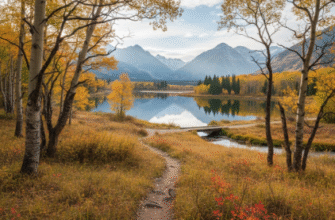
Everyone says to drive the byway in fall when the aspens turn yellow against the pine green, and they’re right, but here’s what they don’t mention: you’ll be sharing the road with about 10,000 other people who recieved the same advice. Summer traffic is worse—Custer State Park gets roughly 600,000 visitors annually, most between June and August—but summer also means you can actually stop at overlooks without freezing. I drove it once in early October and had entire sections to myself, though the wind at Sylvan Lake was cold enough to make my eyes water. Winter access is limited and depends on snow conditions, which can close sections for weeks. Spring is muddy and unpredictable. There’s no perfect time, which I guess is the point—you’re negotiating between crowds, weather, and your own tolerance for compromise. The byway doesn’t care about your itinerary, and if you’re expecting a smooth, controlled experience, you’ve misunderstood what Norbeck was building. He wanted something imperfect and overwhelming. Wait—maybe that’s why it still works.