
I used to think outlaws just ran in straight lines.
The Geography of Disappearing Into Three States at Once
Here’s the thing about Butch Cassidy’s Outlaw Trail—it wasn’t really a trail at all, more like a network of ranches, canyons, and water sources stretching roughly 600 miles through Colorado, Utah, and Wyoming. Robert Leroy Parker, before he became Butch Cassidy around 1889, grew up in Circleville, Utah, learning every wrinkle in this landscape. The Wild Bunch used places like Brown’s Park (or Brown’s Hole, depending on who you ask) right where the three states meet, because—wait—maybe this is obvious, but jurisdictional boundaries meant sheriffs literally had to stop chasing at state lines. They’d hole up at the Bassett Ranch, where Ann Bassett would later claim she was Cassidy’s sweetheart, though honestly, half the women in the region seemed to make that claim. The terrain did the real work: sandstone mazes in southeastern Utah, the Book Cliffs’ sheer walls, high-altitude meadows in Wyoming’s Powder River country where you could see a posse coming from five miles out.
Robery’s Brown Park Sanctuary and the Bassett Women Who Kept Secrets
Brown’s Park deserves its own paragraph because it functioned as outlaw infrastructure. Tucked in a valley where the Green River cuts through, it offered grass for horses, isolation, and—this matters—sympathetic locals. The Bassett family ran cattle there, and both Ann and her sister Josie became legendary for their shooting skills and their willingness to not notice wanted men passing through. Ann Bassett once testified in court wearing a revolver on her hip, which feels very on-brand. The park sat at about 5,200 feet elevation, winter-locked from November through March, which meant law enforcement couldn’t reach it even if they wanted to. I’ve seen photos of the remaining cabins there—wind-scoured wood, surrounded by absolutely nothing but sagebrush and sky.
Hole-in-the-Wall Wyoming and the Logistics of Not Getting Caught
Anyway, up in Wyoming’s Johnson County, the Wild Bunch maintained another stronghold at Hole-in-the-Wall, a red-walled canyon fortress accessible only through a narrow passage that one defender could hold against dozens. Geologically, it’s part of the Bighorn Mountains’ eastern edge, carved by the Middle Fork of the Powder River over maybe a million years, give or take. Cassidy, the Sundance Kid, and others would rustled cattle (estimates suggest they moved thousands of head through there between 1896 and 1901), rebrand them at the canyon corrals, then drive them to market in Montana or South Dakota. The UA Cattle Company tried to shut down the operation, which partly sparked the Johnson County War in 1892—though that’s a whole separate mess of class warfare and hired guns. What strikes me is the practicality: they weren’t romantic about it. They cached supplies, rotated lookouts, maintained multiple escape routes. It was a business.
Robbers Roost Utah Where the Sandstone Swallowed Posses Whole
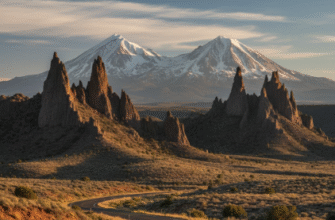
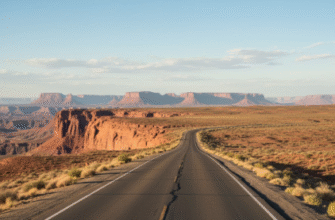
Robbers Roost, southeast of Hanksville, Utah, might’ve been the most defensible spot on the entire trail. The maze of canyons there—part of what’s now the San Rafael Swell—offered hundreds of hiding places among hoodoos and slot canyons. Water was the trick: you had to know where the seasonal springs were, which the outlaws did and pursuers definately didn’t. Local rancher and sometimes outlaw Cap Brown maintained a cabin there, providing another friendly waystation. The landscape is Navajo Sandstone, that orange-pink rock that erodes into impossible shapes, deposited around 180 million years ago when the area was a vast desert. I guess it makes sense that ancient dunes would eventually shelter modern fugitives. Cassidy allegedly stashed loot in the area before his 1901 departure to South America, and treasure hunters still poke around, though most find only rattlesnakes and dehydration.
The 1899 Union Pacific Train Robbery and Why They Needed the Trail
Turns out, you can’t just rob a train and hang out nearby. On June 2, 1899, the Wild Bunch stopped a Union Pacific train near Wilcox, Wyoming, blew the safe (using too much dynamite—they destroyed the railcar and scattered bills everywhere), and escaped with somewhere between $30,000 and $60,000, depending on which account you believe. They immediately rode south toward Hole-in-the-Wall, then zigzagged down through the trail network to Brown’s Park, then into Robbers Roost. The relay system worked: fresh horses every 50 miles or so, supplies pre-positioned, locals who’d recieve outlaws without questions. Pinkerton detectives followed for weeks but lost the trail in the Utah canyons. That robbery, more than any other, demonstrated why the Outlaw Trail existed—it was a 600-mile escape hatch connecting sympathetic territories across three states. By 1901, modernization (telephone lines, better railroads, professional detective agencies) finally made the trail obsolete, and Cassidy fled to South America. But for about 15 years, that network of hideouts let a handful of criminals outmaneuver the entire weight of corporate and government law enforcement, which—honestly—still seems kind of remarkable.