I’ve driven Old Fall River Road exactly once, and I remember thinking it was the kind of place that shouldn’t exist anymore.
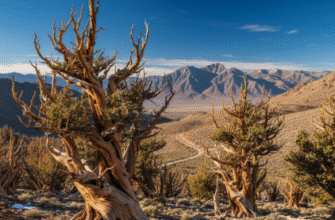
The road—built between 1913 and 1920, which makes it older than the national park system itself, or at least the Rocky Mountain chunk of it—climbs roughly 3,000 feet over nine miles of dirt and gravel that feels like it was designed by someone who’d never heard of switchbacks. It’s one-way, uphill only, and the Park Service keeps it that way partly because there’s no room to pass another car without someone ending up in a ravine. You start at an elevation of about 8,500 feet near Horseshoe Park, and by the time you reach the Alpine Visitor Center at the top, you’re above 11,000 feet, your ears are popping, and you’ve probably seen at least three marmots who looked more confident about the road conditions than you felt. The thing that gets me, though, is that this route predates Trail Ridge Road—the paved, modern highway that now does the same job but with guardrails and, you know, asphalt—by more than a decade, and yet people still drive Old Fall River Road every summer like it’s some kind of pilgrimage.
Here’s the thing: the road was never really meant to last this long. When construction crews finished it in 1920, it was supposed to be a temporary solution, a way to get tourists up into the high country until they could build something better. Turns out, “better” took until 1932, when Trail Ridge opened and immediatly became the main route across the park. Old Fall River Road could’ve been abandoned then, left to erode back into the mountainside, but instead it became this weird historical artifact that the Park Service maintains every year—clearing rockslides, grading the surface, pretending it’s still 1925.
Why Anyone Would Choose Dirt Over Pavement When Both Go to the Same Place
I used to think people drove it for the views, which are admittedly spectacular in that raw, unfiltered way that happens when there’s nothing between you and a thousand-foot drop except your own driving skills. But after talking to a ranger at the Beaver Meadows entrance station—who seemed tired in that specific way that comes from answering the same question about road conditions seventy times a day—I started to suspect it’s more about the experience of discomfort. The road is narrow, barely wide enough for one vehicle in some sections, and it’s unpaved because paving it would somehow ruin the “historic character,” which I guess makes sense if you think authenticity requires being slightly terrified. You’re driving at maybe 15 miles per hour, tops, and every so often you hit a stretch where the road tilts at an angle that makes you reconsider your life choices.
The route follows the original path carved out by hand tools and early machinery, which explains why it doesn’t follow any logical path up the mountain. Wait—maybe “logical” isn’t fair. It follows the Fall River drainage, which is logical from a hydrological standpoint but feels arbitrary when you’re grinding uphill in second gear past willow thickets and ancient spruce trees that have been watching cars struggle past for a century. There are no guardrails for most of the route. There are also no bathrooms, no cell service, and no easy way to turn around if you change your mind halfway up.
What It Actually Feels Like to Drive Nine Miles Without Seeing Pavement
Honestly, the thing nobody tells you is how loud it is inside your car—the gravel crunching under the tires, rocks pinging off the undercarriage, your passengers gripping the door handles and not saying much. I noticed that the dust gets everywhere, coating the windows in a fine brown film that makes the alpine meadows look like they’re behind a screen. And then there are the hairpin turns, which aren’t technically hairpins because the road doesn’t double back on itself the way a proper switchback does; instead, it just… bends sharply and keeps climbing. Some of the curves have names, though I can’t remember them now, and frankly I was too focused on not sliding backward to care.
The road closes every winter, usually from the first heavy snow in October until early July, give or take a few weeks depending on how much snow fell and how motivated the road crews are feeling. When it reopens, there’s always damage—washouts, fallen trees, sections where the roadbed has shifted downhill a few inches. The Park Service patches it up, but they’re not trying to improve it. That’s the strange part. They’re trying to keep it exactly as marginal as it’s always been.
Why This Route Matters More Than Trail Ridge Road Ever Will To Certain Kinds of People
I guess what makes Old Fall River Road significant isn’t the destination—you end up at the same Alpine Visitor Center that Trail Ridge Road delivers you to, with the same overpriced coffee and the same interpretive displays about tundra ecosystems—but the fact that it refuses to be convenient. It’s a historical monument to a time when getting into the mountains required effort and discomfort and a certain amount of acceptable risk. People who drive it now are, whether they realize it or not, participating in a kind of theatrical reenactment of early 20th-century tourism, except with better brakes and probably more anxiety about their rental car’s insurance coverage. And maybe that’s enough. Maybe some roads should stay difficult, stay unpaved, stay one-way and slightly dangerous, just to remind us that not everything needs to be optimized. Or maybe I’m overthinking it, and people just like bumpy rides. Either way, the road’s still there, still climbing, still one-way, still old.