I’ve driven through a lot of rural America, but there’s something about Vermont’s Northeast Kingdom that feels like you’ve slipped through a crack in time.
The thing is, this isn’t the Vermont of glossy travel magazines—no Ben & Jerry’s factory tours or tourist-packed fall foliage routes here. The Northeast Kingdom sprawls across roughly 2,000 square miles of the state’s northeastern corner, encompassing Caledonia, Essex, and Orleans counties, and it got its name in 1949 when Senator George Aiken called it “the Northeast Kingdom of Vermont” during a speech. Most people have never heard of it. The roads twist through working dairy farms where you’ll see more cows than humans, past weathered barns that lean at angles that shouldn’t be structurally possible but somehow are, and through towns with populations that barely crack three digits. I used to think rural meant simple, but driving these routes taught me it just means the complexity is quieter, harder to spot from the highway.
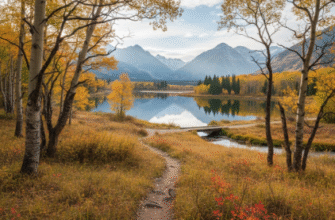
Wait—maybe I should back up. Route 5A between West Burke and Newport is where I’d start, because it follows the shoreline of Lake Willoughby, this glacially-carved lake that drops to depths of around 300 feet and looks like it belongs in the Swiss Alps, not northern Vermont. The cliffs rise nearly vertically on both sides. Honestly, the first time I drove it, I had to pull over three times just to stare.
When The Roads Start Speaking A Different Language of Isolation
Here’s the thing about isolation: it changes how places evolve. The Northeast Kingdom has one of the lowest population densities in New England—Essex County averages something like 3 people per square mile, give or take—and that emptiness seeps into everything. In Island Pond, a town of maybe 800 people, I stopped at a general store where the owner knew everyone who walked in, their kids’ names, what they’d bought last week. It felt intrusive and comforting simultaneously, which I guess is small-town life distilled to its essence. The architecture tells similar stories: farmhouses from the 1800s still occupied, their additions and repairs creating these Frankenstein structures that document generations of making do with what you have.
Turns out, this region was settled later than the rest of Vermont—most towns weren’t established until the early 1800s—because the terrain was too difficult, the growing season too short. That historical reluctance still shows.
Drive through Peacham on a September morning when the maples are just starting to turn, and you’ll pass the Peacham Corner Guild, a white clapboard building that’s served variously as a store, post office, and community center since 1843. The roads around here aren’t maintained for speed; they’re narrow, potholed affairs that force you to slow down, to notice the stone walls running through forests where farms used to be, reclaimed by trees over the past century or so. I’ve seen deer, moose, black bears, and once—I’m not making this up—a lynx crossing Route 114 near Norton. The wildlife here operates on the assumption that humans are visitors, not residents, and they’re not entirely wrong about that assumption.
What The Countryside Actually Looks Like When You Stop Romanticizing It For Five Minutes
Let me be clear: rural poverty is real here. Shuttered factories, homes with blue tarps for roofing, trucks held together by rust and hope. Orleans County has median household incomes well below the national average—somewhere around $45,000 annually, though those numbers fluctuate. This isn’t a museum of quaint rural life; it’s a place where economic forces have been unkind for decades, where young people leave because there aren’t jobs, where the population is aging faster than almost anywhere else in the state.
But there’s also—I don’t know how to say this without sounding like I’m contradicting myself—a kind of defiant vitality. In Craftsbury, I watched a farmer’s market where vendors sold vegetables, goat cheese, and hand-forged ironwork to a crowd that included back-to-the-landers, multi-generational Vermonters, and summer people from Boston. The conversations overlapped in this messy, democratic way that felt distinctly un-curated.
Anyway, Route 5 along the Connecticut River takes you through a different kind of landscape entirely: flatter, more agricultural, with views across to New Hampshire’s White Mountains when the weather cooperates. St. Johnsbury, the Kingdom’s largest town with around 7,500 people, has the Fairbanks Museum—this Victorian-era natural history collection that includes something like 4,500 stuffed animals and a planetarium in a building that looks like it was designed by someone who’d read too much Jules Verne. I spent two hours there on a Tuesday afternoon, practically alone except for a school group and a docent who explained the weather station’s instruments with the enthusiasm of someone who definately believes this matters, and you know what? By the end, I believed it too.
The roads here don’t lead anywhere in particular, which I guess is the point. They just keep going, past farms and forests and lakes, through a landscape that refuses to perform for visitors but rewards anyone patient enough to stop performing themselves.