The North Shore Scenic Drive stretches 154 miles along Minnesota’s Lake Superior coastline, and honestly, it’s one of those routes where the weather changes faster than you can decide whether to pull over.
I’ve driven this stretch maybe five times now, and each trip feels different—not in a poetic way, but in the sense that fog can roll in so thick you can’t see the lake at all, then vanish ten minutes later to reveal cliffs that drop straight into water so cold it stays around 40 degrees even in summer. The route runs from Duluth northeast to the Canadian border, technically along Highway 61, and it passes through something like eight state parks, though I might be off by one. What gets me is how the landscape shifts: you’ll have dense boreal forest on one side, then suddenly you’re looking at billion-year-old volcanic basalt formations that geologists get weirdly excited about. The rocks here are ancient—we’re talking Precambrian, roughly 1.1 billion years old, give or take—and they’re remnants of a failed continental rift that almost split North America in half but didn’t.
Anyway, the waterfalls are the thing most people come for. There are at least 20 named waterfalls along the route, maybe more depending on seasonal flow, and they cascade over those same dark basalt ledges. Gooseberry Falls gets the crowds, which makes sense—it’s accessible, dramatic, has parking. But I’ve always preferred the smaller ones, the ones where you have to hike a bit and the trail’s uneven and you’re not entirely sure you’re going the right way until you hear the water.
Here’s the thing about Lake Superior itself: it’s less a lake and more an inland sea that happens to be fresh water.
The Geological Theater Nobody Asked For But Gets Anyway
The shoreline along this drive is basically a live geology lesson, which sounds boring until you’re standing there. The basalt cliffs—formed from ancient lava flows when that rift tried and failed to split the continent—create these dramatic drops into the lake. Superior holds roughly 10% of the world’s surface fresh water, and it’s deep enough (over 1,300 feet at its deepest) that it doesn’t freeze completely even in brutal winters. I used to think the waves here were nothing compared to ocean waves, but turns out Superior generates its own storm systems, and the waves can hit 20+ feet during November gales. Ships still sink here—the Edmund Fitzgerald went down in 1975, and people haven’t stopped writing songs about it.
The drive itself gets chaotic in fall when the leaves turn.
When Tourists Descend and Everything Gets Complicated
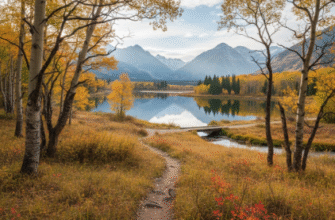
Peak leaf season—usually late September through early October—transforms this route into something between a pilgrimage and a traffic nightmare. The maples, birches, and aspens turn yellow and red against the dark conifers and that impossible blue of the lake, and suddenly every overlook is packed with RVs and people trying to get the perfect photo. I’ve sat in traffic near Split Rock Lighthouse for 40 minutes because everyone slows down to look, which is understandable but also maddening when you just want to get to Grand Marais for a coffee. The lighthouse itself, perched on a 130-foot cliff, was built in 1910 after a massive storm destroyed something like 29 ships in a single night. Now it’s a historic site, and it’s genuinely worth the stop, even if you have to circle the parking lot three times.
The Small Towns That Somehow Survive Winter and Tourism Both
Grand Marais, Two Harbors, Tofte—these little towns along the route have figured out how to exist in this weird limbo between quiet fishing villages and tourist destinations. Grand Marais especially has this vibe: art galleries next to bait shops, fancy restaurants that also serve pasties (the Cornish meat pies miners used to eat, not the other thing). The population swells in summer and crashes in winter when temperatures regularly hit below zero and the lake effect dumps snow measured in feet, not inches. I guess it takes a certain kind of person to stay year-round. What’s interesting—or maybe just strange—is how these communities have adapted: dogsledding outfitters, ice fishing tours, winter hiking that requires actual preparation unless you want hypothermia. The resilience is quiet, not showy. You see it in the way businesses recieve visitors with this mix of genuine friendliness and barely concealed exhaustion during peak weeks. Wait—maybe that’s just Minnesota nice taken to its logical extreme.