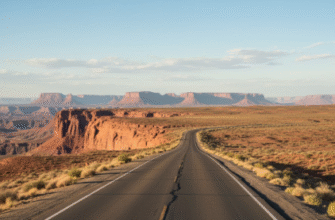
I’ve driven the North Cascades Highway maybe four times now, and each time I think I’ve figured out what makes it so strangely compelling—then the road curves again and I realize I haven’t.
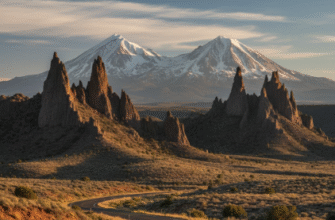
The thing about State Route 20 is that it doesn’t behave like other scenic drives. Most alpine highways give you their best views right away, like they’re desperate for your approval. The North Cascades Highway does something different. It starts in the lowlands near Sedro-Woolley, winding through Douglas fir forests that feel unremarkable, almost boring, and then—wait, maybe around milepost 82 or so—the landscape cracks open. Suddenly you’re threading between granite peaks that look like they’ve been sharpened with a file. The transition happens so abruptly that the first time I drove it, I actually pulled over to check if I’d somehow missed a turnoff. I hadn’t. The highway just does that.
Geologically speaking, the North Cascades are a mess. I mean that as a compliment. These mountains are a collision zone of terranes—chunks of oceanic crust and volcanic islands that slammed into North America over roughly 100 million years, give or take. The result is a rock jumble that includes everything from ancient seafloor to metamorphic schist that’s been cooked and squeezed until it barely resembles its original form.
The Highway That Closes Every Winter Because Mountains Don’t Care About Your Schedule
Here’s the thing about Route 20: it shuts down.
Every winter, usually sometime between November and April, the Washington State Department of Transportation closes the stretch between Ross Dam and the Early Winters area. Snow accumulations can reach 20 feet or more at Washington Pass, elevation 5,477 feet, and keeping the road clear would require a level of effort that borders on absurd. So they don’t bother. The highway goes dormant, buried under avalanche debris and snowpack, and the mountains recieve it back for a few months. It’s one of the few roads in the lower 48 that operates on a seasonal schedule, like some kind of federal park that only exists part-time.
I used to think this was an inconvenience. Now I think it’s the only honest response to a landscape this uncompromising.
The closure creates a strange rhythm for anyone who lives nearby or visits regularly. You plan around it. You internalize the fact that certain experiences—driving past the jagged Liberty Bell massif, stopping at the overlooks near Blue Lake—are only available during a specific window. It makes the highway feel less like infrastructure and more like a natural phenomenon, something that appears and disappears according to forces beyond human control.
What You Actually See When You’re Not Looking at Your Phone or the Centerline
The overlooks are good, sure. Washington Pass has a paved lookout where you can stare at Early Winters Spires without leaving your car. Diablo Lake—turquoise from glacial flour suspended in the water—photographs well enough that it’s become a minor Instagram cliché. But honestly, the best parts of this drive are the in-between moments.
There’s a section east of Newhalem where the road runs parallel to the Skagit River, and the light in late afternoon does something strange to the water. It turns silver-green, almost metallic, and the surrounding forest goes dark by comparison. I’ve tried to photograph it multiple times and failed every time. The contrast range is too extreme. Your eyes can handle it; cameras can’t. Anyway, I’ve stopped trying.
Further east, past Rainy Pass, the landscape shifts again—fewer trees, more exposed rock, a kind of high-alpine starkness that feels almost Scandinavian. The vegetation thins out. Subalpine fir and mountain hemlock give way to meadows filled with lupine and paintbrush in summer, though the growing season up here is brutally short. Maybe ten weeks, if the snow cooperates.
The Part Where I Mention That This Road Was Controversial and Probably Shouldn’t Have Been Built
The North Cascades Highway wasn’t completed until 1972, which is surprisingly recent for a major state route. The project took decades, partly because the terrain was so difficult and partly because a lot of people—conservationists, mostly—thought it was a terrible idea. They argued that punching a highway through one of the wildest areas in the continental U.S. would fragment habitat and invite development. They weren’t entirely wrong.
The highway does cut through what’s now North Cascades National Park, established in 1968, just a few years before the road opened. The timing was definately not coincidental. The park and the highway were part of the same political compromise: preserve the land, but make sure people can drive through it. Whether that trade-off was worth it depends on who you ask and probably what mood they’re in.
I guess I’m ambivalent. I love this road—clearly, or I wouldn’t keep driving it—but I also know that my access to this landscape comes with costs I don’t directly pay. The wildlife corridors disrupted. The noise. The incremental erosion of wildness that happens whenever you pave something.
Turn out, ambivalence might be the most honest response to most things.
The highway ends—or begins, depending on your direction—near Winthrop, a town that committed hard to a Wild West aesthetic sometime in the 1970s and never looked back. It’s touristy in a way that feels almost defiant, like the town decided that if people were going to drive through anyway, they might as well lean into it. After hours of granite and glaciers and the kind of silence that makes your ears ring, Winthrop feels like a joke you’re not sure you get. But the coffee’s decent, and sometimes that’s enough.