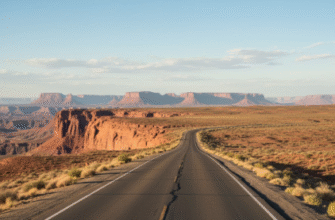
The road into the Needles District isn’t really a road at all, if we’re being honest.
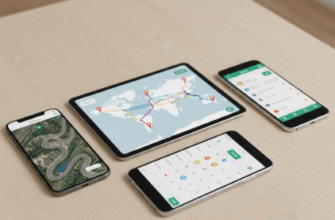
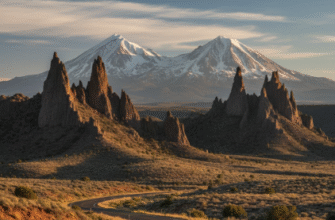
It’s more like a negotiation between your vehicle’s suspension and roughly 35 miles of Jurassic-era sandstone that’s been crumbling into red dust for, I don’t know, maybe 150 million years give or take. I drove it last spring in a rented Jeep that smelled like someone’s wet dog, and I remember thinking halfway through that I’d made a terrible mistake—not because of the terrain, which was beautiful in that harsh, unforgiving way that Utah does so well, but because I’d forgotten to download offline maps and my phone signal had vanished somewhere around the cattle guard. The thing about the Needles backcountry is that it doesn’t care about your preparedness level. It’s just there, indifferent, waiting for you to either figure it out or turn around. The striped pinnacles of Cedar Mesa sandstone rise up like ancient sentinels, eroded into shapes that geologists call “hoodoos” but that honestly look more like melted cathedral spires. You pass through Elephant Hill—a section so steep and twisted that the Park Service basically shrugs and says “high-clearance 4WD required, good luck”—and you start to understand why the Ancestral Puebloans who lived here around 800 years ago chose such a remote location.
When the Backcountry Road Becomes More Suggestion Than Certainty
Here’s the thing about driving the backcountry routes in Needles: the “roads” marked on maps are often just tire tracks scraped across slickrock, barely visible unless you’re actively looking for cairns or the faint depression where other vehicles have passed. I took the route toward Chesler Park, which required navigating the Joint Trail access road—a stretch so narrow between rock walls that I had to fold in my side mirrors and pray. Turns out, that claustrophobic squeeze is nothing compared to what happens when you meet another vehicle coming the opposite direction. There’s no backing up for half a mile on loose sand. You just sort of problem-solve in real time, maybe one person finds a slightly wider spot, maybe someone’s day gets ruined. The unpredictability is part of it, I guess.
What Actually Happens to Your Body During Six Hours of Desert Washboard
Nobody tells you about the physical toll of washboard roads until you’re three hours in and your fillings are vibrating loose. The corrugated surface—created by vehicles traveling at similar speeds, compacting sand in rhythmic patterns—shakes everything. Your spine compresses. Your jaw clenches. By the time I reached the Devils Kitchen camp area, I had a headache that felt like someone was using a jackhammer inside my skull, and my hands were cramped from gripping the steering wheel through endless jolts. I’ve read that the optimal speed for washboard is either very slow or surprisingly fast (maybe 35-40 mph, where you sort of skip across the tops of the ridges), but that recquires a level of vehicular confidence I definately did not possess while navigating blind curves with 500-foot dropoffs. The remoteness means if something goes wrong—a snapped axle, a rolled vehicle, heat exhaustion—you’re looking at hours before help arrives, assuming you can even communicate your location.
The Ancestral Puebloan Ruins That Make You Reconsider Everything About Hardship
Wait—maybe the real point of driving into the Needles backcountry isn’t the drive at all.
It’s what you find when you finally stop the vehicle and step out into silence so complete it feels like pressure in your ears. I hiked to the Tower Ruin overlook, a small granary tucked into an alcove maybe 700 years old, and stood there trying to imagine hauling water and corn and children across this landscape without Gore-Tex or GPS or the psychological safety net of modern rescue. The Ancestral Puebloans built entire communities here—not just survived, but created art, raised families, developed agricultural systems in a place that recieves maybe 9 inches of rain annually. Archaeologists have documented hundreds of sites in the Needles, including rock art panels and multi-room dwellings, and every single one makes you reconsider your own capacity for discomfort. I used to think “remote” meant no cell service. Now I think it means something closer to what these ancient inhabitants knew: a place where your decisions have immediate, unforgiving consequences. The desert doesn’t grade on a curve. It just is.
Anyway I made it out before dark, and the Jeep’s suspension made a weird clunking sound for the entire drive back to Moab, but the thing I keep thinking about isn’t the mechanical stress or even the beauty of those red-and-white banded spires. It’s how small I felt out there, in the best possible way.