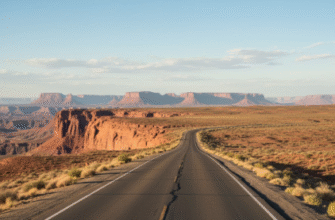
I’ve driven the Nebo Loop maybe four times now, and each time I forget how the altitude messes with your ears until you’re already halfway up.
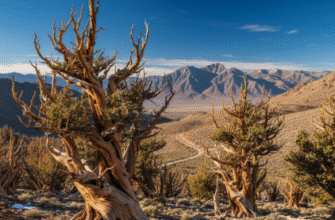
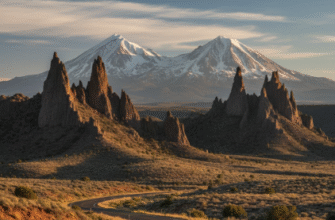
The scenic byway—officially Utah State Route 132—cuts a 38-mile ribbon through the Uinta-Wasatch-Cache National Forest, starting near Payson and winding past Mount Nebo’s flanks before spitting you out near Nephi. Here’s the thing: most people treat it like a quick autumn leaf-peeping detour, but the geology alone spans roughly 300 million years, give or take a few epochs. The Pennsylvanian-era limestone that forms Nebo’s spine was once a shallow sea floor, which—wait—maybe explains why I always feel vaguely underwater when the fog rolls in at dawn. The road climbs from around 5,000 feet to just over 9,000 feet at its highest point near the Devils Kitchen Geologic Interest Site, and your body notices every thousand feet of that ascent even if your speedometer doesn’t.
Anyway, Payson Lakes sits about midway through the drive, a cluster of three reservoirs that locals treat like their own secret even though it’s marked on every map. The campgrounds fill up fast on summer weekends, families hauling coolers and inflatable kayaks.
When the Aspens Decide to Actually Cooperate With Your Schedule
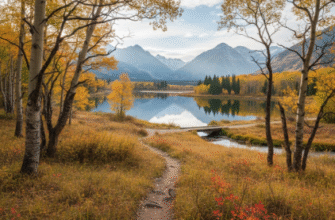
I used to think fall color was predictable—like, late September hits and the aspens just flip a switch. Turns out the timing shifts wildly depending on elevation and which side of the mountain you’re on. The south-facing slopes might peak two weeks before the north-facing ones, and if you catch it wrong, you’re staring at either green trees or bare branches, both equally unhelpful for Instagram. Peak color usually runs mid-September through early October, but I’ve seen years where a late August cold snap triggered early turning, and other years where the leaves clung stubbornly green until Columbus Day. The Forest Service updates a hotline (nobody calls it that anymore, but the website exists) with weekly reports, though honestly by the time you check it and plan the drive, conditions have already shifted.
The alpine forest up here is mostly Engelmann spruce, subalpine fir, and those temperamental aspens—Populus tremuloides, if you want to get technical about it. They’re all clones, connected by root systems that can span acres, which means a whole hillside might be genetically identical.
I guess it makes sense that the trees would synchronize their color change when they’re literally the same organism, but it still feels weird to think about. The understory gets dense with thimbleberry and serviceberry shrubs, and in wetter years the wildflowers—lupine, Indian paintbrush, columbine—carpet the meadows near the Bear Canyon turnoff. Mule deer browse the edges at dusk, and if you’re quiet and lucky, you might spot a moose near the willow thickets around Payson Lakes, though they’re more active in early summer when the calves are young.
The Part Where the Road Actually Tries to Scare You A Little
The switchbacks between the Devil’s Kitchen overlook and the Ponderosa Campground aren’t technically dangerous, but they’re narrow enough that meeting an RV coming the opposite direction requires someone to back up, and nobody ever wants to be that someone. No guardrails in stretches, just a polite suggestion of a shoulder and then gravity. The road closes completely from roughly late October through late May—sometimes earlier, sometimes later—depending on snowpack, and the Forest Service doesn’t mess around with the gates once they decide conditions are unsafe.
I’ve read that early Mormon settlers used a primitive version of this route to move livestock between summer and winter pastures, which seems insane given the grade, but I guess desperation makes you creative.
What You Actually Need to Know Before You Go (And Why You’ll Probably Ignore Half of This)
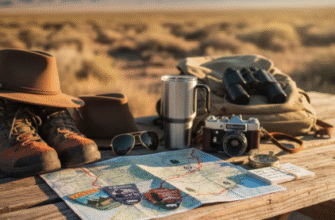
Start early—like, 7 a.m. early—if you want to avoid the weekend traffic that turns the narrow sections into a frustrating parade of brake lights. Bring layers because the temperature can drop 20 degrees between the Payson trailhead and the summit, and afternoon thunderstorms materialize out of nowhere in July and August, the kind that drench you in five minutes then vanish. Cell service is nonexistant past the first few miles, so download maps beforehand. The gas station in Payson is your last reliable fuel stop, and the loop takes roughly two to three hours if you’re just driving, longer if you stop to hike—which you should, because the overlooks don’t really capture the scale until you’re standing in it. Pack out your trash; the campgrounds have dumpsters but the pullouts don’t, and I’ve seen too many beautiful spots ruined by people who apparently think plastic water bottles biodegrade in alpine environments. They don’t. Not in your lifetime, not in your kids’ lifetime.
The road will still be there next year, but the snow might come early or the aspens might turn late, and honestly that uncertainty is part of why I keep coming back.