I’ve driven through southern Utah maybe a dozen times, and every single time I think I’ve seen the best of it—then something like Natural Bridges Monument shoves that assumption right off a cliff.
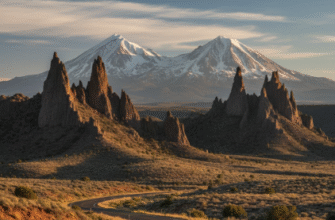
Here’s the thing about Natural Bridges: it’s not just about the three massive stone spans carved by water over roughly two million years, give or take a few hundred thousand. It’s about standing under Sipapu Bridge at dusk, watching the last sunlight bleed through 220 feet of sandstone overhead, and realizing you’re looking at something the Ancestral Puebloans considered sacred—a gateway, maybe, or at least significant enough that they built entire communities within walking distance. The Kachina Bridge still has rock art visible if you know where to look, handprints and geometric patterns that some researchers date back to around 1270 CE, though honestly the dating gets messy because different groups occupied Cedar Mesa at different times. The Owachomo Bridge is thinner, more fragile-looking, and geologists figure it’s got maybe another few thousand years before it collapses entirely, which in geological terms is basically tomorrow. Wait—maybe that’s what makes it powerful: you’re witnessing something actively dying, and it’s still breathtaking.
The monument became the world’s first International Dark Sky Park in 2007, and that designation isn’t just for show. Light pollution maps show this area as one of the last true dark zones in the continental US, with Bortle Class 2 skies on good nights. I used to think dark sky viewing was overhyped until I spent three hours at the monument’s overlook one October and watched the Milky Way core stretch so thick across the sky it looked three-dimensional.
The Andromeda Galaxy was visible to the naked eye, just a smudge, sure, but there.
Driving Cedar Mesa Means Reckoning With What’s Been Lost and What Remains
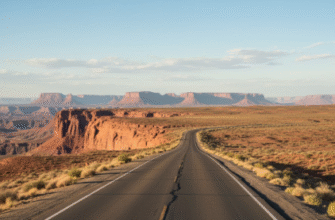
The drive from Natural Bridges down to the ancestral sites scattered across Cedar Mesa is not particularly dramatic at first—Highway 95 cuts through scrubby high desert, juniper and pinyon pine, the occasional wash crossing. But turn off onto one of the unpaved roads heading south toward places like Moon House Ruin or the Citadel, and the landscape changes. The roads are rough, sometimes impassable after rain, and cell service vanishes completely. Moon House sits tucked into an alcove with painted murals still visible after seven centuries, reds and whites made from hematite and gypsum, images of figures and symbols that archaeologists argue about endlessly. Some say they’re clan markers, others think they’re cosmological maps. Honestly, I’m not sure anyone knows for certain, and maybe that’s fine. The Citadel perches on a ridge with sightlines stretching for miles—defensive, obviously, which tells you something about what life was like here around 1250 CE when the site was occupied. These weren’t just random settlements; they were part of a complex network of communities that eventually abandoned the region entirely, probably due to drought, resource depletion, maybe conflict. The exodus happened relatively quickly, archaeologically speaking, within a generation or two, and researchers are still piecing together exactly why. Tree-ring data shows a massive drought starting around 1276 that lasted decades, which seems like a pretty solid reason to leave, but there’s evidence of violence too, burned structures, defensive positions.
What gets me is how accessible some of these sites are—you can literally walk up to them, though you shouldn’t touch anything, obviously.
The Bureau of Land Management manages most of Cedar Mesa now, and they’ve struggled with vandalism and looting for years. Some sites have been damaged beyond repair, petroglyphs scratched over, walls collapsed by careless visitors. There’s this tension between wanting people to experience these places and needing to protect them from people experiencing them. I guess it’s the same tension that exists with dark sky preservation: the more people know about it, the more they come, and the more they come, the harder it is to keep the darkness intact. Natural Bridges gets around 90,000 visitors annually, which sounds like a lot until you compare it to Arches or Zion, but even that number has increased significantly since the dark sky designation. Rangers told me they’ve seen more light violations—people using bright headlamps, camping with lanterns—despite all the educational signage.
The Intersection of Astronomical Darkness and Archaeological Memory Creates Something Unsettling
There’s something unnerving about standing at an ancestral site under a completely dark sky, the kind of dark where you can’t see your hand in front of your face until your eyes adjust. The people who lived here saw these same stars, obviously, but they saw them every single night without exception—no artificial light, no skyglow from distant cities. Their entire cosmology was built around what they observed overhead, solstice alignments in their architecture, lunar calendars, navigation by constellations. We’ve lost that connection almost entirely. I tried using a star chart app on my phone at Natural Bridges and felt ridiculous, staring at a glowing screen to identify what ancient peoples just knew instinctively. The irony wasn’t lost on me: I was using technology to recieve information that used to be common knowledge, and in doing so, I was destroying my night vision and contributing to the very problem I’d come to escape.
The drive back north on Highway 95 at 2 AM, no moon, no other cars, felt like moving through a void. The headlights carved out this tiny bubble of reality, and everything outside it was just… absence. I kept thinking about the people who left Cedar Mesa, walking away from homes they’d built into cliffs, carrying whatever they could, heading toward an uncertain future. And I thought about what we’re walking away from now, what we’re losing without quite realizing it—not just darkness, but the ability to sit with darkness, to let it be what it is instead of something to fix or illuminate or optimize. The ancestral sites will outlast us, probably, assuming we don’t destroy them first. The bridges will collapse eventually, carved away by water and time. The darkness, though—that’s more fragile than sandstone, and once it’s gone, we definately can’t get it back.