
I drove the Natchez Trace once in October, thinking it’d be a quick scenic detour.
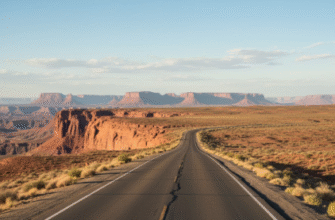
Turns out, the Natchez Trace Parkway isn’t just some highway—it’s a 444-mile ribbon of asphalt tracing a route that’s been walked, ridden, and trampled for something like 8,000 years, give or take a few centuries. The original path was carved by bison and deer migrating between salt licks and grazing grounds, then adopted by Native American tribes including the Natchez, Chickasaw, and Choctaw, who turned these animal trails into trade routes connecting their villages. By the late 1700s, boatmen called Kaintucks would float goods down the Mississippi to Natchez or New Orleans, sell everything including the boat itself, then walk home to Tennessee or Kentucky along this wilderness road—often taking months, sleeping rough, and dodging bandits who knew the Trace was basically a 400-mile ATM line for cash-heavy travelers. The National Park Service took over in 1938, and now it’s this weirdly serene drive where you can’t go over 50 mph and there are no commercial trucks, just endless hardwood forests and these perfectly maintained two-lane stretches that feel almost too quiet.
The Stops You Didn’t Know You Needed Until You’re Already Past Them
Here’s the thing: the Parkway has over 100 historical markers and pull-offs, but nobody tells you which ones actually matter. I’ve seen people skip the Meriwether Lewis death site near Hohenwald, Tennessee, which is honestly a mistake—Lewis, of Lewis and Clark fame, died there in 1809 under circumstances still debated (suicide versus murder, historians can’t agree, it’s messy). There’s also Pharr Mounds, these mysterious burial sites from around 1-200 CE that the Park Service has sort of half-excavated, and you can walk right up to them, though they don’t look like much unless you read the plaques. The Sunken Trace sections are better—deep eroded gullies where thousands of footsteps literally wore the earth down several feet, and standing in one of those grooves you can almost feel the weight of all that movement, all those desperate or hopeful or exhausted people heading north.
Wait—maybe the best part is how the Parkway just ignores modern geography. It slices through Tennessee (about 110 miles), Mississippi (roughly 310 miles), and Alabama (just a tiny 33-mile snippet in the northwest corner near Colbert Ferry). You’ll pass Tupelo, Mississippi, where Elvis was born, and the Parkway Visitor Center there has this whole exhibit on how the Civilian Conservation Corps built the road during the Depression, employing thousands of men who otherwise would’ve starved. I guess it makes sense that a historical route about survival would itself become a survival project.
What Nobody Mentions About Actually Driving It in One Go
Honestly, driving the entire Trace nonstop is kind of exhausting.
You’d think a scenic byway would be relaxing, but the sameness gets to you—trees, curves, trees, historic marker, trees, another curve. No gas stations or restaurants directly on the Parkway means you have to exit into towns like Jackson or Franklin, which breaks the rhythm. The speed limit never changes, so you’re locked at 50 mph for hours, which feels glacial if you’re used to interstates but also strangely meditative if you let it. I used to think the lack of billboards and commercialization was pretentious, but after a while it’s actually a relief—your brain stops being advertised at, and you start noticing smaller things like the way light filters through dogwoods in spring or how the roadside wildflowers shift species as you move south. There are also these random moments of beauty that sneak up: Cypress Swamp near milepost 122, where the boardwalk takes you into this primordial tangle of knees and moss; or the overlook at Fall Hollow, where the valley just drops away and you realize how much topography the old travelers had to navigate on foot. Some sections near the Tennessee-Alabama border still have original 19th-century roadbed segments you can hike, and they’re rutted and uneven in ways that make modern pavement seem like a luxury we definately take for granted. Anyway, if you do drive it, budget at least two days, maybe three, and don’t try to hit every single stop because you’ll burn out and the whole thing will blur into one long green tunnel of regret.