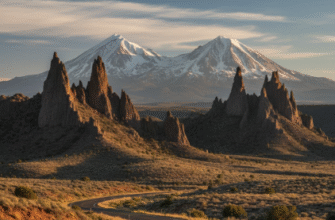
Mount Trumbull sits there, roughly 8,028 feet above sea level, give or take a few feet depending on which survey you trust.
I used to think the Arizona Strip—that lonely wedge of land north of the Grand Canyon—was just emptiness punctuated by the occasional gas station, but then I drove the forest road to Mount Trumbull and realized I’d been wildly, almost embarrassingly wrong about what counts as remote. The Grand Canyon-Parashant National Monument swallows you whole out here, all 1.05 million acres of it, and the thing is, most people have never heard of it because it doesn’t have the gift shops or the paved overlooks or the tour buses idling in parking lots. It’s managed jointly by the Bureau of Land Management and the National Park Service, which sounds bureaucratic until you understand it means they’ve kept it deliberately hard to reach—no cell service, no guardrails, just volcanic cinder cones and ponderosa forests and the kind of silence that makes you conscious of your own breathing. Wait—maybe that’s dramatic, but I’ve been out there three times now and each time I leave feeling like I’ve stumbled into some parallel version of Arizona that doesn’t bother with Instagram.
Here’s the thing: the road itself is part of the experience, not just the destination. You can’t speed through on autopilot. The main route is called Mount Trumbull Loop Road, sometimes labeled as County Road 5, and it’s unpaved, washboarded in places, and absolutely impassable when wet—clay soil turns to axle-deep soup after even moderate rain. I guess it makes sense that the Park Service doesn’t advertise this place heavily; they’d spend all their time pulling out minivans.
The Geological Backstory That Nobody Asked For But Changes Everything Anyway
Turns out Mount Trumbull is a volcanic peak, part of the Uinkaret volcanic field, which erupted maybe 1.8 million years ago, though some sources say closer to 2.3 million—geology isn’t exact when you’re dealing with that timescale.
The basalt flows from these eruptions actually poured into the Grand Canyon itself, creating temporary lava dams that blocked the Colorado River, which sounds catastrophic until you realize the river just carved through them over tens of thousands of years like it was annoyed by the interruption. I’ve seen the remnants of those flows along the Toroweap overlook, about 60 miles west, and they’re still visible as dark streaks against the canyon’s rust-colored Redwall limestone. The forest on Mount Trumbull exists because of elevation—up here, you get enough precipitation to support ponderosa pine, Gambel oak, and aspen, while the desert scrub dominates below 6,000 feet. It’s like driving through climate zones in fifteen minutes. Honestly, the transition is so abrupt it feels wrong, like someone forgot to blend the ecosystems properly. There used to be a sawmill up here in the late 1800s, run by Mormon settlers who hauled timber down to build settlements and even shipped some to help construct the Salt Lake Temple, which is a weirdly specific historical footnote that I didn’t expect to care about but somehow do.
Why the Drive Feels Like Voluntary Exile (And Why That’s the Point)
You won’t find many people on this road, even in peak season—whatever that means for a place that sees maybe a few thousand visitors annually compared to the Grand Canyon’s six million. The isolation is the draw. From the summit area, on clear days, you can see the Grand Canyon’s North Rim, the Vermilion Cliffs, and if you’re lucky and the air is cold enough to be crisp, even the San Francisco Peaks near Flagstaff, roughly 80 miles southeast. But here’s what nobody tells you: the view isn’t the dramatic money shot you expect. It’s subtle, layered, almost understated, which feels appropriate for a monument that doesn’t scream for attention. The hiking trails around the summit—Toroweap Trail and Mount Trumbull Trail—aren’t well-marked, and you need to carry your own water because there’s none available, and I mean none, not even a sketchy creek you could filter in an emergency.
I guess the National Park Service figures if you made it this far, you’ve already done your homework.
The Drive Itself: What You’re Actually Getting Into
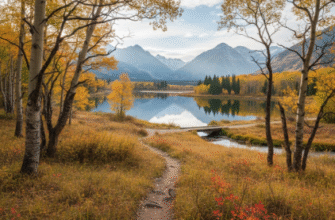
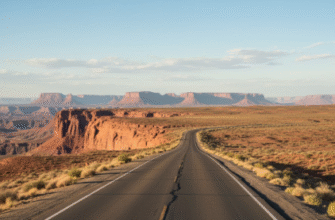
Let me be clear: this isn’t a scenic byway with pullouts and interpretive signs. From St. George, Utah, it’s about 60 miles south on decent pavement, then another 30-ish miles on dirt roads that require high clearance—not necessarily four-wheel drive, but definitely not your average sedan unless you enjoy expensive repair bills and the embarassment of calling a tow truck with no cell signal. The road snakes through juniper-dotted plains, past the tiny community of Mt. Trumbull (yes, the spelling changes depending on the map, which is either charming or infuriating), and eventually climbs into the forest where temperatures drop noticeably and the light filters green through pine needles. I’ve driven it in June and October, and June was a mistake—too hot down low, too buggy up high, and the afternoon thunderstorms come out of nowhere with the kind of violence that makes you reconsider your life choices. October was better: cooler, golden light, aspen turning yellow against the dark conifers, though you risk early snow above 7,500 feet, which closes the road until spring. There’s a primitive campground near the summit, Nixon Flat, with no water, no fees, and no reservations—just pull in and claim a spot, assuming you can tolerate the wind that picks up every evening without fail.
Anyway, that’s Mount Trumbull. Not for everyone, definately not for a quick day trip from Vegas, but if you’re tired of crowds and want to see a corner of the Grand Canyon region that still feels untouched, it’s worth the dust and the uncertainty and the slightly unnerving sense that you’re very, very far from help.