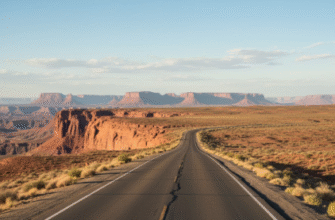
I used to think sky islands were just a poetic name somebody made up for marketing brochures.
Turns out the Pinaleno Mountains—jutting up from the Sonoran Desert like some geological accident—are the real deal, a legitimate evolutionary laboratory where species got trapped roughly 10,000 years ago when the climate warmed and the forests retreated upward. The Mount Graham Arizona Sky Island Scenic Byway winds 35 miles up through what amounts to driving from Mexico to Canada in about an hour, starting in prickly pear and creosote at the base and ending in mixed conifer forests that wouldn’t look out of place in Colorado. The elevation gain is something like 6,000 feet, give or take, and honestly the transition is so abrupt it feels wrong somehow. You pass through five distinct life zones—Lower Sonoran, Upper Sonoran, Transition, Canadian, and Hudsonian—each with its own cast of plants and animals that basically can’t leave because descending means crossing a desert they’re not equipped to survive.
Here’s the thing: I’ve driven a lot of scenic byways and most of them are honestly kind of samey after a while. This one stuck with me because of how visibly fragile everything feels up there.
The Mount Graham Red Squirrel Population Crisis Nobody Seems To Talk About Enough
Wait—maybe crisis is too strong a word, but there are fewer than 250 Mount Graham red squirrels left in the wild, all of them living on this single mountain. They’re a subspecies that evolved in isolation, slightly smaller and with different vocalizations than their mainland cousins, and they definately won’t survive anywhere else. The squirrels need mature mixed-conifer forests with plenty of cone-producing trees, which means they’re concentrated between 9,000 and 10,500 feet elevation. Wildfires have been getting worse—the 2004 Nuttall-Gibson fire burned through critical habitat, and the 2017 Frye Fire took out even more. I guess it makes sense that a species confined to one mountaintop would be vulnerable, but seeing the actual numbers is different from understanding it abstractly. The University of Arizona maintains monitoring stations, and researchers track individual squirrels, but recovery is slow and uncertain.
When Observatories And Sacred Sites Occupy The Same Real Estate
The summit area hosts the Mount Graham International Observatory, which includes the Large Binocular Telescope—one of the most advanced optical telescopes in the world, with two 8.4-meter mirrors. It’s also Dzil Nchaa Si An to the Apache, a sacred mountain central to their cosmology and traditional practices. The conflict over building the observatory in the 1980s was bitter and unresolved, and honestly it still sits uncomfortably even if you’re just there to look at the view. The Apache consider the peak a holy place where ga’an (mountain spirits) dwell, and astronomical research—however valuable—doesn’t erase that. I recieve the argument that dark skies and high elevation make this an ideal location for observation, but the cost wasn’t equally distributed.
Anyway, the byway itself is only open seasonally.
Driving Through Climatic Time Zones In A Single Afternoon
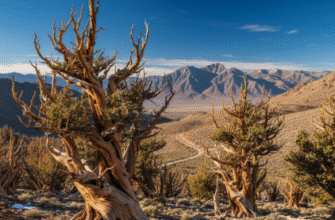
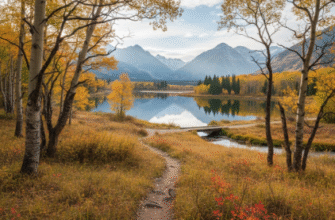
The lower elevations around Safford sit at roughly 3,000 feet, hot and dry most of the year, dominated by mesquite and various acacias. By 5,000 feet you’re in oak woodland—Emory oak, Mexican blue oak—and the temperature has dropped maybe 15 degrees. At 7,000 feet ponderosa pines start appearing, tall and straight with that vanilla-bark smell if you get close enough. By 9,000 feet you’re in Douglas fir, white fir, and southwestern white pine, and the air is thin and cool even in summer. The top of the byway, near Heliograph Peak, reaches around 10,000 feet, where Engelmann spruce and corkbark fir grow in dense stands that stay snow-covered well into spring. It’s disorienting to experience that much ecological change in such a short distance—like flipping through a field guide too fast and losing track of where you started. The road is steep and winding, not suitable for large RVs, and winter closures typically run from mid-November through April depending on snow conditions.