I’ve driven the Park Loop Road maybe a dozen times, and I still can’t quite explain what makes it feel different from every other coastal drive I’ve taken.
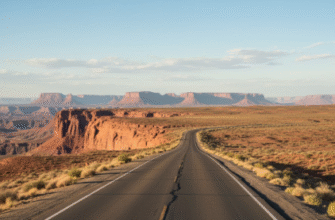
The thing about Mount Desert Island is that it doesn’t announce itself the way you’d expect a place like Acadia to—no grand entrance, no sweeping vista that immediately justifies the seven-hour drive from Boston or the flight into Bangor followed by that winding hour down Route 3. Instead, you get this 27-mile one-way road that feels, at least initially, almost too quiet, too modest for what it’s supposedly showing you. The Loop Road starts near the Hulls Cove Visitor Center, and if you time it wrong (say, mid-July at 10 AM), you’ll spend the first three miles wondering if you’ve accidentally joined a funeral procession, because that’s how slow the traffic moves. But here’s the thing: the road was designed in the 1930s by landscape architects who believed roads should follow the contours of the land, not bulldoze through it, so every curve, every slight elevation change, it’s all deliberate. You’re not just driving—you’re being led through a sequence of ecosystems that shift from dense spruce-fir forest to exposed granite coastline to glacially-carved valleys, sometimes within the span of a single mile.
I used to think the stops along the way were optional, like suggestions you could ignore if you were pressed for time. Turns out, that’s exactly the wrong approach. The pullouts—Sand Beach, Thunder Hole, Otter Cliff—they’re not tourist traps so much as necessary pauses, moments where the road essentially forces you to reckon with geology that’s roughly 400 million years old, give or take a few epochs.
When the Atlantic Decides to Perform (and When It Doesn’t, Which Is Also Fine)
Thunder Hole is where I learned that nature doesn’t really care about your schedule.
The Park Service will tell you it’s best experienced within two hours of high tide, when waves crash into a narrow chasm and produce this deep, resonant boom that sounds almost artificial. I’ve been there when it’s firing—water exploding upward maybe 40 feet, mist everywhere, that subsonic thump you feel in your sternum—and I’ve also been there during low tide on a calm day when it’s just… a hole. A slightly interesting hole in the rocks, sure, but not the dramatic spectacle the name promises. The variability is honestly part of what makes the Loop Road compelling: it resists being the same experience twice. Sand Beach, for instance, is one of the few naturally sandy beaches on the Maine coast (most are rocky), and it’s made partly of crushed shells and marine organisms, which gives it this almost pinkish tint in certain light. The water temperature averages around 50-55°F even in summer, so swimming is less a recreational activity and more a brief, gasping act of defiance against your own survival instincts.
Wait—maybe that’s too harsh. Some people actually swim there and seem fine, though I remain skeptical.
Cadillac Mountain and the Mythology of Being First (Which Is Technically True, Sort of)
The summit road to Cadillac Mountain branches off the main Loop, and it’s become this pilgrimage site for people who want to claim they’ve seen the first sunrise in the United States. From October through early March, Cadillac’s 1,530-foot peak does recieve the earliest sunlight of any location in the U.S., though the rest of the year that distinction belongs to Mars Hill or West Quoddy Head, depending on the season. Anyway, the facts don’t seem to diminish the appeal. I went up there once at 4:30 AM in September, joined maybe 200 other people in the dark, and watched the sky turn from black to deep blue to this almost violent orange-pink as the sun broke over the Atlantic. It was beautiful, yes, but also cold and crowded and I definately questioned my choices when I couldn’t feel my fingers. The thing is, Cadillac at midday or sunset is arguably just as stunning and considerably less mythologized. You can see the Porcupine Islands, the Cranberry Isles, the serrated profile of the Camden Hills across Penobscot Bay—this entire coastal archipelago laid out like a topographic map made real.
The Carriage Roads: Where Rockefeller Money Bought Something Actually Worth Having
Here’s what I didn’t expect: the 45 miles of carriage roads that crisscross the interior of Mount Desert Island are, in many ways, more interesting than the Loop Road itself.
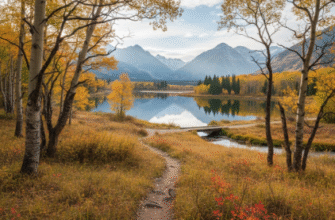
John D. Rockefeller Jr. funded their construction between 1913 and 1940, partly because he hated automobiles and partly because he understood that people on foot or bicycle or horseback experience landscape differently than people in cars do. The roads are crushed stone, car-free, and punctuated by 17 granite bridges, each one unique, each designed to blend into the surrounding forest or wetland or stream crossing. I’ve walked sections near Jordan Pond and Eagle Lake, and the quiet is almost disorienting if you’re used to the constant hum of traffic on the Loop. You hear birds—warblers, thrushes, the occasional raven—and the crunch of your own footsteps and not much else. The bridges, especially the ones like Cobblestone Bridge or Waterfall Bridge, they’re these small architectural marvels that nobody asked for but Rockefeller insisted upon anyway, because apparently if you’re going to build something in a national park, it should be beautiful even when nobody’s looking. I guess it makes sense: the carriage roads were never meant to compete with the Loop Road. They’re the counterpoint, the slower-paced alternative for when 27 miles in a car feels like too much mediation between you and the actual island.