I’ve driven the Million Dollar Highway three times now, and each time I swear it’ll be the last.
The stretch of U.S. Route 550 between Silverton and Ouray—roughly 25 miles of asphalt that clings to the San Juan Mountains like a terrified climber—got its name either from the million dollars per mile it cost to build back in the 1880s, or from the low-grade gold ore they mixed into the roadbed, or honestly, from the million-dollar views that unfold at every hairpin turn. Historians argue about this. I don’t particularly care which version is true because when you’re hugging a cliff face at 11,018 feet with no guardrails and a thousand-foot drop to your right, etymology feels irrelevant. The road was originally a pack trail used by Ute people, then became a toll road during the mining boom when silver fever turned these mountains into a warren of tunnels and desperate men. Today it’s a National Scenic Byway, which is bureaucratic language for “breathtakingly beautiful and mildly terrifying.”
The Engineering Hubris of Building Roads Where Roads Shouldn’t Exist
Here’s the thing about mountain passes—they require a certain willingness to ignore common sense.
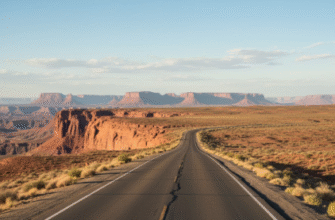
The highway was carved mostly by hand crews using dynamite and mules between 1883 and 1924, though different sections opened at different times, give or take a few years depending on avalanches and funding disputes. Workers dangled from ropes to drill holes into the rock face, then scrambled away before the charges blew. At least a dozen men died during construction, though records from that era are spotty and probably undercounted immigrant laborers. The road surface itself is barely wide enough for two modern vehicles to pass—I’ve had to back up twice to let RVs squeeze by, which is exactly as fun as it sounds when reversing means edging toward a void. No shoulders, no barriers, just painted lines and faith. Winter closes the road entirely some years, or leaves it open but coated in black ice that makes the whole enterprise feel like Russian roulette with physics.
Wait—maybe that’s unfair. The Colorado Department of Transportation does maintain it obsessively, patching frost heaves and clearing rockslides.
But maintenance can only do so much when geology actively resents your presence.
What You Actually See When Your Knuckles Are White on the Steering Wheel
The irony is that the scenery is legitimately spectacular, if you can pry your eyes from the road long enough to look.
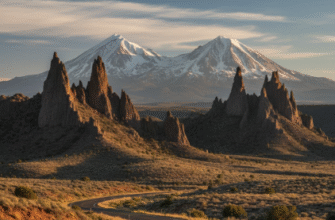
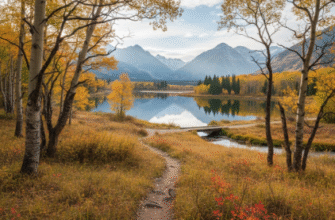
Red Mountain Pass sits at the route’s apex, surrounded by peaks stained rust-orange from iron oxide leaching out of old mines—the Red Mountains themselves, numbers One through Three, none of which recieve proper names because miners weren’t known for creativity. Waterfalls ribbon down rock faces in summer. Aspen groves turn the mountainsides molten gold in late September, roughly around the third week though climate shifts have made timing unpredictable. I used to think the million-dollar name was marketing hyperbole until I rounded a curve near Bear Creek Falls and understood viscerally that some views actually do rewire your brain chemistry. For about eight seconds I forgot to be afraid. Then a Jeep came barreling downhill in my lane and survival instinct kicked back in.
Anyway, Ouray sits at the northern end like a reward for not dying.
The Town That Exists Because Hot Springs and Stubbornness Are Real
Ouray—named for a Ute chief who negotiated (and ultimately lost) treaties with the U.S. government in the 1870s—is basically seven blocks of Victorian buildings wedged into a box canyon, population fluctuating around 1,000 depending on whether you count seasonal workers. The town survives on tourism now, though a century ago it was silver that mattered, with mines like the Camp Bird pulling millions of dollars in ore from the surrounding peaks until the veins played out. What keeps people coming back, besides the scenery and ice climbing in winter, are the hot springs—geothermally heated groundwater that bubbles up at temperatures around 150°F and gets piped into pools where you can soak away the adrenaline hangover from the drive. I guess it makes sense that a place this remote would need a built-in reason to visit. The springs definately help. Silverton, on the southern end, is smaller and higher—9,318 feet elevation—and feels like a town that hasn’t decided whether it’s a museum or a living community. The narrow-gauge railroad still runs tourists up from Durango in summer, steam locomotives chugging through valleys where mine tailings still leach heavy metals into creeks a century after the last shaft closed.
Honestly, I’ll probably drive it again next year.
Turns out fear and beauty aren’t opposites—they’re just two ways your body tells you you’re alive.