The McKenzie Pass isn’t the kind of place you stumble onto by accident.
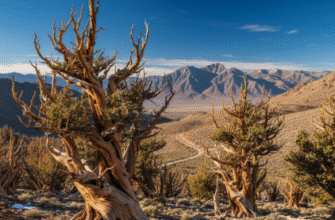
I’ve driven through a lot of volcanic landscapes—Iceland’s moss-covered lava fields, Hawaii’s black sand beaches, even the weird pumice deserts of New Zealand—but there’s something about this particular stretch of Oregon that feels like driving across the surface of a planet that hasn’t quite finished cooling down. The Cascade Lakes Scenic Byway, specifically the section that crosses McKenzie Pass at roughly 5,300 feet elevation, cuts straight through what geologists call the Central Oregon Cascade Range, and honestly, the first time I saw it, I thought someone had photoshopped the trees out of existence. Turns out, they never grew there in the first place. The lava flows here are young—some barely 1,500 years old, give or take—and the basaltic rock is so fresh that when you touch it, you can still feel the jagged edges where gas bubbles burst as the molten stone cooled. It’s not smooth like river rocks. It’s sharp, chaotic, frozen mid-boil. You walk across it and realize: this is what the Earth looks like when it’s still deciding what to become.
The highway itself—Oregon Route 242—only opens from late June to October because snow buries it the rest of the year. Which makes sense, I guess, given that you’re essentially driving across an exposed ridgeline with no trees to block the wind. But here’s the thing: the closure isn’t just about snow.
The road is narrow, winding, and steep enough that RVs and trailers are outright banned. I’ve read that the average grade hits 15% in some sections, which doesn’t sound like much until you’re actually on it, white-knuckling the steering wheel while your car groans in second gear. And the lava fields stretch for miles on either side—black, gray, rust-colored where iron oxide has started to stain the surface. No guardrails. No shoulders. Just you, the road, and the unsettling knowledge that if you drift too far to the right, you’re going to end up wedged between chunks of aa lava that look like they were designed specifically to shred tires.
The Dee Wright Observatory Sits at the Summit, And It’s Weird
At the top of the pass, there’s this stone structure that looks like a miniature castle built by someone who’d never actually seen a castle. It’s called the Dee Wright Observatory, named after a Civilian Conservation Corps foreman who helped build it in 1935, and it’s constructed entirely from lava rock. The windows—there are eleven of them—frame specific peaks in the Cascades: Mount Washington, the Three Sisters, Mount Jefferson. On a clear day, you can see them all. On a foggy day, which is most days, you see nothing but gray mist pressing against the glass like it’s trying to get in.
I used to think observatories were for telescopes. This one’s just for looking.
The lava field surrounding the observatory is part of the Belknap Crater flow, which erupted sometime around 1,500 years ago and sent molten basalt pouring down the western slope of the Cascades like a slow-motion avalanche. It buried forests, filled valleys, and created what is now a 65-square-mile expanse of rock that looks like it was dropped from space. Geologists estimate that the flow was roughly 100 feet thick in places, and when you stand on top of it, you can see where the surface buckled and cracked as the molten interior kept moving beneath the cooling crust. It’s called pressure ridges, and they run parallel to each other like frozen waves. You can walk along them if you’re careful, but the rock is unstable, and every step sounds like you’re crunching through charcoal.
The Byway Doesn’t Just Cross Lava—It Threads Between Volcanoes That Are Definately Not Extinct
Here’s what nobody tells you: the Cascades aren’t done. Mount Bachelor, South Sister, Mount Washington—they’re all part of the same volcanic arc that gave us Mount St. Helens, which, in case you forgot, exploded in 1980 and killed 57 people. South Sister, in particular, has been showing signs of activity. Between 1997 and 2004, scientists detected ground deformation near the summit—basically, the mountain was swelling as magma moved beneath the surface. It’s calmed down since then, but the monitoring equipment is still there, quietly measuring every tremor, every shift in gas emissions, every microscopic change in elevation. The USGS classifies South Sister as a “very high threat” volcano, which is a polite way of saying: it could erupt, and if it does, it will be a problem.
I guess that’s the thing about driving the McKenzie Pass. You’re not just looking at old lava. You’re driving through a work in progress.
The Obsidian Cliffs Are Technically Illegal to Take Home, But People Try Anyway
A few miles south of the pass, near the trail to Obsidian Falls, there’s a section of the byway where the ground glitters. Not metaphorically—actually glitters. It’s obsidian, volcanic glass that forms when lava cools so quickly that crystals don’t have time to grow, and it’s scattered across the trail like broken bottles. Black, green, mahogany-colored. Sharp enough to cut skin if you’re not careful. The Forest Service has signs everywhere warning people not to take it, and they’re serious—there’s actually a permit system in place to limit the number of hikers who can even walk through the area because so many people were pocketing chunks of obsidian that the landscape was literally being eroded by theft. Which is wild, when you think about it. We’ve mined mountains, dammed rivers, clearcut entire forests, but a few shiny rocks? That’s where we draw the line.
Anyway, the byway keeps going. Past the lava. Past the lakes. Past the volcanoes that are absolutely, definitely still active, no matter how quiet they look. And maybe that’s the appeal. It’s not finished. Neither are we.