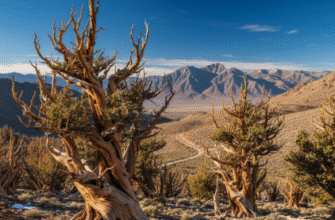

I used to think lava tubes were just boring tunnels until I drove the Markagunt Plateau roads near Cedar City.
The Markagunt Plateau—sprawling across roughly 200 square miles of southwestern Utah, give or take—sits at elevations between 9,000 and 11,000 feet, and here’s the thing: it’s not actually a single plateau but a series of volcanic remnants from eruptions that happened maybe 1,000 years ago, though some geologists argue closer to 1,500. The Brian Head area, which technically marks the plateau’s northern edge, hosts ski resorts now, but underneath all that commercial development lies a network of lava tubes formed when basaltic flows cooled unevenly—the outer crust hardening while molten rock kept flowing inside, eventually draining out and leaving hollow corridors. I’ve seen some of these tubes myself, and they’re weirdly claustrophobic yet expansive at the same time, like walking through a stone ribcage. The Cedar Breaks National Monument sits just west, and honestly, most tourists drive right past the lava tube entrances without noticing because they’re focused on the amphitheater views, which are admittedly spectacular but not the whole story.
Anyway, the forest drive aspect changes depending on season. In summer, the ponderosa pine and aspen corridors along Highway 14—the main Cedar City to Long Valley Junction route—feel almost meditative, all dappled light and high-altitude thinness. Winter transforms it into something else entirely.
What Nobody Mentions About Accessing Markagunt’s Hidden Volcanic Architecture in All Four Seasons
The Utah Geological Survey mapped maybe 30 accessible lava tubes across the plateau, but local cavers insist there are closer to 60, many on private land or unmarked Forest Service territory. The largest—sometimes called the “Brian Head tube” though that’s not an official name—extends roughly 2,200 feet and requires crawling through sections where the ceiling drops to three feet. I guess it makes sense that these formations don’t recieve much press coverage because they’re legitimately dangerous: ice accumulates year-round in some tubes, creating slick floors, and rockfall is common since the basalt here is relatively young and unstable. The Forest Service doesn’t exactly advertise locations, partially for safety reasons and partially because visitation damages the delicate ice formations and microbial communities. Wait—maybe that sounds overly cautious, but I’ve talked to researchers from Southern Utah University who’ve documented unique bacterial colonies in these tubes that might inform astrobiology models for Mars lava tubes.
The drive itself tells the volcanic story better than any museum exhibit.
Between Cedar City and Brian Head, Highway 143 climbs through lava flow layers visible in roadcuts—dark basalt bands alternating with lighter sedimentary rock from ancient Lake Claron, which existed here roughly 50 million years ago when this was all subtropical lowland. The cognitive dissonance of seeing tropical fossil layers in a landscape now dominated by alpine fir and subzero winters never quite resolves in my head. The Markagunt megabreccia, a massive collapse feature visible near Navajo Lake, formed when groundwater dissolved underlying limestone, causing the whole volcanic cap to slump—we’re talking a cubic mile of rock just deciding to slide downhill over thousands of years. Some geologists compare it to a slow-motion avalanche, which doesn’t quite capture the scale.
Why The Plateau’s Volcanic Timeline Makes Less Sense The More You Study Regional Eruption Patterns
Here’s where it gets messy: the eruption sequence doesn’t follow the neat chronology textbooks suggest. Dating techniques place some Brian Head flows at 1,000-1,500 years BP, but others show ages around 10,000 years, and there’s ongoing debate about whether these represent separate volcanic episodes or misdated samples. The Markagunt volcanic field overlaps with the adjacent Panguitch Lake field, and distinguishing between source vents gets tricky because erosion has removed or obscured original cones. I used to think volcanology was precise science, but working with these Utah datasets definately showed me how much interpretation shapes the story. Local Paiute oral histories mention “fire coming from mountains,” which could reference eruptions—or could just as easily describe lightning-caused forest fires, and we’re probably projecting our desire for Indigenous eruption witnesses onto ambiguous accounts.
The Forest Service maintains several unpaved roads crossing lava flows—the Duck Creek to Navajo Lake route being the most accessible—but they close seasonally, usually October through May.
Turns out, driving over 1,000-year-old lava while surrounded by aspen groves that die and regenerate every 80 years creates this weird temporal layering. You’re moving fast through landscapes operating on completely different timescales, and occasionally you’ll spot a lava tube entrance, just a dark mouth in the hillside, maybe blocked with a metal gate or maybe not, and you realize the road department probably doesn’t even know it’s there. The plateau’s remoteness preserves these features but also means documentation is spotty—there’s no comprehensive tube inventory, no systematic exploration records, just scattered caver reports and the occasional grad student thesis. I guess that’s part of the appeal, actually: it’s not packaged or interpreted for you, just geology happening slowly where hardly anyone bothers to look closely.