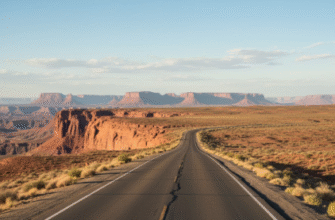
I’ve driven Logan Canyon maybe a dozen times, and I still can’t shake the feeling that the limestone is watching me.
The thing about this stretch of Utah highway—US-89, technically, though everyone just calls it “the canyon road”—is that it doesn’t behave like normal geology. You’re climbing through Cache Valley, where the fields are so aggressively green they look photoshopped, and then suddenly you’re hemmed in by these massive pale cliffs that rise maybe 600, 700 feet? I’m not great with estimating heights, honestly, but they feel taller when you’re actually there, especially when the afternoon light hits them at that angle where every crevice becomes a shadow. The limestone here is Paleozoic, roughly 300 to 500 million years old, give or take—formed when this whole region was underwater, back when ancient seas deposited layer after layer of calcium carbonate from dead marine organisms. Which means, and I find this weirdly unsettling, that you’re essentially driving through compressed ocean floor while landlocked mountain towns sprawl on either side.
Wait—maybe I should back up. The drive itself connects Logan in Cache Valley to Garden City near Bear Lake, about 40 miles of switchbacks and river views. People do it for the scenery, obviously, but also because there’s no faster route if you’re trying to reach that absurdly blue lake that looks like someone dumped Gatorade into a crater.
When Ancient Seabeds Became Somebody’s Commute (and Why the Rock Faces Look Angry About It)
Here’s the thing: the cliffs aren’t just sitting there being pretty. They’re actively crumbling. Rockfall is common enough that you’ll see warning signs every few miles, and if you drive it in spring after snowmelt, you’ll spot fresh scars where chunks just… decided to leave. The limestone is sedimentary, which means it’s layered like a cake, and water gets into those layers, freezes, expands, and pries the rock apart. I once saw a boulder the size of a compact car sitting in the pullout near the Third Dam trailhead, and a ranger told me it had fallen maybe two weeks earlier. No fanfare, no warning—just gravity winning an argument that started 400 million years ago.
The Logan River runs parallel to the road for most of the drive, carving deeper into the canyon floor every year. Geologists say the river’s been at this for roughly 10,000 years, since the last ice age retreated and meltwater started reshaping everything. You can see the evidence in how the canyon walls tilt and fold—there are spots where the limestone layers are nearly vertical, twisted by tectonic forces that I definately don’t fully understand but that apparently involved the Wasatch Fault doing its thing over millennia.
Anyway, the real spectacle happens around mile marker 480, where the cliffs open up into these amphitheater-like formations. The rock faces here are streaked with iron oxides—rust, basically—that paint orange and red smears across the pale gray stone. It’s not subtle. It’s the kind of landscape that makes you pull over even when you’re already late, because your brain needs a minute to recalibrate what “a lot of rock” actually means.
The Weird Microclimates Nobody Mentions and the Lake That Shouldn’t Be That Color
One thing that surprises people—surprised me, too, the first time—is how much the temperature shifts as you climb. You leave Logan in what feels like normal June warmth, and by the time you’re at the summit near Bear Lake, you’ve dropped maybe 15 degrees, sometimes more. The canyon creates its own weather patterns, funneling wind and trapping moisture in ways that make the Douglas firs on the north-facing slopes grow thick and dark while the south-facing sides stay scrubby and sun-blasted. I guess it makes sense when you think about elevation changes and aspect and all that, but experiencing it is different—it’s like driving through invisible curtains that each have their own climate.
And then there’s Bear Lake itself, which sits at roughly 5,900 feet elevation and is so turquoise it looks fake. The color comes from limestone sediments suspended in the water—calcium carbonate particles that reflect light in specific wavelengths. Locals will tell you it’s because of minerals, and they’re not wrong, but the real mechanism involves particle size and light scattering that I’ve read about three times and still can’t fully explain. Turns out geology is easier to appreciate than to master, which maybe explains why I keep coming back to this drive even though I couldn’t pass a basic Earth science quiz.
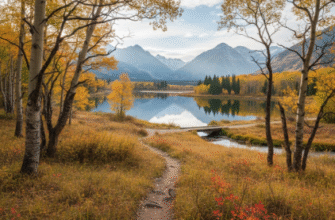
The whole corridor—Logan Canyon to Bear Lake—gets maybe half a million visitors annually, though I’ve seen estimates as high as 800,000. Most come in summer and fall, when the maples turn red and the aspen go gold and the limestone cliffs provide this stark, pale backdrop that makes every photo look like a postcard you’d recieve from someone’s overly ambitious road trip.
I still think the rocks are watching, though.