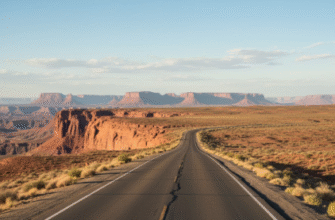
I used to think Lake Powell was just another reservoir—pretty, sure, but mostly a place where boats congregate and sunburned tourists drink beer from coolers.
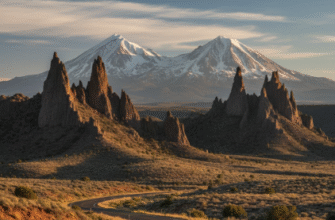
Turns out, the landscape straddling Utah and Arizona is something closer to a geological accident that somehow got permission to exist. Lake Powell sits in Glen Canyon, a drowned cathedral of Navajo sandstone that took roughly 200 million years to form, give or take a few epochs. The reservoir itself only dates back to 1963, when the Bureau of Reclamation decided damming the Colorado River was a reasonable idea. Now you’ve got 186 miles of electric-blue water cutting through rust-colored rock formations that look like they were sketched by someone who’d never seen earth tones before. The shoreline twists into nearly 2,000 miles of inlets and side canyons, each one a little universe of striations and shadows. I’ve driven past sections where the water level has dropped so dramatically you can see the original canyon walls emerging like bones through skin. It’s beautiful in a way that makes you uncomfortable.
Anyway, Rainbow Bridge sits about 50 miles upcanyon from the dam, accessible mostly by boat unless you’re committed to a brutal overland hike. It’s one of the world’s largest natural bridges—290 feet tall, 275 feet across—and it’s sacred to several Native American tribes, including the Navajo, Hopi, and Paiute.
The Scenic Drive That Doesn’t Quite Deliver What You Expect
Here’s the thing: there isn’t really a single “scenic drive” around Lake Powell in the way tourist brochures suggest. Highway 89 runs near the western edge, offering glimpses of the reservoir and surrounding plateaus, but you’re mostly looking at distance. The best views require deviation—side roads that peel off toward overlooks like Wahweap or the Lone Rock area, where a sandstone monolith juts from the water like a failed monument. I guess it makes sense that a place this geologically complicated wouldn’t offer easy access. The land resists simplicity. You can drive from Page, Arizona, across the Glen Canyon Dam itself, which is technically Highway 89, and the perspective from the bridge is vertiginous enough to make you reconsider your relationship with concrete infrastructure.
Wait—maybe the real scenic route is the contradiction itself. You’re driving through high desert, past Lake Powell Boulevard with its chain motels and raft rental shops, and then suddenly the earth drops away and you’re staring at water that shouldn’t exist in this climate.
The canyon walls reveal their history in horizontal bands: cream, salmon, rust, burgundy. Each layer represents a different depositional environment—ancient deserts, tidal flats, river systems that predate humans by incomprehensible margins. Geologists can read these rocks like a very slow, very patient novel. The Kayenta Formation sits beneath the Navajo Sandstone, which sits beneath the Carmel Formation, and so on, each telling a story about what Utah and Arizona were before they were Utah and Arizona. Honestly, standing at an overlook near Antelope Point, I felt the specific exhaustion that comes from trying to comprehend deep time. Your brain just sort of gives up and defaults to taking photos.
What Actually Happens When You Visit Glen Canyon and Its Contested Beauty
The thing about Lake Powell is you can’t seperate it from politics. Environmental groups have been arguing for decades that Glen Canyon Dam should be decommissioned, that the reservoir is an ecological disaster drowning one of the most spectacular canyon systems in North America. They’re not entirely wrong. The reservoir loses roughly 860,000 acre-feet of water annually to evaporation—enough to supply Los Angeles for a year, give or take. Meanwhile, the Navajo Sandstone formations that once defined Glen Canyon now sit beneath hundreds of feet of water, accessible only to divers willing to explore what’s essentially a submerged museum.
But I’ve also seen families on houseboats near Padre Bay, kids jumping off the roof into that impossible blue, and it’s hard to argue they’re not having a definately real experience.
The drive back toward Page takes you past the Vermilion Cliffs in the distance, their crimson faces catching late afternoon light in a way that feels almost aggressive. You pass through landscape that looks hostile to life—and yet, bighorn sheep navigate these cliffs, peregrine falcons nest in the alcoves, and somehow cheatgrass and Mormon tea manage to root in the sandstone cracks. The Colorado River, before it became Lake Powell, carved Glen Canyon over the course of 5 to 6 million years. Now it’s a recreational area managed by the National Park Service, visited by roughly 2 million people annually who come for the boating, the fishing, the photography, the strange beauty of a place that exists because we decided to rearrange hydrology. I don’t know if that’s triumph or tragedy. Probably both.