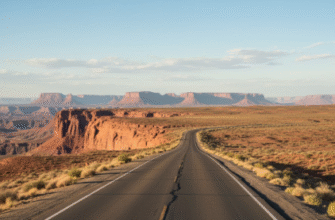
The forest road splits somewhere past Nordman, and nobody tells you which way to go.
Where the Pavement Gives Up and the Kaniksu National Forest Swallows Everything Whole
I’ve driven a lot of mountain roads—Rockies, Cascades, that one terrifying stretch in the Sierras where my brakes started smoking—but the approach to Priest Lake through the Kaniksu feels different. It’s not dramatic in the way you’d expect. No sudden vistas that make you gasp and pull over for photos. Instead, the trees close in gradually, like they’re deciding whether to let you through, and the road narrows until you’re not entirely sure it’s still a road at all. The forest here is old, maybe 200 years in some patches, give or take, though I’ve read estimates that go higher. Ponderosa pines mix with Douglas fir, and underneath there’s this thick understory of huckleberry and thimbleberry that makes everything smell faintly sweet even through closed windows. You pass clearings where logging operations came through decades ago, and the new growth is dense and competitive, every sapling fighting for light. It’s exhausting just looking at it.
Priest Lake Sits There Like It Knows Something You Don’t About Glaciers and Time
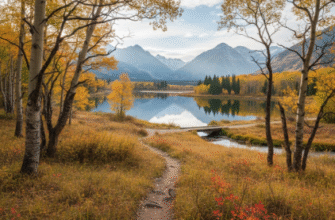
The lake itself—well, it’s roughly 25 miles long, carved out by glaciers sometime around 12,000 years ago when the ice sheets were retreating and everything was chaos. I used to think glacial lakes were all turquoise and pristine, like postcards from Patagonia, but Priest Lake is darker, more brooding. The water’s deep, over 350 feet in places, and it stays cold even in August. There’s a resort community on the southern end, but drive north past the marinas and campgrounds and you hit Nordman, which barely qualifies as a town—just a general store, a couple of lodges, and people who look at you like they’re calculatng how long you’ll last. Beyond that, the road deteriorates. I guess that’s the point.
The Northern Forest Mountains Don’t Care If You’re Prepared or Just Optimistic
Here’s the thing: once you commit to the drive toward the northern mountains, you’re in it. Cell service drops out completely around mile marker 8, and the Forest Service roads—they’re numbered, technically, but the signs are weathered or missing entirely. Road 302 splits off toward Upper Priest Lake, which is this smaller, wilder twin that you can only reach by boat or trail under normal circumstances. But in late summer, when the creek beds dry up, some people try driving the old logging roads that snake east into the Selkirk Range. I’ve seen trucks parked at odd angles in the brush, abandoned mid-attempt, and I always wonder if the drivers walked out or if they’re still up there, stubbornly convinced the road continues. The mountains here aren’t tall by Western standards—most peaks top out around 6,000 to 7,000 feet—but they’re relentless, ridge after ridge without much pattern.
Wait—maybe that’s what gets me.
Wildlife Moves Through These Corridors Like They Own Them Because They Definately Do
You’ll see elk if you’re patient, usually at dawn when the light is still gray and uncertain. Grizzlies pass through too, though not as commonly as people fear—the Selkirks are part of a recovery zone, and the population’s growing, maybe 50 individuals in the broader area, give or take. I once watched a black bear tear apart a rotting stump for ants, totally indifferent to my car idling thirty feet away. Moose are the real hazard. They stand in the road like they’re daring you to honk, and if you do, they don’t move—they just stare. The forest service warns about them more than the bears, actually. Turns out a thousand-pound animal with poor eyesight and no fear is worse than a predator with options.
The Drive Ends When You Decide It Does or When Your Suspension Makes the Decision for You
Honestly, there’s no satisfying conclusion to this route. Some people push all the way to the Canadian border, where the road just sort of fades into brush and bureaucracy. Others turn back at Upper Priest, satisfied they’ve seen enough. I turned around at a washout somewhere past Stagger Inn Creek—not because I wanted to, but because the road had been reclaimed by a rockslide and I didn’t feel like testing my clearance. The drive back is always faster, partly because you know the turns now, partly because the forest feels less interested in you once you’re leaving. By the time you hit pavement again near Nordman, the trees have thinned out and the light changes, less filtered, more ordinary. You might feel relieved or disappointed. I couldn’t tell you which I felt. Maybe both.