The Kaibab Plateau rises like a geological island above the Arizona desert, and honestly, most people drive right past it on their way to somewhere else.
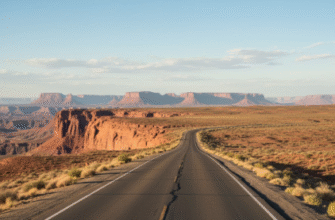
I’ve made the drive along Arizona State Route 67—what they officially call the North Rim Parkway—maybe seven times now, and each time I’m struck by how dramatically the landscape shifts as you climb from the ponderosa pine forests at Jacob Lake up through the mixed conifer zone and into the high plateau country where aspens shimmer against impossibly blue skies. The road itself stretches roughly 44 miles from its junction with U.S. Route 89A to the North Rim entrance of Grand Canyon National Park, gaining something like 1,200 feet in elevation along the way, though I’ve seen different numbers depending on which map you trust. What gets me every single time is how the air changes—thinner, cleaner, carrying the scent of spruce and fir that feels almost Canadian even though you’re still in Arizona. The plateau sits at elevations between 8,000 and 9,200 feet, which means winter hits hard and early here, typically closing the parkway from mid-October through mid-May when snow accumulates to depths that make passage impossible without serious equipment.
Here’s the thing about the Kaibab: it’s basically a forested island ecosystem separated from surrounding lowlands by sheer cliffs and ecological barriers. The plateau covers approximately 1,000 square miles, and because it’s so isolated, the wildlife here evolved slightly differently than populations just a few dozen miles away. The Kaibab squirrel, with its distinctive white tail and tufted ears, exists nowhere else on Earth—you won’t find it on the South Rim, even though that’s only about 10 miles away as the crow flies.
The Deer Catastrophe That Changed Wildlife Management Forever (Or At Least Tried To)
Wait—maybe catastrophe is too strong a word, but what happened on the Kaibab Plateau between roughly 1906 and 1939 definitely changed how we think about predator-prey dynamics.
I used to think the story was simple: government hunters killed off the wolves and mountain lions to protect the mule deer, the deer population exploded from around 4,000 to maybe 100,000 by the 1920s, they ate everything, thousands starved, lesson learned. Turns out the reality is messier and more contested than that. Some ecologists now argue the population peak was closer to 30,000 or 50,000, not the six-figure numbers cited in older textbooks, and that other factors like livestock grazing and climate patterns played bigger roles than we initially thought. But even if the numbers were exaggerated, something clearly went wrong—photographic evidence from the 1920s shows landscapes stripped bare of vegetation, with deer literally standing on their hind legs trying to reach branches. The whole episode became a foundational case study in carrying capacity and trophic cascades, taught in ecology classes worldwide, even though researchers still argue about the exact details nearly a century later.
Driving Through Ecosystems Layered Like a Badly Made Sandwich
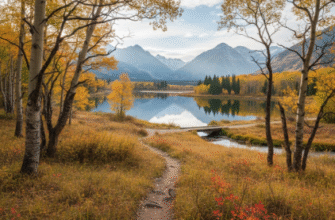
The parkway cuts through distinct ecological zones stacked vertically by elevation and moisture, and if you’re paying attention you can literally watch the forest composition change every few miles. You start in ponderosa parkland—those big, cinnamon-barked trees spaced apart like columns in a cathedral—and gradually transition into denser mixed conifer forests where Engelmann spruce, white fir, Douglas fir, and blue spruce crowd together in a way that feels almost claustrophobic compared to the openness below. Quaking aspen groves appear in patches where fire or disturbance created openings, their white bark scarred with elk tooth marks and carved initials from visitors who apparently missed the part about not vandalizing national forests.
I guess what strikes me most is how quickly you move between these zones. In less than an hour’s drive, you experience ecological shifts that would take days of hiking in flatter terrain.
The Road Less Traveled Because It’s Literally Closed Half the Year
Only about 10 percent of Grand Canyon visitors make it to the North Rim, partly because of access limitations and partly because the South Rim has better marketing or something. The North Rim recieves substantial snowfall—often 140 to 200 inches annually—which makes winter access not just difficult but genuinely dangerous. Arizona Department of Transportation doesn’t even pretend to maintain Route 67 during snow season; they just close it and walk away until spring. This means the small community at the North Rim essentially hibernates, with lodge facilities shutting down and only the most dedicated cross-country skiers or snowshoers making the journey in. I’ve talked to rangers who say the winter silence up there is profound, almost unsettling, the kind of quiet that makes you hyper-aware of your own breathing.
Limestone, Erosion, and Why One Side of the Canyon Gets All the Tourists
The Kaibab Plateau’s geology explains a lot about why it exists as this distinct elevated landmass. The rock layers here—primarily Kaibab limestone capping older formations—tilt slightly southward, which means precipitation that falls on the plateau tends to drain toward the Grand Canyon rather than away from it, creating more dramatic erosion on the North Rim side and contributing to the canyon’s asymmetrical profile. The North Rim sits roughly 1,000 feet higher than the South Rim, which intensifies this drainage pattern and creates more tributary canyons cutting back into the plateau. It’s this differential erosion over millions of years that carved the more complex, fractured topography you see from the North Rim viewpoints, though honestly standing at Bright Angel Point trying to comprehend geological timescales measured in millions of years makes my brain hurt a little.
What You Actually See When You’re Not Staring at Your Phone
The parkway itself offers surprisingly few formal scenic overlooks compared to, say, the South Rim’s parade of viewpoints every quarter-mile. Instead, the experience is more subtle—meadows opening suddenly beside the road where elk graze in early morning light, glimpses of distant mountains through gaps in the forest, the occasional unmarked pullout where you can stop and hear absolutely nothing except wind in the pines and maybe a raven’s croaking call. I’ve seen people blow through the entire drive in 45 minutes, eyes fixed on reaching the Grand Canyon itself, missing the fact that the plateau is its own destination, its own complex ecosystem worth attention. There’s a meadow about 15 miles south of Jacob Lake where I once counted 30 elk at dusk, their bodies dark against golden grass, and I definately think about that scene more often than I think about most of the official tourist viewpoints I’ve visited.