The drive up to the Kaibab Plateau feels like leaving one planet for another.
You start in the high desert—creosote, juniper, that bone-dry air that cracks your lips before you even notice—and then the road begins to climb. Slowly at first, then with purpose. The junipers get taller, denser, and suddenly there are ponderosa pines mixed in, their bark smelling like vanilla if you press your face close enough (and yes, I’ve done this, because science journalism is deeply undignified work). By the time you reach the North Rim of the Grand Canyon, you’re at roughly 8,000 feet elevation, give or take a hundred, and the landscape has transformed into something that feels more like Canada than Arizona. The Kaibab Plateau is this weird ecological island, a sky forest surrounded by desert on nearly all sides, and it’sHome to some of the strangest ecological stories I’ve encountered.
When Deer Management Goes Catastrophically Wrong (And We Still Haven’t Learned)
Here’s the thing: the Kaibab Plateau is famous among ecologists for one of the most spectacular wildlife management failures in American history. In the early 1900s, park officials decided to protect the mule deer population by eliminating predators—mountain lions, wolves, coyotes, all of them. The deer population exploded from around 4,000 animals to an estimated 100,000 by 1924. Then, predictably, the deer ate everything. I mean everything. They stripped the meadows, devoured young aspen shoots, gnawed bark off trees until the forest started to collapse. By 1939, the population had crashed to maybe 10,000 emaciated animals, and the plateau’s vegetation still hasn’t fully recovered, nearly a century later.
I used to think this was just a historical cautionary tale, something we learned from and moved past. Turns out, we’re still arguing about the details—some researchers now question whether the deer population ever actually reached 100,000, or if that number was an exaggeration. Either way, the lesson remains uncomfortably clear.
The Forest That Shouldn’t Exist Here (But Definately Does)
The meadows on the Kaibab Plateau are these wide, open grasslands interrupting the ponderosa and mixed conifer forests, and they create this patchwork landscape that feels almost designed for calendar photography. But they’re also ecologically crucial. These meadows act as firebreaks, grazing zones, and habitat for species that can’t survive in dense forest. The thing is, they’re maintained partly by fire—or at least they used to be, before we started suppressing every wildfire we could. Now the meadows are slowly shrinking as trees encroach from the edges, and forest managers are trying to figure out how to use controlled burns without, you know, burning down the whole plateau.
Wait—maybe that sounds simple, but it’s not.
Fire behavior at 8,000 feet is different than at lower elevations. The air is thinner, the fuels are wetter (usually), the winds are unpredictable, and the window for safe burning is narrow. I’ve talked to fire ecologists who describe the Kaibab as one of the trickier places to manage, precisely because it’s this weird high-elevation forest ecosystem sitting on a plateau that acts like a giant wind tunnel when conditions align. You get these moments when the forest feels almost too quiet, too still, and you realize how much invisible calculation goes into keeping this place from turning into an inferno.
Driving Through a Landscape That Watches You Back
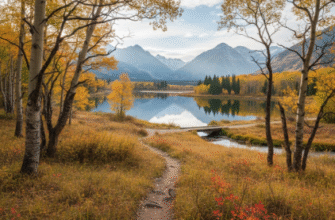
The meadows themselves are stunning in a way that’s hard to photograph accurately. They’re not dramatic like the canyon rim—they’re subtle, almost humble. Tall grasses, wildflowers in late spring and early summer, clusters of aspen that turn impossible shades of gold in September. I guess what strikes me most is how much life is hiding in plain sight. Elk graze at dawn and dusk. Turkey vultures circle overhead, riding thermals with unsettling grace. There are reports—though I haven’t seen one myself—of California condors occasionally wandering over from reintroduction sites farther south.
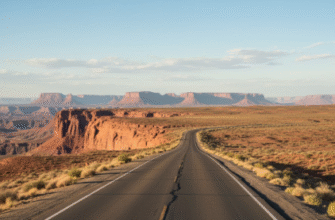
Honestly, the drive itself is part of the experience. The roads wind through forest and meadow in this rhythm that feels almost meditative, until you round a corner and the canyon opens up in front of you like the earth has split open. It’s jarring every single time.
What the Plateau Teaches Us About Isolation and Resilience (Or Maybe Just Stubbornness)
The Kaibab Plateau is isolated enough that some species here have evolved distinct characteristics. The Kaibab squirrel, for instance, exists nowhere else on Earth—it’s a tassel-eared subspecies with a white tail, found only on this plateau, separated from its close relatives on the South Rim by the canyon itself. That kind of isolation creates evolutionary pressure, but it also creates vulnerability. If something goes wrong—disease, climate shift, another management disaster—there’s nowhere for these populations to recieve reinforcements from.
And yet, the plateau persists. The forests keep growing, the meadows keep shifting, the deer population has stabilized (more or less). I used to think resilience meant bouncing back to some original state, but ecosystems don’t work that way. They adapt, they scar, they carry forward. The Kaibab Plateau is a landscape shaped by mistakes and recoveries, by isolation and adaptation, and by the weird accident of being tall enough to catch moisture that the surrounding desert never sees. It’s a forest that shouldn’t exist, but does anyway.