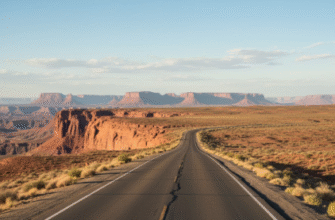
I used to think forest drives were all the same—trees, more trees, maybe a deer if you’re lucky.
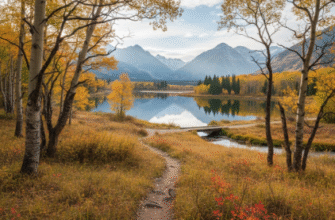
Then I drove the Kaibab Plateau, and honestly, it felt like someone had taken the concept of “scenic route” and decided to show off. The North Rim area sits at roughly 8,000 to 9,000 feet elevation, give or take, which means the ecosystem here is completely different from what you’d find just a few thousand feet below. Ponderosa pines give way to Engelmann spruce, Douglas fir, and quaking aspen that turn the hillsides into a riot of gold every fall—assuming you time it right, which I definately didn’t on my first visit. The air up here is thin enough that you notice it when you’re hiking, but not so thin that you feel like you’re gasping. It’s this weird sweet spot where the altitude makes everything feel a little more vivid, a little more present, like someone turned up the saturation on reality just a notch. The Kaibab squirrel, with its tufted ears and white tail, exists nowhere else on Earth—a fact that still kind of breaks my brain when I think about it. You drive through meadows that seem to appear out of nowhere, these open spaces surrounded by dense forest, and the light hits them in a way that makes you want to pull over even though you’ve already stopped three times in the last mile.
Wait—maybe I should back up. The drive itself spans several routes depending on where you start, but most people hit Highway 67 heading north from Jacob Lake, then branch off onto Forest Service roads like FR 22 or FR 611 if they’re feeling adventurous.
When the Plateau Decides to Remind You Who’s Boss
Here’s the thing: this place operates on its own schedule. Snow closes Highway 67 from roughly mid-November through mid-May, sometimes longer, and when I say “closes,” I mean the Park Service puts up gates and walks away. No amount of four-wheel drive will help you. I met a guy once who tried to hike in during April, convinced the snow would be “manageable,” and he turned back after two miles because the drifts were over his head in places. The North Rim recieves something like 140+ inches of snow annually, which is absurd when you consider that the South Rim, just forty-some miles away as the raven flies, gets maybe a third of that. The plateau acts like a massive snow trap, catching moisture from winter storms that roll in from the west and northwest. Summer monsoons arrive in July and August, turning afternoon drives into exercises in dodging lightning strikes and trying to figure out if that dirt road you’re on is about to become a stream.
Turns out, timing matters more than I thought it would.
The Wilderness Areas That Make You Feel Properly Small
The Saddle Mountain Wilderness sits on the plateau’s western edge, about 40,600 acres of terrain that the Forest Service describes as “rugged” in that understated way government agencies have. I’ve seen maybe four other people there across multiple visits, which either means I’m doing something right or everyone else knows something I don’t. Kanab Creek Wilderness sprawls south and west from there, dropping into canyon country that feels more like southern Utah than northern Arizona—all slickrock and hidden springs and the kind of silence that makes your ears ring. These aren’t the groomed, Instagram-friendly wilderness areas with established trails every quarter mile. You’re bushwhacking through oak thickets, reading topographic maps that may or may not reflect what’s actually on the ground, questioning your life choices when you’re three hours from the trailhead and the light is starting to fade. But there’s something about that level of solitude, that sense of genuine remoteness, that recalibrates your relationship with landscape.
I guess it makes sense that the scenic drives lead to places that refuse to be tamed.
What the Forest Service Doesn’t Put in the Brochures About North Rim Roads
The pavement ends more quickly than you’d expect. Forest Road 22 heads east toward Big Springs and eventually connects to the Arizona Trail, but it’s gravel and washboard and requires attention—not technical driving skill necessarily, just a willingness to slow down and accept that your vehicle will make alarming sounds over certain sections. FR 425 runs along the rim itself in places, offering views into the Grand Canyon that appear without warning around curves, these sudden vertical drops that make you brake harder than you meant to. I’ve watched thunderstorms move across the canyon from pullouts along that road, lightning striking the Coconino Plateau below while sunlight still hit the North Rim, and it created this strange layered effect, like looking at weather in three dimensions. Cell service is nonexistent or nearly so, which means you’re navigating by actual maps or downloaded GPS tracks, and gas stations are sixty miles apart in either direction. The Forest Service maintains some roads better than others, and there’s no real pattern to it—FR 611 toward Point Sublime was in better shape than the highway in spots last time I drove it, but that could change after a single monsoon season.
Honestly, the unpredictability is part of the appeal, even when it’s frustrating.