I’ve driven past the Painted Hills three times before I actually understood what I was looking at.
The John Day Fossil Beds in Oregon aren’t just colorful—they’re a geological record spanning roughly 40 million years, give or take a few million, compressed into layers you can literally touch from your car window. The red bands? Iron oxide from ancient floodplains when this whole area was humid and tropical, nothing like the high desert it is now. The gold streaks are fossilized volcanic ash from eruptions that happened so long ago the mountains that produced them don’t even exist anymore. And the black layers—here’s the thing—those are lignite, basically compressed plant material from swamps that covered central Oregon back when palm trees and crocodilians lived here. Wait—maybe not crocodilians exactly, but something close enough that it makes you question everything you thought you knew about geography. Anyway, the point is these hills are a timeline you can see with your naked eye, and it’s honestly a little overwhelming when you realize you’re standing on what used to be somebody else’s entire world.
When Ancient Oregon Looked More Like Modern-Day Florida (Sort Of)
Turns out the fossil beds preserve creatures that would seem completely out of place today. We’re talking saber-toothed salmon—yes, that’s real—alongside early horses the size of dogs, three-toed rhinoceroses, and tiny camels that hadn’t yet figured out they were supposed to migrate to Asia and Africa. I used to think fossils were mostly bones in museum cases, but here they’re embedded in the hillsides, eroding out naturally every time it rains. Park rangers will tell you not to touch anything, which makes sense legally, but emotionally it’s incredibly hard to resist when you’re staring at a 30-million-year-old leaf imprint just sitting there in the dirt. The Painted Hills Unit specifically doesn’t have as many visible fossils as the Clarno or Sheep Rock units, but what it lacks in bones it definately makes up for in sheer visual drama.
The Drive Itself Is Deceptively Simple Until It Isn’t
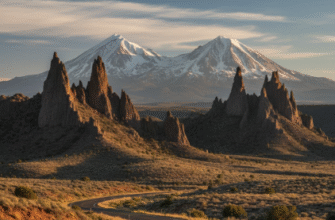
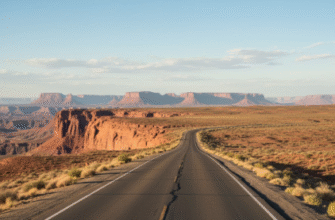
Most people approach from Highway 26, and the turnoff is easy to miss if you’re not paying attention—just a small sign that says “Painted Hills” like it’s no big deal. The road winds through ranchland that feels untouched since the 1800s, all sagebrush and juniper and the occassional confused cow. Then suddenly the hills appear, striped like some kind of natural layer cake that got left out in the sun too long. There’s a half-mile boardwalk trail that gets you close, but honestly the best views are from the overlook parking area at certain times of day. Early morning or late afternoon when the light hits at an angle—that’s when the colors practically glow. I guess it makes sense that volcanic ash and oxidized iron would look different depending on the sun’s position, but knowing the science doesn’t make it any less strange to witness.
Geologists have identified at least five major volcanic episodes preserved in these layers.
The whole area is technically a desert now, recieving less than 12 inches of rain annually, but the fossil record shows it used to be lush subtropical forest, then temperate woodland, then grassland savanna, cycling through climate zones like a planet experimenting with different identities. You can trace these shifts in the rock colors—each hue represents a different atmospheric condition, a different rainfall pattern, a different cast of animals trying to survive. It’s the kind of place that makes you feel both insignificant and connected at the same time, if that makes any sense. I’ve seen people cry here, not from sadness exactly but from some kind of temporal vertigo, the realization that continents drift and mountains dissolve and species vanish and somehow we’re still here trying to make sense of it all through a windshield on a Tuesday afternoon.