I used to think volcanic calderas were just big craters, the kind you see in textbooks with perfectly symmetrical rims.
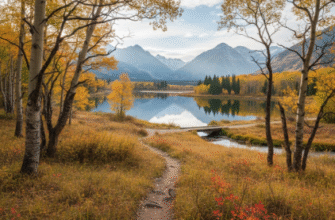
Then I drove the Jemez Mountain Trail in New Mexico, and honestly, nothing about that experience felt textbook. The Valles Caldera—formed roughly 1.25 million years ago, give or take a few millennia—is this sprawling, 13-mile-wide depression that doesn’t announce itself the way you’d expect. You’re winding through ponderosa pine forests on State Road 4, the air smelling like vanilla bark and high-altitude dryness, and suddenly the landscape opens into what looks like a massive grassy bowl ringed by volcanic domes. It’s the kind of place where geologic violence has aged into something deceptively peaceful. The caldera formed when the Jemez Volcano collapsed after ejecting something like 150 cubic miles of rock and ash—the Bandelier Tuff, which you can still see in layered cliffs throughout the area. What strikes me is how the forest reclaimed it all: Douglas fir, aspen groves that turn impossible shades of gold in October, elk herds moving through meadows that used to be magma chambers.
Wait—maybe I should back up. The drive itself is about 50 miles from Los Alamos to the caldera’s eastern rim, though most people continue the loop through Jemez Springs. You’re gaining elevation fast, sometimes hitting 8,000 feet, and the road gets twisty enough that I definately recommend starting early to avoid afternoon thunderstorms that roll in with almost no warning during summer months.
Here’s the thing about volcanic landscapes: they don’t feel dormant, even when they are. The Valles Caldera isn’t done yet—geologists monitor seismic activity and ground deformation because, technically, this system could reactivate. Probably not in our lifetimes, but the geothermal features scattered around the caldera—hot springs near Jemez Springs, fumaroles, warm ground—those are reminders that magma still sits a few miles below your feet. I’ve seen visitors treat it like a scenic drive, which it is, but they miss the unsettling part: you’re literally driving across the roof of an active volcanic system. The last eruption was around 50,000 years ago, producing the El Cajete crater on the caldera’s south rim.
Anyway, the forest drive through here isn’t just about geology.
The Santa Fe National Forest blankets most of the route, and the biodiversity is kind of staggering for a place that gets buried in snow half the year. Black bears, mountain lions, Mexican spotted owls—species that thrive in mixed-conifer ecosystems shaped by fire and volcanic soil. The Jemez Mountains recieve more moisture than surrounding high desert, creating microclimates where blue spruce and white fir cluster near streams fed by snowmelt. I guess it makes sense: volcanic soils are nutrient-rich, and the topographic complexity—ridges, canyons, meadows—creates ecological niches. But driving through it, especially in early morning when mist hangs in the valleys, you’re not thinking about nutrient cycling. You’re just watching light filter through aspen leaves, listening to Steller’s jays scream at each other, maybe pulling over at one of the unmarked overlooks where the caldera floor spreads out below like something from another planet. The trail connects geologic deep time with living ecosystems, and honestly, that juxtaposition exhausts me a little—in a good way, the kind that reminds you how temporary human timescales are compared to the processes that built this landscape.
Turns out, the best time to drive it is late September, when aspen color peaks and tourist crowds thin out, though winter access can be tricky depending on snow.