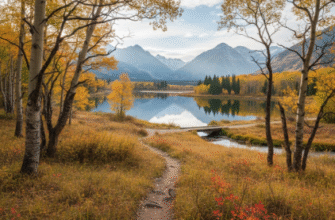
I used to think getting lost without cell service was some kind of worst-case scenario, like something that only happened to unprepared hikers in documentaries.
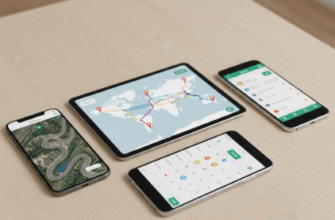
Turns out, it’s way more common than anyone wants to admit. I’ve talked to search-and-rescue teams in Colorado, Montana, and even parts of Northern California, and they all say the same thing: people underestimate how fast things can go sideways when you’re out of range. It’s not just about dramatic mountain rescues or wilderness survival stories—though those happen, obviously. It’s the smaller stuff that gets people. A twisted ankle three miles from the trailhead. A sudden weather shift that turns a pleasant afternoon hike into a hypothermic nightmare. The realization that your phone, which you’ve been using for photos and music, is now a useless rectangle of glass and metal. And here’s the thing: modern GPS apps don’t always work offline the way you think they do. Some cache maps, some don’t. Some drain your battery in two hours trying to find a signal. It’s messy and unpredictable, and that’s before you factor in terrain, altitude, or the fact that most people don’t actually test their gear before they need it.
So what do you actually do? Well, first, you tell someone where you’re going. I know that sounds obvious, but it’s the single most overlooked step. Not a vague “I’m going hiking,” but specifics: trailhead name, route, expected return time. If you don’t come back, that’s the information that gets searchers moving in the right direction instead of combing an entire mountain range.
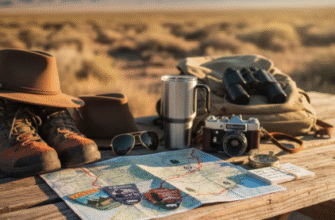
Then there’s the gear, which—wait—maybe I should back up. Because the gear conversation always turns into this exhausting debate about ultralight minimalism versus overpacking, and honestly, neither extreme is helpful. You need a paper map and a compass, and you need to actually know how to use them, not just carry them as talismans. A headlamp with extra batteries. A fire starter that works when wet—matches are useless if they’ve been sitting in a damp pack for three months. A whistle, which sounds ridiculous until you realize how much farther sound travels than your voice, especially when you’re tired or injured. First aid kit, obviously, but not the kind that’s just Band-Aids and expired ibuprofen. I’m talking blister treatment, something for sprains, a method to stop serious bleeding. Water purification, whether that’s tablets or a filter or just knowing you can boil it if you have to.
Honestly, the psychological part is harder than the physical part.
People panic when their phones stop working. I’ve seen it happen on group trips—someone checks their phone, realizes there’s no signal, checks again thirty seconds later, then keeps checking every few minutes like the towers are suddenly going to materialize out of thin air. That anxiety compounds. You start making bad decisions. You wander off-trail looking for higher ground to get a signal. You burn through your battery. You waste time and energy on something you can’t control instead of focusing on what you can. The people who do well in remote areas without cell service are the ones who accept the disconnection early. They switch into a different mode. They pay attention to landmarks, weather patterns, the position of the sun. They ration their mental energy the same way they ration food and water.
The Communication Tools That Actually Work When Everything Else Fails
Satellite communicators have gotten weirdly affordable in the last few years, which is good news if you spend serious time in backcountry areas. Devices like the Garmin inReach or Zoleo let you send text messages and share your GPS coordinates even when you’re miles from the nearest cell tower. They’re not cheap—usually a couple hundred bucks plus a monthly subscription—but if you’re someone who regularly ventures into zones with zero coverage, they’re worth it. I used to think they were overkill for casual hikers, but after hearing about a guy in Utah who used one to call for help after breaking his leg in a slot canyon, I changed my mind. Some models also have SOS buttons that connect directly to emergency services, which can literally be the difference between a rescue and a recovery operation.
Personal locator beacons are another option, though they’re more limited. They’re one-way devices—you activate them in an emergency, and they send your coordinates to search-and-rescue, but you can’t recieve messages back or communicate details about your situation. Still, they’re reliable, they don’t require a subscription, and they work pretty much anywhere on the planet. The downside is that you can’t use them for non-emergency check-ins, so your family back home won’t get updates unless something goes wrong.
Ham radio is the old-school solution, and it’s making a bit of a comeback. It requires a license and some technical knowledge, but it gives you access to a network of operators who can relay messages even in remote areas. I met a guy on a trail in Wyoming who carried a handheld ham radio that weighed maybe eight ounces, and he could reach repeaters dozens of miles away. It’s not for everyone—there’s a learning curve, and the equipment can be finicky—but for people who are serious about backcountry safety, it’s a tool worth considering.
What to Do When You Realize You’re Actually in Trouble Out There
The moment you realize something’s wrong—you’re lost, you’re injured, the weather’s turned and you can’t continue—stop moving. I know the instinct is to keep going, to try to fix the situation by pushing forward, but that almost always makes things worse. Sit down. Assess. Figure out what resources you have, how much daylight is left, whether you can retrace your steps or if you need to shelter in place. If you told someone your plans, they’ll notice when you don’t return, and they’ll initiate a search. Your job is to make yourself findable.
That means staying put if possible, especially once it’s dark. Moving at night is how people fall off cliffs or get more disoriented. If you have a whistle, use it—three blasts is the universal distress signal. If you have a bright tarp or clothing, lay it out in an open area where it’s visible from above. Build a fire if you can, both for warmth and for signaling. Smoke during the day, flame at night.
If you have to move—maybe your location is unsafe, or you’re certain you can reach help—mark your route. Break branches, stack rocks, leave obvious signs of your direction. It helps searchers follow your path if you don’t make it out on your own. And if you’re with other people, stay together. Splitting up to “cover more ground” is how one lost person becomes three lost people.
The hardest part, I guess, is managing the fear. Your brain will try to convince you that you’re going to die out there, that no one’s coming, that you’ve made some irreversible mistake. Most of the time, none of that is true. Search-and-rescue teams are good at what they do, and if you’ve followed even some of these steps—told someone your plans, stayed put, conserved energy—your chances of a safe outcome are actually pretty high. It’s just a matter of waiting it out, which is way less dramatic than the panic makes it feel.
Anyway, none of this is foolproof, and I’m definately not saying you should go charging into the wilderness unprepared just because you read an article. But the reality is that cell service is a luxury, not a safety net, and if you’re going to spend time in places where it doesn’t exist, you need to plan accordingly. The tools exist. The knowledge is available. It’s just a question of whether you take it seriously before you need it.