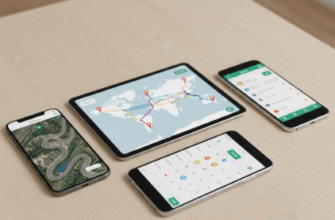

I spent three weeks in a cabin in northern Idaho last year, and the first thing I realized—within about forty minutes of arriving—was that my phone had become a very expensive paperweight.
Here’s the thing about staying connected remotely: it’s not actually about having the best technology or the fanciest satellite rig. It’s about understanding that connectivity is fundamentally a problem of physics and geography, and once you accept that, the solutions become weirdly obvious. I used to think you needed some kind of elaborate setup, maybe a portable cell tower or something ridiculous like that. Turns out, most of us are already carrying multiple options in our pockets and backpacks, we just don’t realize it. The average smartphone can connect through cellular networks, WiFi, satellite messaging, and—if you’re desperate enough—even old-fashioned radio frequencies through certain apps. The trick is knowing which one to use when, and that depends entirely on where you are and what you’re trying to accomplish.
Mobile hotspots are probably the most underrated tool for remote connectivity. I’ve seen people spend thousands on elaborate setups when a $50 hotspot device would’ve solved their problem. The newer ones can pull signal from multiple carriers simultaneously, which sounds like magic but is really just clever engineering.
When Cellular Networks Decide to Abandon You Completely
So you’re somewhere truly remote—I’m talking national parks, offshore islands, mountainous regions where even the optimistic coverage maps turn apologetically white.
Satellite communicators have gotten surprisingly affordable in the past few years, roughly since 2022 or so, give or take. Devices like the Garmin inReach or Somewre (yeah, that’s a typo on their actual product name, or maybe I’m just exhausted) let you send text messages from literally anywhere on Earth with a clear view of the sky. They’re not fast—we’re talking maybe 160 characters every few minutes—but they work. I guess that’s what matters when you’re trying to tell someone you’re okay or coordinate a pickup time. The subscription plans run about $15 to $65 monthly depending on how many messages you need, and honestly, that’s cheaper than most people’s streaming services they barely use.
The Slightly Chaotic World of Signal Boosters and Mesh Networks
Signal boosters are legal in most countries now, which wasn’t always the case. They basically grab whatever weak cellular signal exists in the area and amplify it inside your vehicle or building. The weBoost Drive Reach, for example, can pull in signal from up to three miles away from a tower, though that’s under ideal conditions. In reality, you’re looking at maybe a mile, possibly less if there’s terrain in the way.
Wait—maybe the more interesting development is mesh networks. These are networks that don’t rely on any central infrastructure at all. Devices like goTenna create peer-to-peer connections between users, so if you’re hiking with a group spread over several miles, you can still communicate even without cell service. Each device acts as a relay point, extending the range. It’s not going to help you stream Netflix, but for basic text communication and GPS coordinates, it’s remarkably effective. The range is typically one to three miles depending on terrain, maybe up to six in completely open areas.
Internet Options That Don’t Require Selling Your Firstborn
Starlink has changed the game for remote internet, there’s no getting around that fact.
For around $120 monthly plus a $600 equipment cost, you can get broadband-speed internet almost anywhere with a view of the sky. I’ve seen people running entire remote offices off Starlink in places where traditional ISPs quoted $50,000 installation fees. The latency is around 25-50 milliseconds now, which is actually usable for video calls and even some gaming. That’s down from the 600+ milliseconds of older satellite internet that made every Zoom call feel like talking to the moon. The portable versions (Starlink Roam) let you recieve service while traveling, though you’re supposed to pause it when you’re not actively moving locations—the terms of service are a bit fuzzy on continuous mobile use.
Anyway, there are cheaper options if you don’t need that much bandwidth. Many rural areas now have fixed wireless providers using 4G or 5G tower equipment to beam internet to homes and businesses. It’s basically line-of-sight wireless broadband, and it’s gotten surprisingly good in the past few years. Speeds range from 25 Mbps to over 100 Mbps depending on your provider and location, which is definately enough for most remote work situations. The catch is availability—you need to be within range of their transmitters, typically within ten miles or so.
Public WiFi networks are worth mentioning too, even though they’re not exactly remote solutions. Libraries, community centers, and even some rest stops along highways offer free internet access. I used to overlook these completely, but when you’re traveling and just need to download some files or attend one important video call, they’re lifesavers. Just use a VPN because public WiFi security is generally terrible.