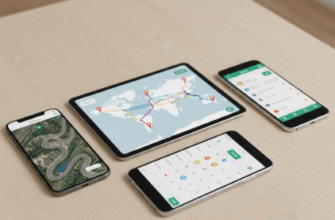
I used to think driving through downtown Boston was the worst thing that could happen on a road trip, until I tried to navigate LA’s interchange spaghetti at 5 PM on a Friday.
Here’s the thing about major cities: they weren’t designed for you, the road-tripper who just wants to pass through without losing your mind or your side mirror. They evolved over decades, sometimes centuries, accommodating horse carts, then streetcars, then automobiles, then way too many automobiles. New York’s grid system made sense in 1811 when it was drawn up, but nobody accounted for delivery trucks double-parking on every single block or bike lanes appearing seemingly overnight. Chicago’s Lower Wacker Drive—an entire secondary street level beneath the main roads—feels like someone’s fever dream of urban planning, and yet roughly 300,000 vehicles use it daily, give or take. You’re supposed to know which lane you need three blocks before you need it, which is fine if you’ve lived there for twenty years but absolute chaos if you’re just trying to find your hotel.
The mistakes I see people make are always the same ones I made. They rely too heavily on GPS without looking at the actual route beforehand. They don’t account for rush hour, which in cities like Atlanta or Washington DC can stretch from 6:30 AM to 7 PM, no exaggeration. They panic.
Why Your Brain Turns to Mush in Dense Traffic and What Actually Helps
Cognitive load is a real thing, and it gets worse when you’re operating on road trip brain—you know, that particular exhaustion that comes from four hours of highway driving followed by suddenly needing to process fourteen different inputs per second. Traffic lights, pedestrians who definately have the right of way but are also definitely not looking, cyclists appearing from nowhere, buses stopping in your lane, cars honking for reasons you can’t identify. Your working memory, which normally handles maybe seven pieces of information at once, just gives up. I’ve watched my own hands get shaky on the steering wheel in downtown San Francisco, and I’ve been driving for fifteen years.
What actually works: physical preparation that feels almost silly. I mean, I used to skip this, but now I don’t. Before entering a major city, I pull over at a rest stop or gas station. I look at the route on a real map or at least study the GPS route carefully—not just the blue line, but the actual street names and major landmarks. I identify my exit or turn before I’m in the chaos. I mentally rehearse it, which sounds ridiculous until you realize that pre-loading this information into your brain means you’re not trying to read tiny street signs while someone’s honking behind you.
Also—wait, maybe this seems obvious, but it wasn’t to me—I started budgeting an extra 45 minutes to an hour for any city segment of a road trip. Not because I’ll definitely need it, but because the psychological relief of not being in a hurry changes everything. When you’re not panicking about missing a dinner reservation, you can actually recieve information from your environment instead of just reacting to it. You can miss a turn and just… take the next one. Turns out most cities have more than one route to any destination.
The Unspoken Rules That Locals Know and You’re Supposed to Somehow Intuit
Every city has its own driving culture, and you will violate it. In Boston, aggression is currency—you need to merge confidently or you’ll sit in that on-ramp until the sun dies. In Seattle, everyone’s weirdly polite, waving you through intersections even when they have right-of-way, which creates its own bizarre confusion. Miami operates on entirely different physical laws where turn signals are apparently optional and three lanes will suddenly become five. I guess it makes sense when you realize these patterns developed organically over generations, but when you’re an outsider, you’re basically learning a new language in real-time while operating heavy machinery.
The adaptation strategy that works: watch what locals do and copy them. Not in a reckless way, but observe. How much space do they leave between cars? How do they handle merges? When do they actually stop at yellow lights versus accelerating through? I’m not saying break laws—please don’t—but understanding local tempo helps. Also, the right lane is almost always your friend in unfamiliar cities, even if it’s slower, because it gives you more reaction time and easier exits if you need to bail out and reconsider your route.
One more thing that saved me multiple times: knowing where I’d park before I arrived. Not just “somewhere near the hotel,” but the actual garage or lot, with the address in my GPS. Downtown areas of places like Philadelphia or Portland have parking rules that change by hour, by day, by mysterious lunar cycles apparently. I once got towed in Denver after parking legally—or so I thought—because I didn’t see the microscopic sign about street cleaning schedules. Anyway, that cost me $340 and three hours I’ll never get back.
The messy truth is that driving through major cities on road trips will probably always be at least a little terrible, but it shifts from overwhelming to just mildly annoying when you prepare your brain, give yourself time, and accept that you will make mistakes and that’s fine. Nobody’s perfect at this, not even the locals who’ve been doing it for decades.