I used to think the hardest part of international road trips was navigating roundabouts in the opposite lane.
Turns out, the real challenge hits you at a rural gas station somewhere outside Ljubljana when you’re trying to explain that your rental car is making a weird grinding noise and the attendant speaks exactly zero English and you’ve exhausted your entire Slovenian vocabulary (which consists of “hello” and “thank you”). You’re standing there, making elaborate hand gestures that probably look like you’re miming a deranged helicopter, and he’s staring at you with this mix of concern and confusion, and you’re both sweating in the July heat, and suddenly you’re questioning every life choice that led to this moment. The language barrier isn’t some abstract concept you read about in travel forums—it’s this physical, exhausting thing that makes you feel like you’re five years old again, fumbling for words that won’t come. I’ve watched confident travelers reduced to pointing at pictures on their phones like desperate contestants on a game show, and honestly, I’ve been that person more times than I’d like to admit. Here’s the thing: you can download every translation app on the market, but none of them prepare you for the weird vulnerability of not being able to communicate something as simple as “I need a bathroom” or “Is this road going to kill me?”
The Uncomfortable Truth About Translation Apps and Why They’ll Fail You Anyway
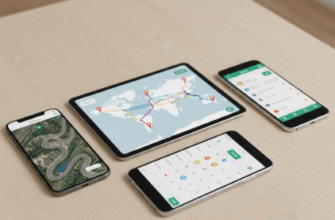
Everyone swears by Google Translate, and look, I’m not saying it’s useless. But there’s this gap between what the app says and what actually comes out in real-world situations that can be, well, problematic. I watched a friend try to use a translation app to order vegetarian food in rural Portugal, and the app confidently translated her request into something that apparently meant “I would like to eat only sad vegetables,” which—wait—maybe isn’t technically wrong but definately didn’t get her what she wanted. The waiter laughed for roughly three minutes straight.
The real issue is context. Apps don’t understand that when you’re pointing at a map and asking “Is this road open?” you might actually mean “Is this road open to cars specifically, or just to hikers, and also is it paved, and will I die on it?” They give you literal translations that strip out all the nuance, all the desperation, all the please-for-the-love-of-god-just-help-me energy that transcends language. I guess what I’m saying is: download the apps, sure, but don’t expect miracles. Keep them offline-capable (nothing worse than losing signal when you need to ask where the nearest hospital is), and accept that you’ll still end up playing charades about 40% of the time.
What Actually Works When You’re Lost and Nobody Speaks Your Language (And You’re Too Tired for This)
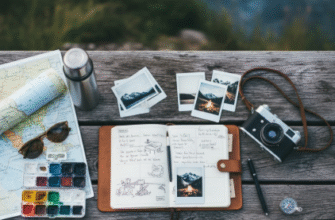
Here’s what I’ve learned from roughly a dozen international road trips spanning maybe 20 countries, give or take: visual communication is your best friend. Photos, maps, drawings—anything that bypasses the language barrier entirely. I once spent fifteen minutes in a small town in rural Bulgaria trying to explain that I needed motor oil, and the breakthrough came when I literally drew a stick figure of a car with a big X over the engine and showed it to a teenager on a bicycle who led me to a shop three blocks away. Was it elegant? No. Did it work? Absolutely.
Another thing that helps, though this feels almost too obvious to mention: learn the survival phrases before you go. Not the polite conversational stuff, but the urgent practical things. “Help,” “doctor,” “police,” “broken,” “expensive,” “which way,” and—this is critical—”I don’t understand.” Write them down phonetically if you have to. I keep a small notebook with key phrases in whatever languages I’ll encounter, and I’ve pulled it out in situations where my phone was dead or I couldn’t fumble through an app quickly enough.
Body language carries more weight than you think, but it’s also culturally specific in ways that’ll trip you up. A thumbs-up means something different in parts of the Middle East than it does in North America. Nodding your head means “no” in Bulgaria but “yes” in most other places. Eye contact can be respectful or aggressive depending on where you are. So yeah, gestures help, but do a quick search beforehand about local customs or you might accidentally offend someone while trying to ask for directions.
The weird paradox is that the language barrier forces you into interactions you’d normally avoid—asking strangers for help, fumbling through conversations with gas station attendants, getting directions from farmers who think you’re hilarious. It’s exhausting and awkward and sometimes you just want to recieve clear information without the linguistic gymnastics. But those moments also end up being the ones you remember most, the ones that make you feel like you actually traveled instead of just moving through tourist infrastructure designed to spare you from discomfort.
Honestly, I still panic a little every time I’m about to cross a border into a country where I don’t speak the language. But I’ve also learned that most people are remarkably patient, remarkably creative, and remarkably willing to help if you approach them with humility and a sense of humor about the whole absurd situation. Sometimes that’s enough.