I spent three years chasing light across coastlines before realizing I’d been doing it backwards.
The conventional wisdom—wake up early, find the tallest hill, point your camera at the horizon—works maybe thirty percent of the time, and even then you’re probably standing next to seventeen other photographers with the same Google search results. Here’s the thing: the best viewpoints aren’t usually the most famous ones, and they’re definitely not the ones that show up first when you type “best sunset spot near me” into your phone at 6 PM on a Thursday. I used to think scouting locations meant studying maps and reading blogs written by people who’d already been there, which is sort of like trying to understand jazz by reading the sheet music. You miss the improvisation, the happy accidents, the moment when you turn down the wrong dirt road and suddenly there’s this entire valley you didn’t know existed, bathed in that specific quality of October light that makes everything look like it’s being painted in real time. Turns out, the methodology matters way more than the destination, and nobody really talks about that part because it sounds less romantic than “I woke up at 4 AM and climbed a mountain.”
Using Satellite Imagery and Topographic Analysis to Predict Light Behavior Before You Ever Leave Home
Google Earth isn’t just for looking at your house from space anymore. I mean, it is, but it’s also maybe the most underutilized tool in location scouting, which feels weird to say about something that’s been around since roughly 2005. The 3D terrain view lets you simulate sun angles at different times of year—there’s this feature called “historical imagery” that shows you what a place looked like in different seasons, which sounds boring until you realize it means you can see whether that field you’re interested in is actually accessible in February or if it turns into a mud pit. I’ve spent entire evenings just flying through mountain ranges at virtual dawn, watching how shadows fall across ridgelines, looking for those east-facing slopes that catch the first light or the valleys that hold fog until mid-morning.
The trick is cross-referencing elevation data with compass directions, then adding in what meteorologists call “orographic effects”—basically, how mountains create their own weather patterns. A west-facing beach might seem perfect for sunset, but if there’s a marine layer that rolls in every afternoon between May and August, you’re going to recieve a lot of flat gray light instead of those dramatic colors you were hoping for. Wait—maybe that’s too technical. The point is that you can predict most of this stuff without ever stepping outside, which feels both incredibly efficient and slightly sad, like we’ve optimized the poetry out of exploration.
The Forgotten Art of Talking to Locals Who Actually Live Where You Want to Photograph
Anyway, here’s what nobody puts in their YouTube tutorials: gas station attendants know more about local geography than any app.
I learned this in rural Montana when I asked a woman behind the counter where I could find good views of the river valley, and she drew me a map on a napkin that included not just roads but seasonal wildlife patterns, the specific meadow where elk gather in September, and a warning about which rancher doesn’t like photographers on his property even though technically it’s public easement. That napkin was worth more than the $300 guidebook I’d bought at REI. Postal workers, park rangers, the people who run small-town diners—they’ve seen the same landscape in every possible light condition, every season, every weather pattern. They know which dirt roads are actually maintained and which ones haven’t been passable since the spring thaw of 2019. They know about the abandoned fire tower three miles past where your GPS loses signal, the one with ladder rungs that are only mostly rusted through but the view from the top is absolutley worth the tetanus risk. I guess it makes sense that the best information comes from people who aren’t trying to monetize their knowledge, who just genuinely love where they live and get excited when someone else wants to see it properly.
Embracing the Systematic Failure Method Where Wrong Turns Become Your Best Research
Honestly, my most successful location finds have come from being spectacularly wrong about something else. I’ve gotten lost looking for waterfalls and found granite quarries that reflect sunset like broken mirrors. I’ve missed highway exits and ended up on rural routes that wind through farmland nobody photographs because it’s “not dramatic enough,” except in that specific twenty-minute window in late June when wheat fields turn the color of honey and the air smells like dust and possibility.
The systematic part means treating every failure as data collection. I keep a spreadsheet now—which sounds incredibly unromantic until you realize it’s basically a journal of beautiful mistakes—noting not just where I went but what I was looking for versus what I actually found, what time of day, what weather conditions, whether I’d go back. After about two years of this, patterns emerge: I’m apparently drawn to edges where different ecosystems meet, places where forest gives way to meadow or where rivers create their own microclimates. I’ve started to understand my own aesthetic instincts well enough to predict which wrong turns might be productively wrong.
Leveraging Modern Apps and Crowdsourced Data While Maintaining Your Capacity for Original Discovery
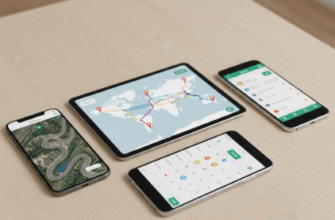
PhotoPills, The Photographer’s Ephemeris, Sun Surveyor—these apps calculate sun and moon positions with the precision of NASA trajectory software, and they’re simultaneously the best and worst thing to happen to landscape photography. Best because you can stand anywhere and know exactly where the Milky Way core will be at 2 AM on August 15th. Worst because everyone else can too, which is how you end up with sixty tripods at Mesa Arch doing the exact same shot.
I use them as starting points, not destinations. The app tells me golden hour ends at 7:43 PM, but it doesn’t tell me about the way light bounces off that specific rock formation for another twelve minutes afterward, creating this brief moment of indirect glow that’s actually more interesting than the direct sunset everyone else just packed up their gear to leave. Instagram location tags are useful for ruling places out—if a spot has 50,000 tagged photos, I know I’m not going to find anything original there, which is valuable information. But the real utility comes from studying the gaps in coverage, the spaces between the famous locations, the areas where satellite imagery shows interesting topography but social media shows nothing. Those gaps are where the work happens, where you actually have to show up and use your eyes and make decisions based on what the landscape is telling you rather than what the algorithm suggests.